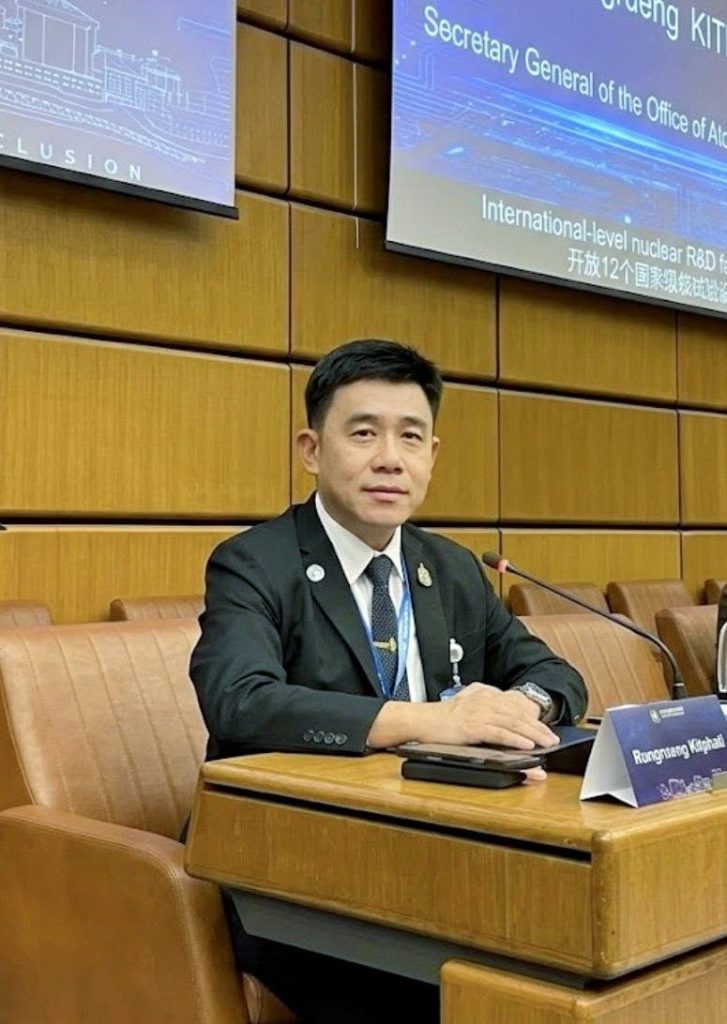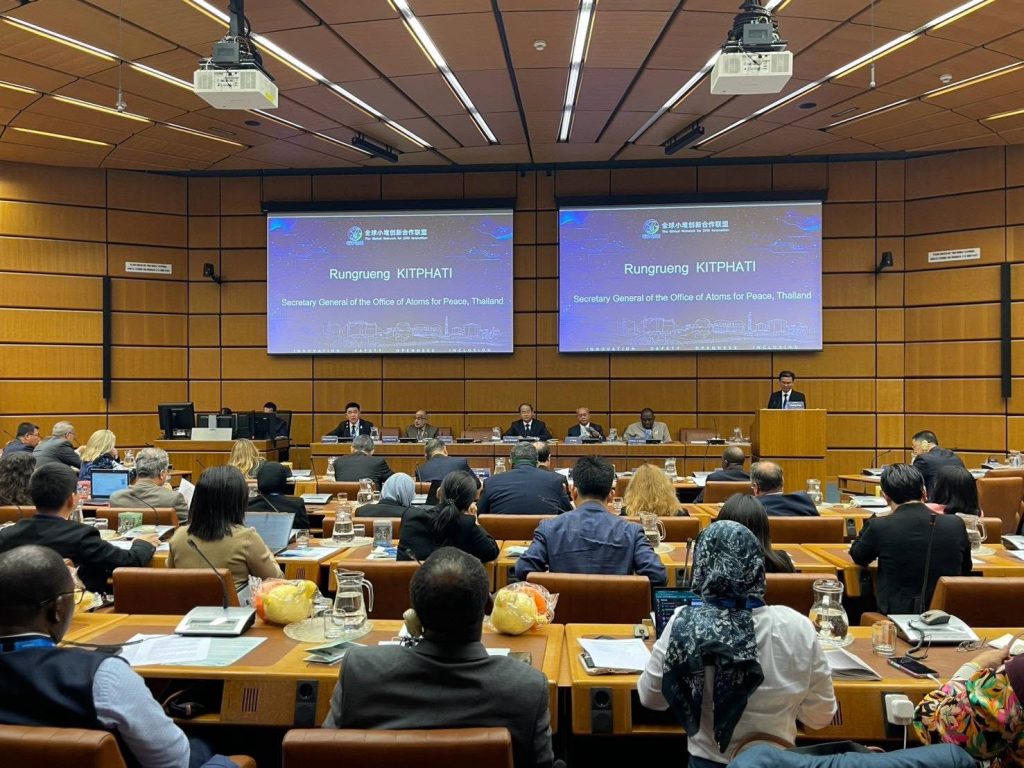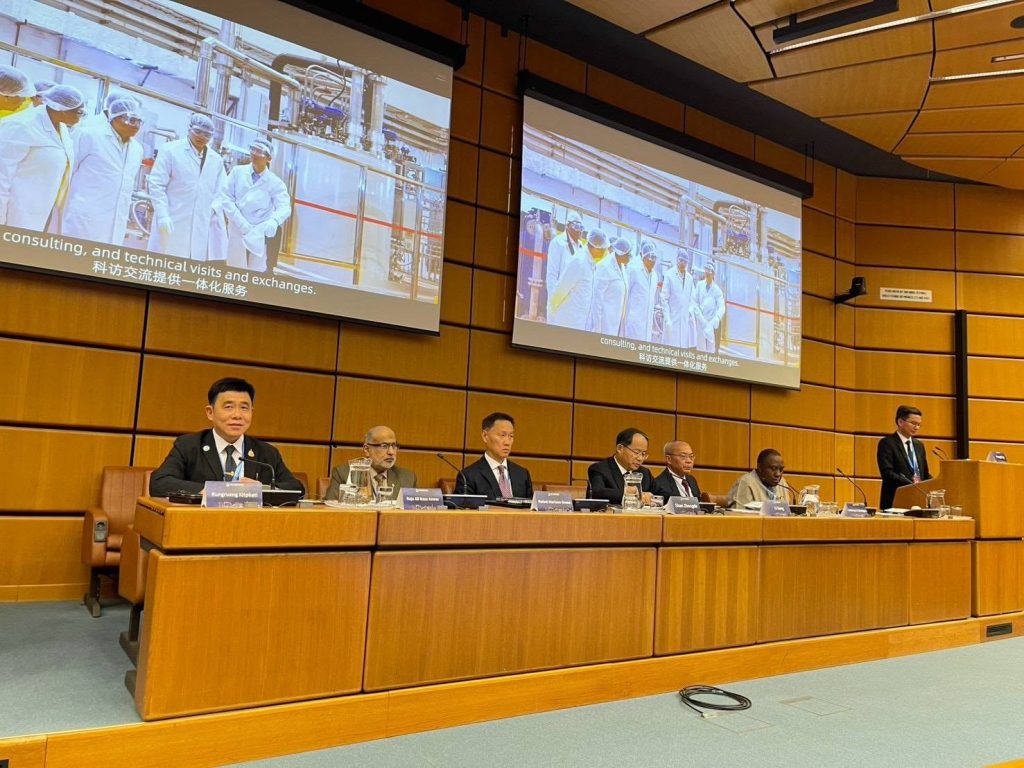
“SMRs can only move forward if safety comes first.” Thailand has reaffirmed its position on the international stage, expressing its commitment to working with global partners to strengthen national preparedness for Small Modular Reactor (SMR) technology. The Office of Atoms for Peace (OAP) emphasized that preparing Thailand for the future of nuclear energy involves more than technological advancement. It must go hand in hand with a robust regulatory framework, safety in accordance with international standards, and efforts to build public confidence.
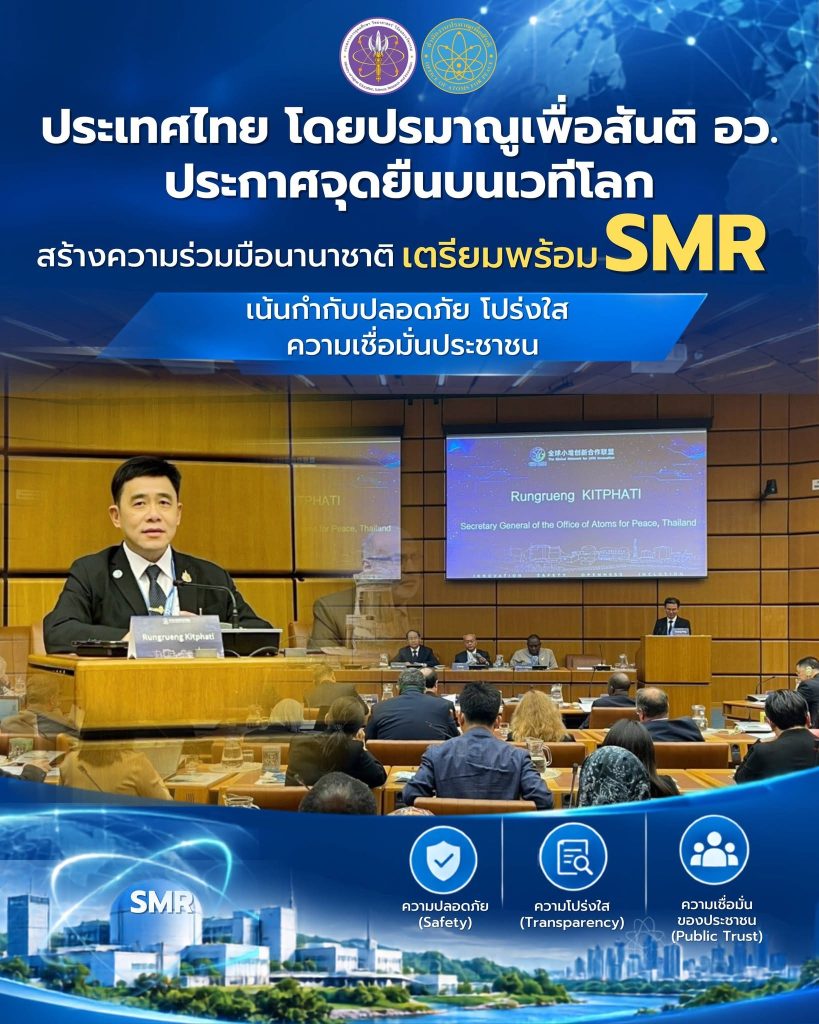
On 14 September 2026, Dr. Rungrueng Kitphati, Secretary-General of the Office of Atoms for Peace (OAP), Ministry of Higher Education, Science, Research and Innovation (MHESI), was assigned by Professor Dr. Yodchanan Wongsawat, Deputy Prime Minister and Minister of Higher Education, Science, Research and Innovation, to participate in the 70th IAEA General Conference (70th IAEA GC) in Vienna, Austria. During the conference, Thailand joined international partners in announcing its commitment to strengthening preparedness for Small Modular Reactor (SMR) technology through the Global Network for SMR Innovation (GNSI).
On this occasion, Dr. Rungreung Kitphati, Secretary-General of OAP, delivered a statement at the launch ceremony of the GNSI, emphasizing that “SMRs are a technology with significant potential amid the transition toward decarbonization. However, as an emerging and complex technology, they require rigorous studies, safety testing, and scientific research. No country can undertake these efforts alone.” Accordingly, the GNSI plays a vital role as a platform for knowledge exchange, technical harmonization, and the advancement of international cooperation.
The Secretary-General of OAP further emphasized that, although Thailand is committed to supporting the energy transition and strengthening national energy security, safety must remain at the heart of SMR development and deployment. OAP continues to uphold its responsibilities in the areas of Safety, Security, and Safeguards, while working to build public confidence. Engineering excellence alone is not sufficient; equal importance must be given to transparent communication, public consultation, and community participation to ensure that SMR technology is developed and deployed safely and sustainably.