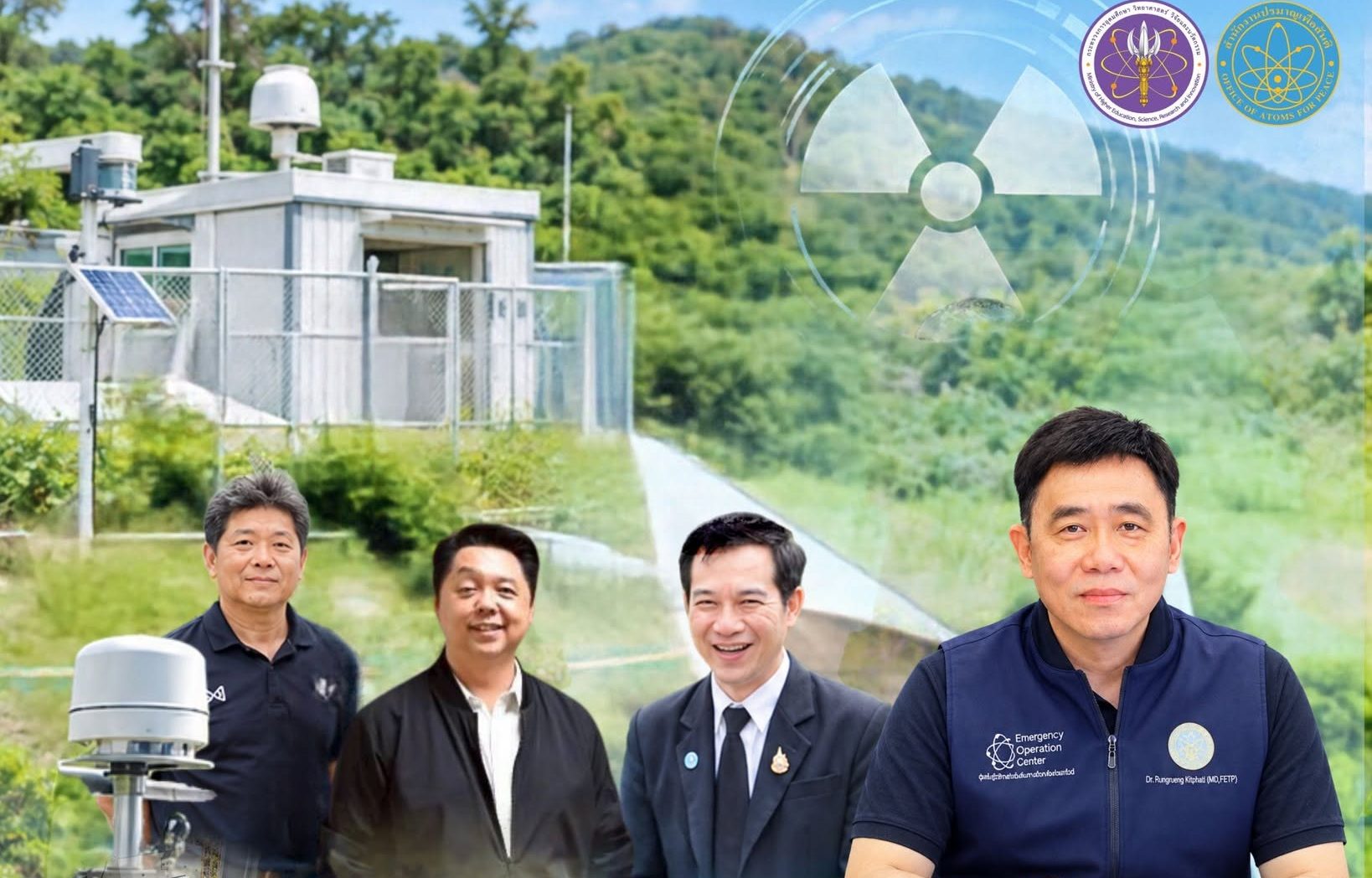
When discussing global nuclear accidents like the Chernobyl and Fukushima Daiichi nuclear power plants, many immediately think of the severe devastation and subsequent impacts. However, these incidents have provided the world with a crucial lesson: when radioactive materials or fission products are released into the environment, an absolutely essential tool for effective response is a “Radiological Monitoring Station.”
These stations measure radiation dose rates and identify the specific types of dispersed radioactive elements, enabling us to accurately assess impacts and respond with precision.
Under normal circumstances, nuclear power plants release extremely low levels of radioactive substances that remain well within safe limits throughout their operational lifespan.
Operators maintain small on-site monitoring stations for continuous surveillance. However, if a severe accident occurs and safety systems fail, high levels of radioactive materials could spread into the environment, severely impacting the public, society, and ecosystems.
Furthermore, these risks do not solely stem from large-scale power plants. They also encompass other facilities, such as medical isotope production plants, uranium conversion facilities, and research nuclear reactors.
Recognizing this, the Office of Atoms for Peace (OAP) has undertaken a proactive mission to build confidence and ensure transparency in public safety.
We have installed a total of 20 “Radiological Monitoring Stations” covering all regions across Thailand.
The OAP’s monitoring network is highly advanced and operates with robust systems:
• The stations conduct automated, real-time environmental radiation monitoring 24 hours a day.
• Measurement data is transmitted directly to the OAP’s Nuclear and Radiological Emergency Operations Center.
• The data is integrated with the International Atomic Energy Agency’s International Radiation Monitoring Information System (IRMIS).
• The system is also linked to the ASEAN Network of Regulatory Bodies on Atomic Energy (ASEAN-RDEP), allowing for the timely tracking of transboundary radiological situations.
3 Core Missions of the Radiological Monitoring Stations:
1. Background Radiation Measurement: Monitoring naturally occurring radiation in various areas of Thailand to establish fundamental baseline data.
2. Anomaly Detection: In the event of an accident or radiation dispersal from either domestic or international sources, the system will trigger an immediate alert if radiation levels exceed standard safety thresholds.
3. Emergency Response Support: Providing spatial data and tracking the direction of radiation dispersion, enabling relevant agencies to assess risks and evacuate the public promptly.
Looking toward the near future, Thailand is entering an era of modern clean energy technology, which may involve the deployment of Small Modular Reactors (SMRs) for electricity generation. The OAP has prepared for this transition by elevating our safety regulatory framework and strictly defining emergency planning zones.
A key component of our next steps is the preparation to establish additional Off-site Monitoring Stations around prospective SMR locations. These stations will monitor potential radiation dispersion, analyze nuclide types, and assess radiation doses to ensure maximum safety outside controlled areas.
This data will assist disaster relief agencies in accurately declaring evacuation zones and issuing public warnings. The development of this radiation monitoring
infrastructure is, therefore, a vital guarantee in protecting human lives, society, and the environment, ensuring Thailand can advance toward sustainable and safe energy security.
The Office of Atoms for Peace (OAP) — Regulating safety for public confidence. We put the safety of the people and the nation first. Even in unheralded missions, we work tirelessly behind the scenes to protect national security and ensure the utmost safety for our citizens and the environment.
Written by:
Dr. Rungrueng Kitphati Secretary-General, Office of Atoms for Peace (OAP) Ministry of Higher Education, Science, Research and Innovation (MHESI)