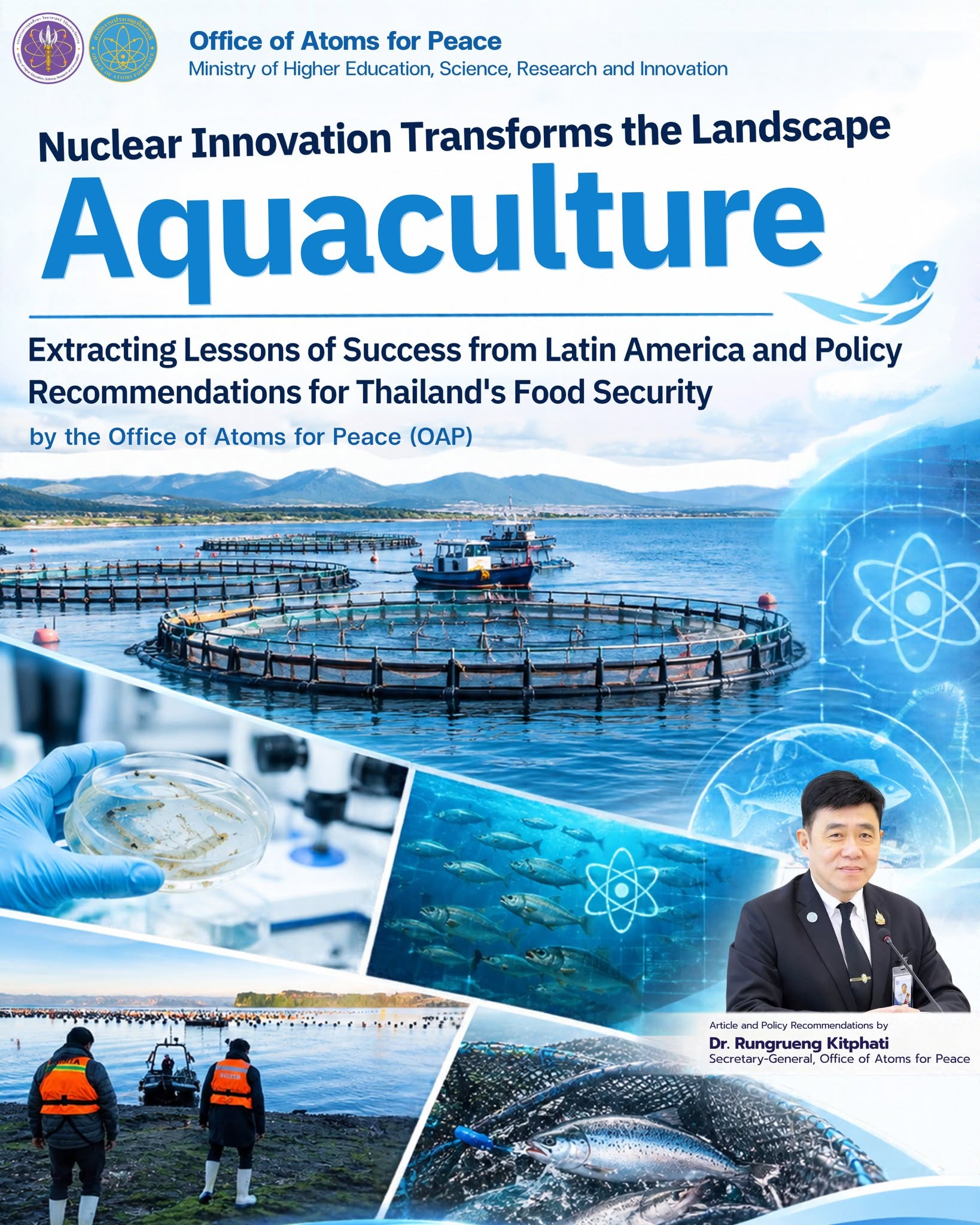
Aquaculture is a crucial pillar of global food security. In Latin America, the farming of “Rainbow Trout” is a vital source of income and food. However, farmers face the threat of the Infectious Pancreatic Necrosis Virus (IPNV), a severe contagious disease that can cause mortality rates of up to 50-90% in fry and juvenile fish, severely impacting the supply chain and community livelihoods.
Consequently, the International Atomic Energy Agency (IAEA), through the Joint FAO/IAEA Centre of Nuclear Techniques in Food and Agriculture, initiated a technical cooperation project (under the ARCAL agreement) to transfer “nuclear and related techniques” to experts in 9 Latin American countries. This aims to shift the paradigm from “reacting” to disease outbreaks to sustainable “prevention.”
Nuclear Technology in Disease Detection and Breeding
Advanced nuclear techniques, such as DNA analysis, genetic sequencing, and molecular diagnostics, have played a vital role in two main dimensions:
* Early Detection: Laboratories can detect the IPNV virus faster and more accurately, reducing losses before the disease spreads.
* Breeding Resilient Fish: Scientists can analyze genetic traits and successfully identify molecular markers linked to IPNV resistance.
Carla Bravo de Rueda, Animal Health Technical Officer at the Joint FAO/IAEA Centre, stated that selective breeding based on these genetic markers helps improve survival rates by approximately 1.2% per generation. This translates to an additional 1.2 tons of yield for every 100 tons produced. Since trout reach maturity in just a few years, the compounded gains in each generation make a massive difference to farmers’ incomes. This project also helps harmonize regional disease diagnostic standards, reduce technological gaps, and build a strong collaborative network.
Perspectives and Policy Recommendations for Thailand by OAP
Thailand is one of the world’s leaders in aquaculture (e.g., white shrimp, tilapia, and Asian seabass). However, our industry continuously faces threats from emerging infectious diseases and viruses (such as EMS or WSSV in shrimp, and TiLV in tilapia). The Office of Atoms for Peace (OAP) recognizes that the success in Latin America serves as a prototype model that Thailand can concretely apply. Therefore, OAP proposes the following policy directions:
* Integrate Nuclear for Food Security: OAP and the Ministry of Higher Education, Science, Research and Innovation (MHESI) should support research funding to apply nuclear and isotopic techniques in identifying molecular markers for the selective breeding of Thailand’s economic aquatic species to resist endemic diseases. This will help reduce the use of chemicals or antibiotics in farms.
* Elevate Cross-agency Collaboration: OAP is ready to act as a crucial link in coordinating collaboration between the Department of Fisheries and the IAEA (Joint FAO/IAEA Centre) to attract technological support, establish molecular laboratories, and build the capacity of Thai personnel to become experts in aquatic animal genetic medicine.
* Drive Thailand as an ASEAN Regional Hub: The government should use this opportunity to initiate a network of aquatic animal disease diagnostic laboratories using nuclear techniques in the ASEAN region (similar to the ARCAL network in Latin America). This will establish unified disease inspection standards, prevent cross-border outbreaks, and enhance the region’s competitiveness in global seafood exports.
Nuclear technology is not limited to energy or medicine; it is also a key to unlocking genetic secrets to protect farmers’ livelihoods. The Office of Atoms for Peace is committed to applying frontier science to tangibly create sustainability for the country’s food systems and grassroots economy.
Written by: Dr. Rungrueng Kitphati, Secretary-General, Office of Atoms for Peace, Ministry of Higher Education, Science, Research and Innovation (MHESI)
Special thanks for information from: Karla Molina Diaz and Melissa Evans, IAEA Department of Technical Cooperation, International Atomic Energy Agency (IAEA)
This article was published on Website and Facebook : Office of Atoms for Peace https://www.facebook.com/share/p/1PQ8TG4SkV/