
• วิกฤตขยะอาหารระดับโลก: ในแต่ละปี ปริมาณอาหารที่กินได้กว่า 1 พันล้านตัน (เกือบ 1 ใน 5 ของอาหารทั้งหมด) ต้องกลายเป็นขยะอาหารอย่างน่าเสียดาย โดยองค์การอาหารและเกษตรแห่งสหประชาชาติ (FAO) ระบุว่า อาหารกว่า 13.2% สูญเสียไปตั้งแต่ก่อนถึงหน้าร้าน (คิดเป็นมูลค่ากว่า 4 แสนล้านดอลลาร์สหรัฐ) และอีก 19% ถูกทิ้งในระดับการค้าปลีกและผู้บริโภค ก่อให้เกิดก๊าซเรือนกระจกและมลพิษทางสิ่งแวดล้อมมหาศาล
• ความร่วมมือระดับสากล (Atoms4Food): ทบวงการพลังงานปรมาณูระหว่างประเทศ (IAEA) ร่วมกับ FAO ขับเคลื่อนเทคโนโลยีนิวเคลียร์และไอโซโทปเพื่อช่วยลดการสูญเสียอาหารและสร้างระบบอาหารที่ยั่งยืน
• 5 นวัตกรรมนิวเคลียร์กู้วิกฤตขยะอาหาร:
1. การฉายรังสีอาหาร (Food Irradiation): ใช้รังสีแกมมา รังสีเอ็กซ์ หรือลำอิเล็กตรอน ยับยั้งจุลินทรีย์และแมลงศัตรูพืช ช่วยยืดอายุการเก็บรักษา เช่น ช่วยให้สตรอว์เบอร์รีสดในตู้เย็นเก็บได้นานขึ้นถึง 7 วัน ลดการเน่าเสียระหว่างการขนส่ง
2. ยกระดับการตรวจความปลอดภัยทางอาหาร: ใช้เทคนิค X-ray Fluorescence, Neutron Activation และไอโซโทปเสถียร ตรวจหาเคมีตกค้าง เชื้อโรค และสารพิษในห้องปฏิบัติการได้อย่างแม่นยำ ช่วยลดการสั่งทำลายอาหารโดยไม่จำเป็น
3. การปรับปรุงพันธุ์พืชด้วยรังสี (Mutation Breeding): ใช้รังสีเร่งการกลายพันธุ์ตามธรรมชาติ เพื่อพัฒนาพืชพันธุ์ใหม่ที่ทนทานต่อสภาพอากาศ ภัยแล้ง และโรคพืช (เช่น การพัฒนาคอลิฟลาวเวอร์ทนโรคเน่าดำในมอริเชียส) ช่วยลดผลผลิตเสียหายในแปลงเกษตร
4. เทคนิคทำหมันแมลง (Sterile Insect Technique – SIT): ฉายรังสีทำหมันแมลงศัตรูพืช แล้วปล่อยสู่ธรรมชาติเพื่อลดการขยายพันธุ์ เช่น ควบคุมแมลงวันผลไม้เมดิเตอร์เรเนียนในสาธารณรัฐโดมินิกัน ปกป้องผลผลิตการเกษตรได้อย่างมีประสิทธิภาพ
5. เร่งการตรวจสอบและส่งออกสินค้า: ใช้เทคนิคไอโซโทปตรวจการปลอมปน ตรวจสอบแหล่งกำเนิด และรับรองมาตรฐานสินค้าเกษตร ช่วยให้การกักกันสินค้านำเข้า-ส่งออกรวดเร็วขึ้น ป้องกันอาหารเน่าเสียระหว่างเดินทาง
• พันธกิจ ปส. ในประเทศไทย: สำนักงานปรมาณูเพื่อสันติ (ปส.) ในฐานะหน่วยงานกำกับดูแลความปลอดภัยทางนิวเคลียร์และรังสีแห่งชาติ พร้อมนำองค์ความรู้และเทคโนโลยี โดยเฉพาะอย่างยิ่งการกำกับดูแลการฉายรังสีอาหารตามแนวทางสากลมาสนับสนุนเกษตรกรและผู้ประกอบการ เพื่อยกระดับความปลอดภัยด้านอาหารและสร้างสิ่งแวดล้อมที่ยั่งยืนให้แก่ประเทศไทย
บทความนี้เขียนโดย…
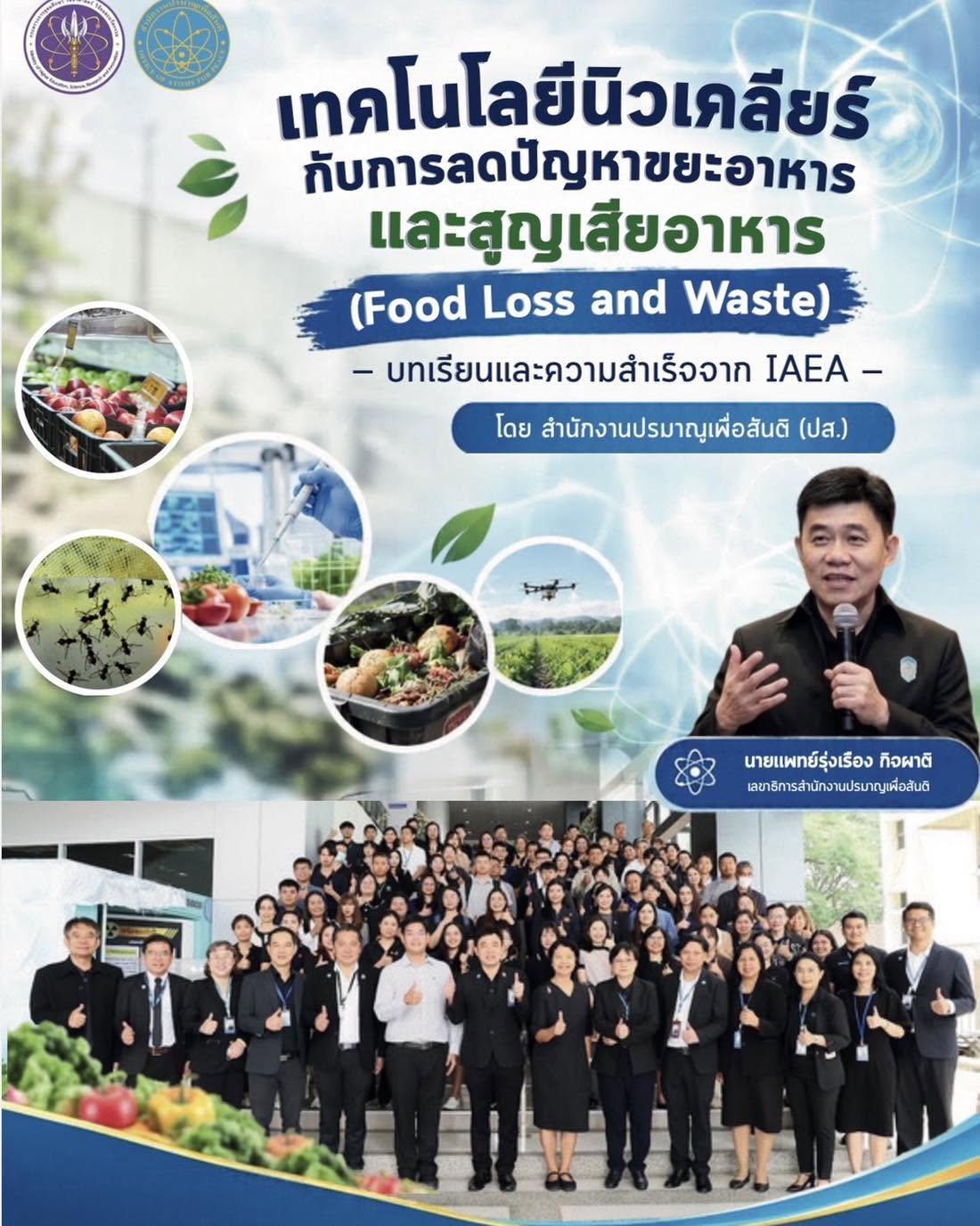
นายแพทย์รุ่งเรือง กิจผาติ เลขาธิการสำนักงานปรมาณูเพื่อสันติ กระทรวงการอุดมศึกษา วิทยาศาสตร์ วิจัยและนวัตกรรม
บทความนี้เผยแพร่ เว็บไซต์ และ Facebook สำนักงานปรมาณูเพื่อสันติ https://m.facebook.com/story.php?story_fbid=1787908196059431&id=100045208037725
Nuclear Technology and the Reduction of Food Loss and Waste: Lessons and Successes from the IAEA
By Office of Atoms for Peace (OAP)
• Global Food Waste Crisis: Every year, over 1 billion tonnes of edible food (nearly one-fifth of all food produced) tragically becomes food waste. According to the Food and Agriculture Organization (FAO), more than 13.2% of food is lost before reaching retail shelves (valued at over $400 billion USD), with another 19% discarded at retail and consumer levels, generating massive greenhouse gas emissions and environmental pollution.
• International Collaboration (Atoms4Food):
• The International Atomic Energy Agency (IAEA), in partnership with the FAO, drives nuclear and isotopic technologies to reduce food loss and foster sustainable food systems.
• 5 Nuclear Innovations Tackling the Food Waste Crisis:
1. Food Irradiation: Uses gamma rays, X-rays, or electron beams to inhibit microorganisms and agricultural pests, extending shelf life. For instance, it allows fresh strawberries to remain preserved in the refrigerator for up to an additional 7 days, reducing spoilage during transit.
2. Enhancing Food Safety Testing: Employs X-ray Fluorescence (XRF), Neutron Activation Analysis (NAA), and stable isotope techniques to accurately detect chemical residues, pathogens, and toxins in laboratories—preventing the unnecessary destruction of safe food.
3. Mutation Breeding: Utilizes radiation to accelerate natural genetic mutations, developing new crop varieties resistant to climate stress, drought, and plant diseases (e.g., developing black-rot resistant cauliflower in Mauritius), thereby curbing crop loss at the farm level.
4. Sterile Insect Technique (SIT): Involves sterilizing pest insects using radiation and releasing them into the wild to suppress their population growth. A prime example is controlling the Mediterranean fruit fly in the Dominican Republic, effectively safeguarding agricultural yields.
5. Accelerating Trade and Export Inspection: Applies isotopic techniques to verify origin, detect adulteration, and certify product standards. This expedites quarantine processes for imports and exports, preventing food spoilage during long journeys.
• OAP’s Mission in Thailand: As the national regulatory authority for nuclear and radiation safety, the Office of Atoms for Peace (OAP) is committed to applying IAEA knowledge and technology—specifically regulating food irradiation in alignment with international standards. This supports Thai farmers and businesses, enhances food safety, and fosters environmental sustainability for Thailand.
Article written by: Dr. Rungrueng Kitphati Secretary-General, Office of Atoms for Peace (OAP) Ministry of Higher Education, Science, Research and Innovation (MHESI)
Special thanks to Nuclear Engineering, Chulalongkorn University for the information.
Reference: How Nuclear Science Helps Tackle Food Waste, IAEA IAEA Article Link
สำนักงานปรมาณูเพื่อสันติ (ปส.) กระทรวงการอุดมศึกษา วิทยาศาสตร์ วิจัยและนวัตกรรม (อว.)
เผยแพร่โดย : กลุ่มเผยแพร่และประชาสัมพันธ์ สำนักงานเลขานุการกรม เบอร์โทรศัพท์ภายใน 1110 , 1120


