
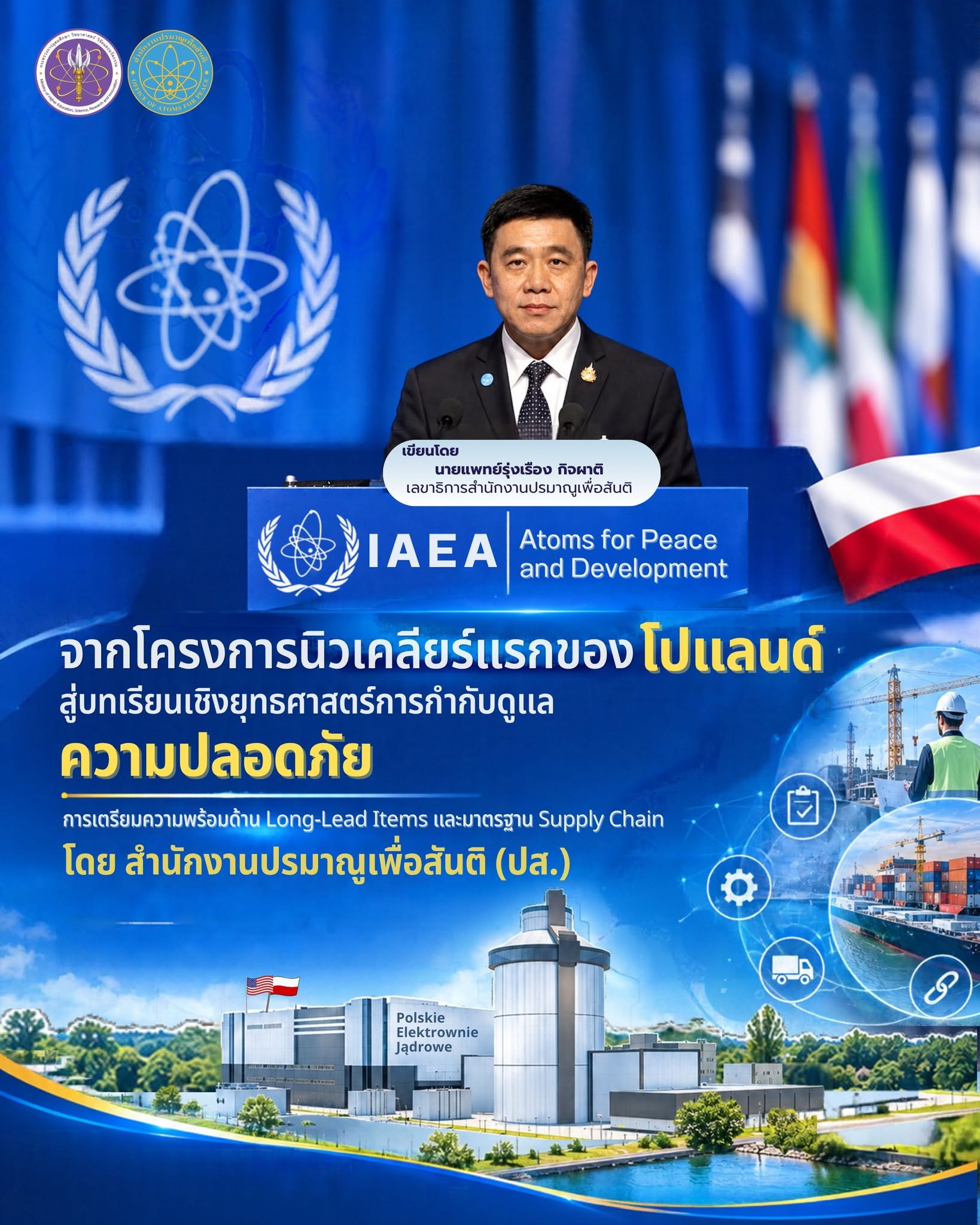
 จากโครงการนิวเคลียร์แรกของโปแลนด์ สู่บทเรียนเชิงยุทธศาสตร์การกำกับดูแลความปลอดภัย: การเตรียมความพร้อมด้าน Long-Lead Items และมาตรฐาน Supply Chain โดย สำนักงานปรมาณูเพื่อสันติ (ปส.)
 “บทนำและปรากฏการณ์สำคัญในยุโรป”
เมื่อวันที่ 16 ตุลาคม 2569 นิตยสาร POWER ได้รายงานความคืบหน้าครั้งสำคัญของโครงการโรงไฟฟ้านิวเคลียร์แห่งแรกในประเทศโปแลนด์ โดยบริษัท Polskie Elektrownie Jądrowe (PEJ) ซึ่งเป็นผู้รับผิดชอบโครงการ ได้มอบหมายให้บริษัท Westinghouse Electric Company เริ่มกระบวนการจัดซื้อชิ้นส่วนที่มีระยะเวลาการผลิตและส่งมอบยาวนาน หรือ Long-Lead Items (LLIs) สำหรับเตาปฏิกรณ์นิวเคลียร์รุ่น AP1000 หน่วยแรก ณ พื้นที่ Lubiatowo-Kopalino ทางตอนเหนือของประเทศ
โครงการนี้มีเป้าหมายติดตั้งเตาปฏิกรณ์แบบน้ำอัดความดัน (Pressurized Water Reactor: PWR) เทคโนโลยี AP1000 จำนวน 3 หน่วย เพื่อเป็นแหล่งผลิตไฟฟ้าคาร์บอนต่ำที่มีเสถียรภาพ และเสริมสร้างความมั่นคงทางพลังงานในระยะยาว โดยตั้งเป้าหมายเริ่มผลิตไฟฟ้ารนิยมนิตินัยหน่วยแรกในปี 2579 (ค.ศ. 2036)
 ในฐานะหน่วยงานกำกับดูแลความปลอดภัยทางนิวเคลียร์และรังสีแห่งชาติ สำนักงานปรมาณูเพื่อสันติ (ปส.) ถือว่ากรณีศึกษาของโปแลนด์ไม่ใช่เพียงเรื่องของการลงทุนทางเศรษฐศาสตร์หรือวิศวกรรมการก่อสร้างเท่านั้น แต่เป็นตัวอย่างสำคัญที่สะท้อนถึง “การบริหารจัดการความปลอดภัยนิวเคลียร์เชิงป้องกันและมิติการกำกับดูแลห่วงโซ่อุปทาน (Nuclear Supply Chain Governance)” ซึ่งประเทศไทยต้องศึกษาวางรากฐานไว้ล่วงหน้า
 “นิวเคลียร์นวัตกรรม Long-Lead Items (LLIs) ในมุมมองของผู้กำกับดูแล (Regulator)”
กระบวนการจัดซื้อ LLIs ของโปแลนด์ครอบคลุมอุปกรณ์สำคัญ 6 รายการในส่วนที่เป็นหัวใจหลักของโรงไฟฟ้า หรือ Nuclear Island รวมถึงภาชนะบรรจุอาคารปฏิกรณ์ (Reactor Containment Vessel) และโมดูลโครงสร้างที่มีความซับซ้อนสูง
เหตุผลที่ต้องสั่งผลิตล่วงหน้าหลายปี เนื่องจากอุปกรณ์นิวเคลียร์ขนาดใหญ่เหล่านี้ไม่สามารถผลิตแบบสำเร็จรูปทั่วไปได้ แต่ต้องผ่านการออกแบบทางวิศวกรรมเฉพาะ คัดเลือกวัสดุพิเศษ และผ่านการตรวจสอบคุณภาพในทุกขั้นตอนการหล่อ หลอม และประกอบ
 มุมมองการกำกับดูแลความปลอดภัยของ ปส.:
 1. การควบคุมคุณภาพก่อนการก่อสร้างจริง (Quality Assurance for Manufacturing): แม้การสั่งซื้อ LLIs จะเริ่มขึ้นภายใต้ข้อตกลง Engineering Development Agreement ก่อนที่สัญญาจัดซื้อจัดจ้างและการก่อสร้างหลัก (EPC Contract) จะเสร็จสมบูรณ์ แต่ในทางกฎหมายกำกับดูแล อุปกรณ์ทุกชิ้นที่จะนำมาติดตั้งในโครงสร้างนิวเคลียร์ต้องผ่านระบบตรวจสอบการประกันคุณภาพ (QA/QC) ที่ย้อนกลับได้ (Traceability) ตั้งแต่ระดับวัตถุดิบต้นน้ำ
2. การคงมาตรฐานความปลอดภัยท่ามกลางระยะเวลาที่ยาวนาน: อุปกรณ์ที่ผลิตขึ้นล่วงหน้าและต้องรอการติดตั้งเป็นเวลาหลายปี จำเป็นต้องมีระเบียบการกักเก็บและบำรุงรักษาระหว่างรอการประกอบ (Preservation and Storage Controls) เพื่อป้องกันการเสื่อมสภาพ ปราบปรามความชื้น หรือการกัดกร่อนจากสิ่งแวดล้อม ซึ่งหน่วยงานกำกับดูแลต้องเข้าไปตรวจสอบเกณฑ์ความปลอดภัยในส่วนนี้ด้วย
3. การสร้างห่วงโซ่อุปทานนิวเคลียร์ในประเทศและมาตรฐาน ASME NQA-1
ประเด็นยุทธศาสตร์ที่น่าสนใจของโปแลนด์ คือการเปิดโอกาสให้อุตสาหกรรมภายในประเทศเข้ามามีส่วนร่วมผลิตชิ้นส่วนนิวเคลียร์ โดยเมื่อวันที่ 14 ตุลาคม 2569 World Nuclear News รายงานว่า Westinghouse ได้ออกคำสั่งซื้อแบบมีเงื่อนไข (Conditional Orders) สำหรับโมดูลที่เกี่ยวข้องกับความปลอดภัยให้แก่บริษัทโปแลนด์ 4 แห่งแล้ว
อย่างไรก็ตาม ทั้ง PEJ และ Westinghouse กำหนดเงื่อนไขเข้มงวดว่า ผู้ผลิตในประเทศจะเข้าร่วมประมูลได้ ต้องผ่านการรับรองระบบประกันคุณภาพมาตรฐาน ASME NQA-1 (Quality Assurance Requirements for Nuclear Facility Applications) ซึ่งเป็นมาตรฐานสากลสูงสุดสำหรับกิจกรรมที่กระทบต่อความปลอดภัยทางนิวเคลียร์
 “มุมมองการกำกับดูแลของ ปส.:”
 • การป้องกันปัญหาชิ้นส่วนไม่ได้มาตรฐาน (CFSI Prevention): การส่งเสริมให้อุตสาหกรรมในประเทศร่วมผลิตอุปกรณ์นิวเคลียร์ช่วยสร้างมูลค่าทางเศรษฐกิจ แต่ในมิติการกำกับดูแล ปส. ต้องวางระบบตรวจสอบและควบคุมอย่างเข้มงวดเพื่อป้องกันอุปกรณ์ปลอมแปลง ไม่ได้มาตรฐาน หรือไม่ตรงตามสเปก (Counterfeit, Fraudulent, and Suspect Items: CFSI) ซึ่งอาจส่งผลร้ายแรงต่อความมั่นคงปลอดภัยของโรงไฟฟ้าในอนาคต
• การเตรียมความพร้อมของภาคอุตสาหกรรมไทย: หากประเทศไทยพิจารณาใช้งานเทคโนโลยี SMR หรือพลังงานนิวเคลียร์ในอนาคต ภาคเอกชนไทยที่จะเข้าไปอยู่ในห่วงโซ่อุปทาน (Supply Chain) ต้องได้รับการยกระดับและประเมินมาตรฐาน QA ให้สอดคล้องกับ ASME NQA-1 หรือเกณฑ์ของ IAEA ตั้งแต่เนิ่นๆ
“ถอดบทเรียนเชิงนโยบายและการเตรียมความพร้อมของประเทศไทย โดย ปส.”
บทเรียนจากโปแลนด์ตอกย้ำว่า ความสำเร็จและความปลอดภัยของโครงการโรงไฟฟ้านิวเคลียร์ไม่ได้ขึ้นอยู่กับเทคโนโลยีตัวเตาปฏิกรณ์เพียงอย่างเดียว แต่ขึ้นอยู่กับ “ความพร้อมของโครงสร้างพื้นฐานการกำกับดูแล ห่วงโซ่อุปทาน และระบบการบริหารจัดการสัญญา”
สำนักงานปรมาณูเพื่อสันติ (ปส.) ในฐานะผู้กำกับดูแลความปลอดภัยทางนิวเคลียร์และรังสีของประเทศไทย ได้วางแนวทางขับเคลื่อนและเตรียมความพร้อมเชิงนโยบายเพื่อรองรับการพัฒนานวัตกรรมพลังงานสะอาด (เช่น SMR) ในอนาคต ดังนี้:
1. การพัฒนากรอบกฎหมายรองรับการตรวจสอบอุปกรณ์ระยะยาว (Long-Lead Item Licensing Framework): ปส. ปรับปรุงกฎระเบียบการออกใบอนุญาตและการตรวจประเมินความปลอดภัย ให้ครอบคลุมถึงขั้นตอนการตรวจสอบโรงงานผลิตชิ้นส่วน (Vendor Inspection) ทั้งในและต่างประเทศ ตั้งแต่ขั้นตอนการสั่งซื้อ LLIs
2. การยกระดับมาตรฐานผู้ตรวจการและ TSO: พัฒนาบุคลากรของ ปส. และองค์กรสนับสนุนทางเทคนิค (TSO) ให้มีความเชี่ยวชาญในการตรวจสอบกระบวนการประกันคุณภาพตามมาตรฐาน ASME NQA-1 และมาตรฐานสากลของ IAEA เพื่อพร้อมรองรับการประเมินผู้ผลิตชิ้นส่วนนิวเคลียร์
3. การสร้างกลไกรับฟังความคิดเห็นและการสื่อสารความเสี่ยงที่โปร่งใส: การอนุมัติขั้นตอนสำคัญของโครงการ ไม่ว่าจะเป็นการอนุมัติสถานที่ตั้ง การประเมินผลกระทบสิ่งแวดล้อมและสุขภาพ (EHIA) หรือการสั่งซื้ออุปกรณ์วิกฤต ปส. ยึดถือหลักความโปร่งใส สื่อสารข้อมูลเชิงวิทยาศาสตร์ให้ผู้กำหนดนโยบาย ผู้ประกอบการ และประชาชนได้รับทราบอย่างถูกต้อง เพื่อสร้างความเชื่อมั่นสูงสุดแก่สังคม
บทสรุป กรณีศึกษาการจัดซื้อชิ้นส่วน Long-Lead Items ของโปแลนด์ เป็นตัวอย่างที่เป็นรูปธรรมของการเตรียมความพร้อมระยะยาวก่อนการก่อสร้างจริง สำนักงานปรมาณูเพื่อสันติ (ปส.) พร้อมทำหน้าที่เป็นผู้กำกับดูแลความปลอดภัย (Regulator) ที่เข้มแข็ง ทันสมัย และยึดมั่นในมาตรฐานสากล เพื่อให้มั่นใจว่าทุกขั้นตอนการเปลี่ยนผ่านทางพลังงานนิวเคลียร์ของประเทศไทย จะตั้งอยู่บนพื้นฐานของความปลอดภัยสูงสุดต่อประชาชน สิ่งแวดล้อม และความมั่นคงของประเทศชาติอย่างยั่งยืน
บทความนี้เขียนโดย…
นายแพทย์รุ่งเรือง กิจผาติ เลขาธิการสำนักงานปรมาณูเพื่อสันติ กระทรวงการอุดมศึกษา วิทยาศาสตร์ วิจัยและนวัตกรรม
ขอบคุณข้อมูลจาก Nuclear Engineering, Chulalongkorn University…
 เอกสารอ้างอิง: POWER Magazine (16 ตุลาคม 2026), World Nuclear News (8 & 14 ตุลาคม 2026), รายงานการกำกับดูแลความปลอดภัยทางนิวเคลียร์ สำนักงานปรมาณูเพื่อสันติ
บทความนี้เผยแพร่บน Facebook สำนักงานปรมาณูเพื่อสันติ
From Poland’s First Nuclear Project to Strategic Regulatory Governance Lessons: Long-Lead Items Preparation and Supply Chain Standards by the Office of Atoms for Peace (OAP)
Introduction and Major Developments in Europe
On October 16, 2026, POWER Magazine reported a major milestone in Poland’s first nuclear power plant project. Polskie Elektrownie Jądrowe (PEJ), the project owner, authorized Westinghouse Electric Company to initiate procurement for Long-Lead Items (LLIs) for the first AP1000 nuclear reactor unit at the Lubiatowo-Kopalino site in northern Poland.
The project aims to construct three AP1000 Pressurized Water Reactor (PWR) units to establish a stable, low-carbon electricity source and enhance long-term energy security, targeting commercial power generation for the first unit by 2036.
As the national nuclear and radiation regulatory authority, the Office of Atoms for Peace (OAP) views Poland’s case study not merely as an economic investment or construction engineering endeavor, but as a critical example of “preventive nuclear safety management and Nuclear Supply Chain Governance”—a foundational framework that Thailand must study and prepare in advance.
Nuclear Innovation: Long-Lead Items (LLIs) from a Regulator’s Perspective
Poland’s LLI procurement process encompasses 6 critical components within the core of the power plant—the Nuclear Island—including the Reactor Containment Vessel and highly complex structural modules.
Placing orders years in advance is necessary because these large-scale nuclear components cannot be off-the-shelf products; they require custom engineering design, specialized materials selection, and rigorous quality verification across every stage of casting, forging, and assembly.
OAP’s Safety Regulatory Perspectives:
1. Quality Assurance for Manufacturing: Although LLI ordering began under an Engineering Development Agreement prior to finalizing the main Engineering, Procurement, and Construction (EPC) contract, nuclear regulatory law dictates that every component installed in a nuclear structure must undergo a traceable Quality Assurance/Quality Control (QA/QC) system starting from raw material origins.
2. Maintaining Safety Standards Over Extended Periods: Components manufactured years before installation require strict Preservation and Storage Controls to prevent degradation, humidity exposure, or environmental corrosion, requiring regulatory bodies to inspect and enforce storage compliance criteria.
Building a Domestic Nuclear Supply Chain and ASME NQA-1 Standards
A key strategic highlight of Poland’s approach is integrating domestic industries into nuclear component manufacturing. On October 14, 2026, World Nuclear News reported that Westinghouse placed conditional orders for safety-related modules with four Polish companies.
However, both PEJ and Westinghouse enforced strict prerequisites requiring domestic manufacturers to attain ASME NQA-1 (Quality Assurance Requirements for Nuclear Facility Applications) certification—the highest international quality assurance benchmark for safety-significant nuclear activities.
OAP’s Regulatory Perspectives:
• Counterfeit, Fraudulent, and Suspect Items (CFSI) Prevention: Involving local industries in nuclear manufacturing drives economic growth; however, from a regulatory standpoint, OAP must establish rigorous inspection and control mechanisms to prevent CFSI, which could pose severe risks to long-term plant safety.
• Readiness of Thai Industry: Should Thailand consider Small Modular Reactors (SMRs) or nuclear energy in the future, Thai private sector suppliers aiming to enter the supply chain must upgrade and evaluate their QA systems to comply with ASME NQA-1 or IAEA standards early on.
Strategic Policy Lessons and Thailand’s Readiness by OAP
The Polish experience reinforces that the success and safety of a nuclear power project do not depend solely on reactor technology, but on the “readiness of regulatory infrastructure, supply chains, and contract management systems”.
As Thailand’s nuclear and radiation regulator, the Office of Atoms for Peace (OAP) has laid out proactive policy guidelines to prepare for future clean energy innovations (such as SMRs) as follows:
1. Developing a Long-Lead Item Licensing Framework: OAP is updating licensing and safety evaluation regulations to encompass Vendor Inspection protocols for manufacturing facilities both domestically and internationally starting from the LLI procurement phase.
2. Upgrading Inspector and TSO Capabilities: Enhancing the expertise of OAP personnel and Technical Support Organizations (TSOs) in auditing quality assurance processes according to ASME NQA-1 and IAEA international standards.
3. Establishing Transparent Public Consultation and Risk Communication: When approving major project milestones—such as siting approvals, Environmental and Health Impact Assessments (EHIA), or critical equipment orders—OAP adheres to transparency, communicating evidence-based scientific facts to policymakers, operators, and the public to build public confidence.
Conclusion
Poland’s Long-Lead Items procurement case study offers a concrete example of long-term readiness prior to actual plant construction. The Office of Atoms for Peace (OAP) stands ready as a strong, modern, and internationally benchmarked regulator, ensuring that every phase of Thailand’s nuclear energy transition prioritizes public safety, environmental protection, and national security.
Written by: Dr. Rungrueng Kitphati, Secretary-General, Office of Atoms for Peace, Ministry of Higher Education, Science, Research and Innovation (MHESI)
Special thanks for information from: Department of Nuclear Engineering, Faculty of Engineering, Chulalongkorn University
References: POWER Magazine (16 October 2026), World Nuclear News (8 & 14 October 2026), Nuclear Safety Governance Report, Office of Atoms for Peace.
สำนักงานปรมาณูเพื่อสันติ (ปส.) กระทรวงการอุดมศึกษา วิทยาศาสตร์ วิจัยและนวัตกรรม (อว.)
เผยแพร่โดย : กลุ่มเผยแพร่และประชาสัมพันธ์ สำนักงานเลขานุการกรม เบอร์โทรศัพท์ภายใน 1110 , 1120


