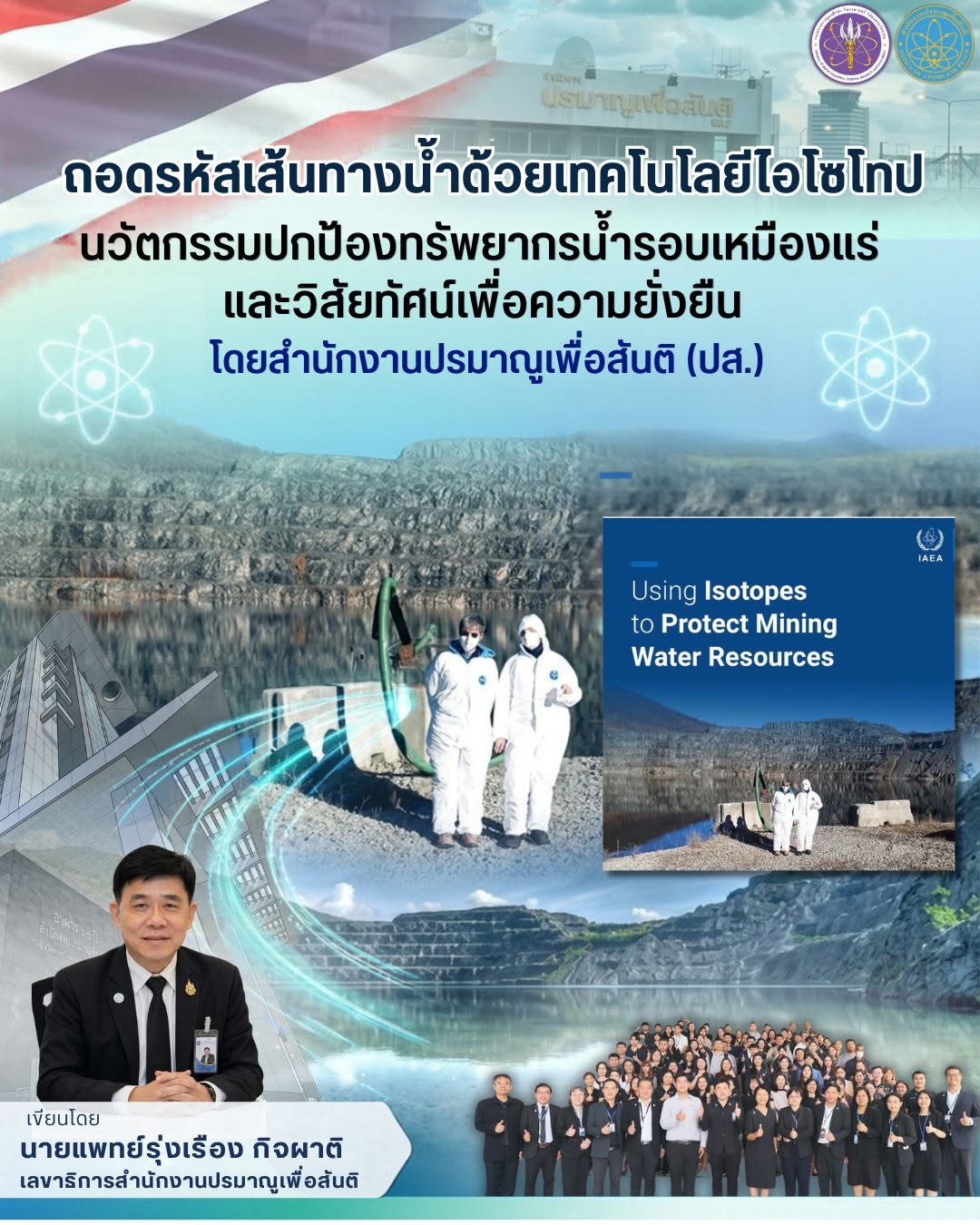
 ถอดรหัสเส้นทางน้ำด้วยเทคโนโลยีไอโซโทป: นวัตกรรมปกป้องทรัพยากรน้ำรอบเหมืองแร่ และวิสัยทัศน์เพื่อความยั่งยืนโดยสำนักงานปรมาณูเพื่อสันติ (ปส.)

การทำเหมืองแร่แม้จะเป็นฟันเฟืองสำคัญในการขับเคลื่อนเศรษฐกิจ แต่ในขณะเดียวกันก็สร้างความท้าทายอย่างยิ่งต่อการบริหารจัดการทรัพยากรน้ำ ทั้งความเสี่ยงจากน้ำเสียที่มีฤทธิ์เป็นกรด (Acid Mine Drainage) การปนเปื้อนของโลหะหนัก และเกลือในแหล่งน้ำใต้ดินและแม่น้ำ
สำนักงานปรมาณูเพื่อสันติ (ปส.) ในฐานะหน่วยงานกำกับดูแลความปลอดภัยทางนิวเคลียร์และรังสีของประเทศไทย เล็งเห็นถึงความจำเป็นในการนำนวัตกรรมขั้นสูงมาใช้ เพื่อแยกแยะให้ชัดเจนว่าการปนเปื้อนเหล่านั้นเกิดจากกิจกรรมเหมืองแร่ กระบวนการทางธรณีวิทยาตามธรรมชาติ หรือกิจกรรมของมนุษย์ในรูปแบบอื่น เพื่อนำไปสู่การจัดการทรัพยากรน้ำอย่างยั่งยืน
บทเรียนความสำเร็จจากทบวงการพลังงานปรมาณูระหว่างประเทศ (IAEA) โครงการวิจัยร่วม (Coordinated Research Project: CRP) ของ IAEA ภายใต้หัวข้อ “การพัฒนาและการประยุกต์ใช้เทคนิคไอโซโทปเพื่อการบริหารจัดการทรัพยากรน้ำอย่างมีประสิทธิภาพในพื้นที่เหมืองแร่” ได้พิสูจน์ให้เห็นถึงศักยภาพของอุทกวิทยาไอโซโทป (Isotope Hydrology) ตลอดระยะเวลา 4 ปี
นักวิจัยจาก 17 ประเทศได้นำเทคนิคด้านไอโซโทปมาประยุกต์ใช้ในสภาพแวดล้อมของเหมืองแร่ที่หลากหลาย ตั้งแต่เหมืองยูเรเนียม ถ่านหิน โพแทช ไปจนถึงแร่ใยหิน โดยครอบคลุมทุกช่วงอายุของเหมือง ตั้งแต่ระยะวางแผน ระยะดำเนินการ ไปจนถึงเหมืองที่ปิดตัวลง
 ไอโซโทป: สารติดตามตามธรรมชาติเพื่อไขความลับของน้ำ เทคนิคนี้ใช้ไอโซโทปสิ่งแวดล้อมทำหน้าที่เป็น “สารติดตามตามธรรมชาติ” (Natural Tracers) เช่น ออกซิเจน-18 ไฮโดรเจน-2 ทริเทียม และเรดอน-222 เพื่อระบุแหล่งที่มาและเส้นทางการเติมน้ำใต้ดิน ประเมินระยะเวลาที่น้ำกักเก็บอยู่ใต้ดิน แผนที่การแลกเปลี่ยนน้ำระหว่างผิวดินและน้ำใต้ดิน ตลอดจนแกะรอยการเคลื่อนที่ของสารปนเปื้อน ข้อมูลเหล่านี้ช่วยให้นักวิทยาศาสตร์สามารถสร้างแบบจำลองการไหลเวียนของน้ำใต้ดินที่แม่นยำยิ่งขึ้น สนับสนุนการกำหนดกลยุทธ์การเฝ้าระวัง และช่วยให้หน่วยงานกำกับดูแลสามารถเลือกใช้มาตรการควบคุมและออกแบบการเก็บตัวอย่างได้อย่างเหมาะสม
ประโยชน์ต่อประเทศไทยและวิสัยทัศน์เชิงนโยบายโดย ปส.
สำหรับประเทศไทยที่มีการทำเหมืองแร่หลายประเภท เช่น เหมืองทองคำ เหมืองโพแทช และเหมืองหิน การนำเทคโนโลยีอุทกวิทยาไอโซโทปมาปรับใช้ จะเป็นจุดเปลี่ยนสำคัญในการยกระดับมาตรฐานการกำกับดูแลสิ่งแวดล้อม ปส. คาดหวังที่จะบูรณาการองค์ความรู้นี้ร่วมกับหน่วยงานที่เกี่ยวข้อง เพื่อประโยชน์สูงสุดของประเทศ ดังนี้:
• การปกป้องสุขภาพและแหล่งน้ำของประชาชน: เทคนิคไอโซโทปจะช่วยให้ ปส. และหน่วยงานรัฐมีหลักฐานทางวิทยาศาสตร์เชิงลึกที่ไม่อาจโต้แย้งได้ ในการแกะรอยแหล่งที่มาของการปนเปื้อน ทำให้สามารถเข้าแก้ไขปัญหาและปกป้องแหล่งน้ำดื่ม น้ำใช้ และน้ำเพื่อการเกษตรของชุมชนรอบเหมืองได้อย่างแม่นยำและทันท่วงที
• การยุติข้อพิพาทด้านสิ่งแวดล้อมอย่างเป็นธรรม: ด้วยข้อมูลการแยกแยะสารไอโซโทป รัฐสามารถพิสูจน์ความรับผิดชอบระหว่างผลกระทบจากเหมืองแร่และปรากฏการณ์ทางธรรมชาติได้อย่างชัดเจน สร้างความโปร่งใสและลดความขัดแย้งระหว่างผู้ประกอบการและชุมชนในพื้นที่
• การยกระดับขีดความสามารถของบุคลากรไทย: ปส. มุ่งมั่นที่จะส่งเสริมการพัฒนาบุคลากรให้มีความเชี่ยวชาญในการออกแบบการทดสอบและวิเคราะห์ข้อมูลไอโซโทปแบบพหุคูณ (Multi-tracer) เพื่อสร้างเครือข่ายนักวิทยาศาสตร์และผู้กำกับดูแลภายในประเทศ ที่สามารถแปลงผลวิเคราะห์ทางห้องปฏิบัติการไปสู่ข้อมูลการจัดการน้ำในเชิงปฏิบัติได้อย่างเป็นรูปธรรม
ความก้าวหน้าทางวิทยาศาสตร์นิวเคลียร์ในด้านอุทกวิทยาไอโซโทปไม่ได้เป็นเพียงเครื่องมือวิจัย แต่คือกุญแจสำคัญในการปกป้องระบบนิเวศและคุณภาพชีวิตของประชาชน สำนักงานปรมาณูเพื่อสันติพร้อมที่จะเป็นกลไกหลักในการผลักดันเทคโนโลยีนี้ เพื่อสร้างความมั่นใจว่าทุกการพัฒนาอุตสาหกรรมและโครงสร้างพื้นฐานของประเทศ จะดำเนินควบคู่ไปกับการอนุรักษ์ทรัพยากรน้ำอย่างปลอดภัยและยั่งยืนสำหรับคนไทยทุกคนบทความนี้เขียนโดย…
นายแพทย์รุ่งเรือง กิจผาติ เลขาธิการสำนักงานปรมาณูเพื่อสันติ กระทรวงการอุดมศึกษา วิทยาศาสตร์ วิจัยและนวัตกรรม
ขอบคุณข้อมูลจาก ทบวงการพลังงานปรมาณูระหว่างประเทศ (IAEA)
บทความนี้เผยแพร่บน Facebook สำนักงานปรมาณูเพื่อสันติ https://www.facebook.com/share/p/1CoYEho6Yt/
Decoding Water Pathways with Isotope Technology: An Innovation to Protect Water Resources Around Mines and the Vision for Sustainability by the Office of Atoms for Peace (OAP) Although mining is a crucial cog in driving the economy, it simultaneously poses immense challenges to water resource management. These include the risks of Acid Mine Drainage, heavy metal contamination, and salinity in groundwater and rivers.
The Office of Atoms for Peace (OAP), as Thailand’s national nuclear and radiation safety regulatory authority, recognizes the necessity of employing advanced innovations to clearly distinguish whether such contamination stems from mining activities, natural geological processes, or other human activities. This ultimately leads to sustainable water resource management.
Success Lessons from the International Atomic Energy Agency (IAEA)
The IAEA’s Coordinated Research Project (CRP) entitled “Development and Application of Isotope Techniques for Efficient Water Resources Management in Mining Areas” has proven the potential of Isotope Hydrology over a 4-year period.
Researchers from 17 countries applied isotope techniques in diverse mining environments—ranging from uranium, coal, and potash to asbestos mines. This covered the entire lifecycle of a mine, from the planning and operational phases to mine closure.
Isotopes: Natural Tracers to Unlock the Secrets of Water This technique utilizes environmental isotopes acting as “Natural Tracers,” such as Oxygen-18, Hydrogen-2, Tritium, and Radon-222, to identify the origins and recharge pathways of groundwater.
It estimates groundwater residence times, maps the exchange between surface water and groundwater, and tracks the movement of contaminants. This data enables scientists to create more accurate groundwater flow models, supports the establishment of monitoring strategies, and helps regulatory bodies select appropriate control measures and design sampling protocols effectively.
Benefits to Thailand and the Policy Vision by the OAP For Thailand, which hosts various types of mining operations such as gold, potash, and quarrying, adopting isotope hydrology technology will be a major turning point in elevating environmental regulatory standards. The OAP envisions integrating this knowledge with relevant agencies for the country’s utmost benefit, as follows:
• Protecting Public Health and Water Sources: Isotope techniques will provide the OAP and state agencies with irrefutable, in-depth scientific evidence to trace the sources of contamination. This enables precise and timely interventions to resolve issues and protect drinking water, domestic water, and agricultural water supplies for communities surrounding the mines.
• Resolving Environmental Disputes Fairly: With data differentiating isotopic signatures, the state can clearly ascertain accountability between mining impacts and natural phenomena. This fosters transparency and reduces conflicts between operators and local communities in the area.
• Enhancing the Capabilities of Thai Personnel: The OAP is committed to promoting workforce development by cultivating expertise in designing tests and analyzing multi-tracer isotope data. This aims to build a domestic network of scientists and regulators capable of tangibly translating laboratory analysis results into practical water management information.
•
Nuclear science advancements in isotope hydrology are not merely research tools, but the crucial key to protecting the ecosystem and the public’s quality of life. The Office of Atoms for Peace stands ready to serve as the primary mechanism in driving this technology, ensuring that every industrial and infrastructure development in the country proceeds in tandem with the safe and sustainable conservation of water resources for all Thais.
Written by: Dr. Rungrueng Kitphati, Secretary-General, Office of Atoms for Peace, Ministry of Higher Education, Science, Research and Innovation (MHESI)
Special thanks for information from: International Atomic Energy Agency (IAEA)
สำนักงานปรมาณูเพื่อสันติ (ปส.) กระทรวงการอุดมศึกษา วิทยาศาสตร์ วิจัยและนวัตกรรม (อว.)
เผยแพร่โดย : กลุ่มเผยแพร่และประชาสัมพันธ์ สำนักงานเลขานุการกรม เบอร์โทรศัพท์ภายใน 1110 , 1120


