
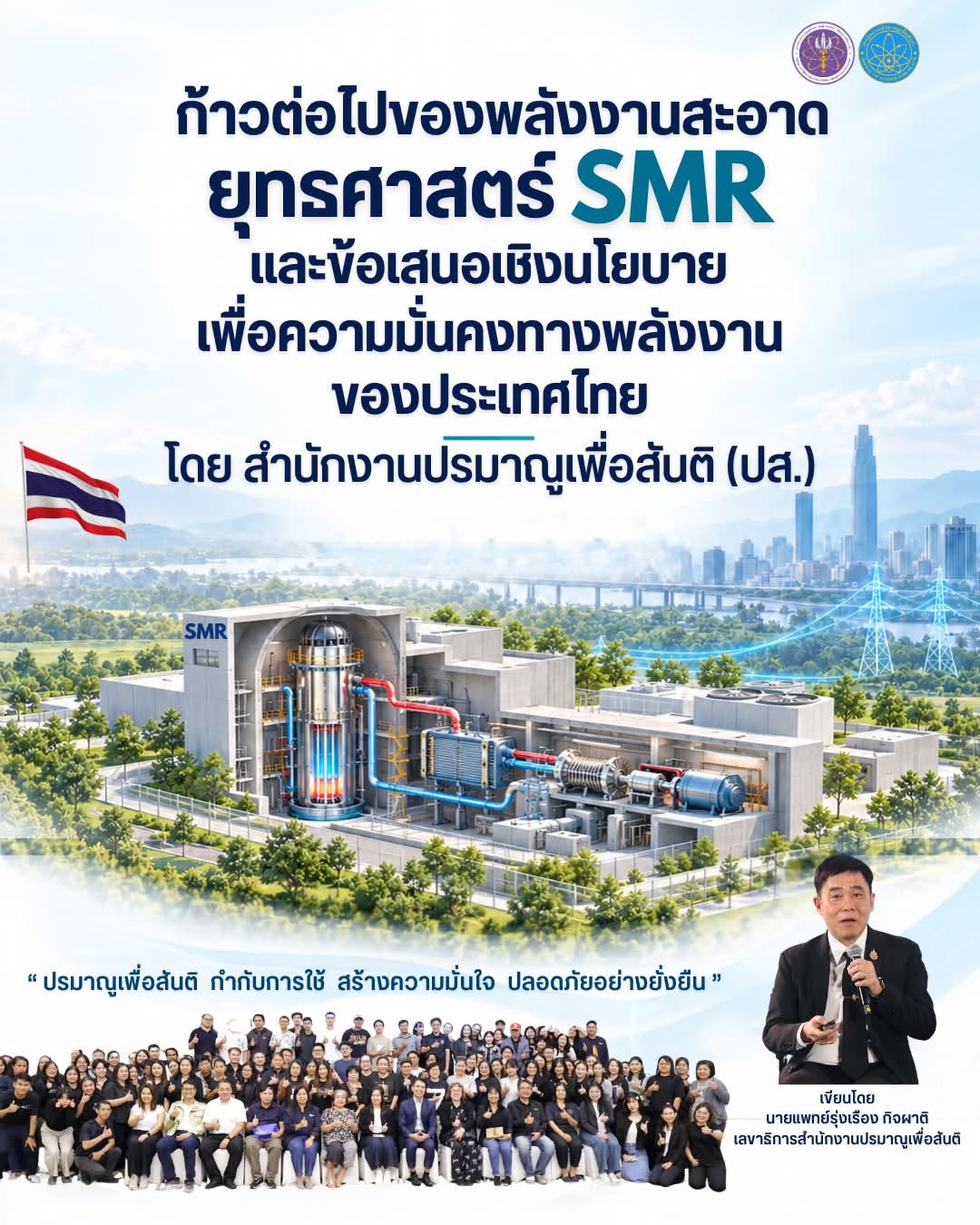
 ก้าวต่อไปของพลังงานสะอาด ยุทธศาสตร์ SMR และข้อเสนอเชิงนโยบายเพื่อความมั่นคงทางพลังงานของประเทศไทย โดย สำนักงานปรมาณูเพื่อสันติ (ปส.)
 ท่ามกลางวิกฤตการเปลี่ยนแปลงสภาพภูมิอากาศและความต้องการพลังงานที่เพิ่มสูงขึ้น การเปลี่ยนผ่านสู่พลังงานสะอาดถือเป็นวาระแห่งชาติที่หลีกเลี่ยงไม่ได้
 ประเทศไทยได้กำหนดทิศทางยุทธศาสตร์พลังงานใหม่ผ่านร่างแผนพัฒนากำลังผลิตไฟฟ้าของประเทศไทย (PDP 2026) โดยมีเป้าหมายในการเดินเครื่องโรงไฟฟ้านิวเคลียร์ขนาดเล็ก (Small Modular Reactor: SMR) ขนาด 300 เมกะวัตต์แห่งแรกภายในปี พ.ศ. 2580 และอาจขยายกำลังการผลิตรวมถึง 9 กิกะวัตต์ภายในปี พ.ศ. 2593 ในฐานะหน่วยงานกำกับดูแลความปลอดภัยทางนิวเคลียร์และรังสีระดับชาติ สำนักงานปรมาณูเพื่อสันติ (ปส.) ได้เตรียมความพร้อมอย่างรอบด้านเพื่อรองรับเทคโนโลยีพลิกโลกนี้ พร้อมวิเคราะห์มิติเชิงยุทธศาสตร์และกำหนดข้อเสนอเชิงนโยบายต่อประเทศ
 SMR กับความสอดคล้องเชิงยุทธศาสตร์ของประเทศไทย เทคโนโลยี SMR มีกำลังการผลิตไฟฟ้าไม่เกิน 300 เมกะวัตต์ต่อโมดูล ซึ่งตอบโจทย์ระบบสายส่งไฟฟ้าของไทยที่ต้องการความยืดหยุ่น จุดเด่นระดับสากลของ SMR คือระบบความปลอดภัยเชิงรับ (Passive Safety Systems) ที่สามารถระบายความร้อนได้เองตามธรรมชาติเมื่อเกิดเหตุฉุกเฉินโดยไม่ต้องพึ่งพากระแสไฟฟ้า ช่วยลดความเสี่ยงจากอุบัติเหตุร้ายแรง
นอกจากนี้ การผลิตชิ้นส่วนสำเร็จรูปจากโรงงานยังช่วยลดระยะเวลาและต้นทุนการก่อสร้าง ทำให้ SMR กลายเป็นทางเลือกที่เติมเต็มช่องว่างระหว่างพลังงานหมุนเวียนที่ไม่เสถียรและเชื้อเพลิงฟอสซิลที่ปล่อยคาร์บอนสูง
ปัจจุบัน ทั่วโลกยังคงประเมินเทคโนโลยี SMR จากหลากหลายผู้ผลิต โดยประเทศไทยยังไม่ได้ตัดสินใจเลือกเทคโนโลยีจากประเทศใดประเทศหนึ่งโดยเฉพาะ การเปิดกว้างนี้ทำให้ไทยมีโอกาสศึกษาบทเรียนจากต่างประเทศ ทั้งด้านมาตรฐานความปลอดภัย การจัดการกากเชื้อเพลิง และความคุ้มค่าทางเศรษฐศาสตร์ เพื่อเลือกเทคโนโลยีที่เหมาะสมที่สุดกับบริบทของประเทศ
ความพร้อมของสำนักงานปรมาณูเพื่อสันติ (ปส.) ปส. ได้เดินหน้าเตรียมความพร้อมใน 4 มิติหลักตามมติคณะกรรมการพลังงานนิวเคลียร์เพื่อสันติ ดังนี้
1. การกำกับดูแลและกฎหมาย: ปส. ได้จัดตั้ง “สถาบันกำกับดูแลความปลอดภัยทางนิวเคลียร์และโรงไฟฟ้านิวเคลียร์มาตรฐานปลอดภัยขนาดเล็ก” และเปิดศูนย์บริการร่วมแห่งชาติเพื่อรองรับการออกใบอนุญาต พร้อมทั้งระดมผู้เชี่ยวชาญทบทวนกฎหมายสถานที่ตั้งโรงไฟฟ้า (Siting) ให้สอดคล้องกับมาตรฐานทบวงการพลังงานปรมาณูระหว่างประเทศ (IAEA)
2. การเฝ้าระวังและรับมือเหตุฉุกเฉิน: มีการยกระดับระบบเตรียมพร้อมรับมือเหตุฉุกเฉินทางนิวเคลียร์และรังสีข้ามพรมแดน ผ่านการฝึกซ้อมระดับสากล (ConvEx) ร่วมกับประชาคมอาเซียนและเครือข่ายระดับโลก เพื่อสร้างความมั่นใจว่าไทยมีระบบเฝ้าระวังที่โปร่งใสและพึ่งพาได้ตลอด 24 ชั่วโมง
3. การจัดการกากกัมมันตรังสี: ปส. กำลังจัดทำกรอบนโยบายการจัดการกากนิวเคลียร์และเชื้อเพลิงใช้แล้วครบวงจร โดยยึดหลักความรับผิดชอบต่อสิ่งแวดล้อมและไม่ผลักภาระให้คนรุ่นต่อไป
4. การยกระดับห่วงโซ่อุปทาน: ปส. ร่วมมือกับสำนักงานคณะกรรมการส่งเสริมการลงทุน (BOI) และสถาบันวิจัยต่างๆ เพื่อผลักดันและยกระดับผู้ประกอบการไทยให้สามารถเข้าสู่ห่วงโซ่อุปทานของ SMR ในระดับโลก
 ข้อเสนอเชิงนโยบายต่อรัฐบาลและหน่วยงานที่เกี่ยวข้อง เพื่อให้โครงการ SMR ของประเทศไทยเดินหน้าได้อย่างมั่นคง ปลอดภัย และเกิดประโยชน์สูงสุดทางเศรษฐกิจ ปส. มีข้อเสนอเชิงนโยบายดังนี้
การบูรณาการระบบนิเวศอุตสาหกรรม (Industrial Ecosystem Integration): รัฐบาลควรเร่งประกาศสิทธิประโยชน์ทางภาษีและการลงทุนที่ชัดเจนผ่าน BOI เพื่อดึงดูดผู้พัฒนาเทคโนโลยี SMR ระดับโลก ควบคู่ไปกับการถ่ายทอดเทคโนโลยี (Technology Transfer) ให้กับผู้ประกอบการไทยในชิ้นส่วนที่ไม่เกี่ยวกับนิวเคลียร์ (Non-nuclear components) โดยตรง เพื่อสร้างมูลค่าเพิ่มทางเศรษฐกิจในประเทศ
การสร้างกระบวนการมีส่วนร่วมเชิงรุก (Proactive Public Engagement): ความท้าทายสูงสุดของนิวเคลียร์ในไทยไม่ใช่เทคโนโลยี แต่เป็นความเชื่อมั่นของประชาชน รัฐบาลและหน่วยงานผู้ดำเนินการต้องให้ความสำคัญกับความโปร่งใส เปิดเผยข้อมูลที่ถูกต้องตั้งแต่ขั้นตอนการเลือกพื้นที่ และดึงภาคประชาชนเข้ามามีส่วนร่วมในการตัดสินใจในทุกขั้นตอน
การลงทุนในโครงสร้างพื้นฐานด้านทรัพยากรบุคคล: การกำกับดูแลและการเดินเครื่อง SMR ต้องอาศัยบุคลากรที่มีความเชี่ยวชาญสูง รัฐควรจัดสรรงบประมาณสนับสนุนมหาวิทยาลัยและสถาบันวิจัยในการผลิตวิศวกรนิวเคลียร์ นักฟิสิกส์รังสี และผู้เชี่ยวชาญด้านกฎหมายระหว่างประเทศอย่างต่อเนื่อง
การเสริมสร้างความร่วมมือระดับภูมิภาค: ประเทศไทยควรใช้โอกาสนี้ก้าวขึ้นเป็นผู้นำของอาเซียนด้านมาตรฐานความปลอดภัยทางนิวเคลียร์ ด้วยการริเริ่มกรอบความร่วมมือด้านการจัดการเหตุฉุกเฉินข้ามพรมแดน และการพัฒนากฎระเบียบ (Regulatory Framework) ร่วมกับประเทศเพื่อนบ้าน
การก้าวเข้าสู่ยุคของเทคโนโลยี SMR ถือเป็นการตัดสินใจเชิงยุทธศาสตร์ที่จะกำหนดอนาคตความมั่นคงทางพลังงานและขีดความสามารถในการแข่งขันของประเทศไทยบนเวทีโลก สำนักงานปรมาณูเพื่อสันติขอยืนยันความพร้อมในการทำหน้าที่เป็นเสาหลักด้านความปลอดภัย ด้วยมาตรฐานการกำกับดูแลที่เข้มงวด รัดกุม และโปร่งใส เพื่อให้พลังงานปรมาณูเป็นพลังที่สร้างสรรค์และยั่งยืนสำหรับคนไทยทุกคนอย่างแท้จริง
บทความนี้เขียนโดย…
นายแพทย์รุ่งเรือง กิจผาติ เลขาธิการสำนักงานปรมาณูเพื่อสันติ กระทรวงการอุดมศึกษา วิทยาศาสตร์ วิจัยและนวัตกรรม
ขอบคุณข้อมูลจาก ทบวงการพลังงานปรมาณูระหว่างประเทศ (IAEA)
บทความนี้เผยแพร่บน Facebook สำนักงานปรมาณูเพื่อสันติ https://www.facebook.com/share/1EukUQ9jTs/?mibextid=wwXIfr
The Next Step in Clean Energy: SMR Strategy and Policy Recommendations for Thailand’s Energy Security
By the Office of Atoms for Peace (OAP)
Amidst the climate change crisis and rising energy demands, the transition to clean energy is an unavoidable national agenda.
Thailand has charted a new strategic direction in energy through the draft Power Development Plan (PDP 2026), targeting the operation of the country’s first 300-megawatt Small Modular Reactor (SMR) nuclear power plant by 2037. There is also potential to expand the total generating capacity to 9 gigawatts by 2050. As the national regulatory body for nuclear and radiation safety, the Office of Atoms for Peace (OAP) has made comprehensive preparations to accommodate this disruptive technology, while analyzing its strategic dimensions and formulating policy recommendations for the country.
SMRs and Thailand’s Strategic Alignment
SMR technology, with a generating capacity not exceeding 300 megawatts per module, meets the flexibility needs of Thailand’s power grid. A globally recognized advantage of SMRs is their Passive Safety Systems, which allow the reactor to cool down naturally during emergencies without relying on electricity, thereby significantly minimizing the risk of severe accidents.
Furthermore, the factory-built modular components help reduce both construction time and costs. This makes SMRs a viable alternative that bridges the gap between the intermittency of renewable energy and the high carbon emissions of fossil fuels.
Currently, the global community continues to evaluate SMR technologies from various manufacturers. Thailand has not yet committed to a specific technology from any single country. This open approach provides Thailand with the opportunity to study international lessons learned—spanning safety standards, spent fuel management, and economic viability—in order to select the technology best suited to the country’s context.
The Readiness of the Office of Atoms for Peace (OAP)
The OAP has advanced its preparations across four main dimensions, in accordance with the resolutions of the Atomic Energy for Peace Commission:
* Regulatory and Legal Framework: The OAP has established the “Institute for Nuclear Safety Regulation and Standard Small Modular Reactors” and opened a national joint service center to support the licensing process. Additionally, experts have been mobilized to review power plant siting regulations to ensure alignment with International Atomic Energy Agency (IAEA) standards.
* Surveillance and Emergency Response: Transboundary nuclear and radiological emergency preparedness systems have been upgraded through international exercises (ConvEx) in collaboration with the ASEAN community and global networks. This ensures Thailand maintains a transparent and reliable 24/7 monitoring system.
* Radioactive Waste Management: The OAP is drafting a comprehensive policy framework for nuclear waste and spent fuel management, adhering to the principles of environmental responsibility to avoid burdening future generations.
* Supply Chain Enhancement: The OAP is collaborating with the Board of Investment (BOI) and various research institutes to support and elevate Thai entrepreneurs, enabling them to enter the global SMR supply chain.
Policy Recommendations to the Government and Relevant Agencies
To ensure Thailand’s SMR project progresses securely, safely, and yields maximum economic benefits, the OAP proposes the following policy recommendations:
* Industrial Ecosystem Integration: The government should promptly announce clear tax and investment privileges through the BOI to attract world-class SMR developers. This must be coupled with direct technology transfer to Thai entrepreneurs for non-nuclear components, creating domestic economic value-added.
* Proactive Public Engagement: The greatest challenge for nuclear power in Thailand is not the technology itself, but public trust. The government and implementing agencies must prioritize transparency by disclosing accurate information from the site selection phase and involving the public in the decision-making process at every step.
* Human Resources Infrastructure Investment: The regulation and operation of SMRs require highly specialized personnel. The government should continuously allocate budgets to support universities and research institutes in producing nuclear engineers, health physicists, and international law experts.
* Regional Cooperation Enhancement: Thailand should seize this opportunity to step up as the ASEAN leader in nuclear safety standards by initiating frameworks for transboundary emergency management and developing regulatory frameworks collaboratively with neighboring countries.
Stepping into the era of SMR technology is a strategic decision that will shape the future of Thailand’s energy security and its competitive edge on the global stage. The Office of Atoms for Peace reaffirms its readiness to serve as a pillar of safety, employing strict, concise, and transparent regulatory standards to ensure that atomic energy remains a truly constructive and sustainable power for all Thai people.
This article was written by:
Dr. Rungrueng Kitphati, Secretary General of the Office of Atoms for Peace, Ministry of Higher Education, Science, Research and Innovation.
Special thanks to the International Atomic Energy Agency (IAEA) for the information.
สำนักงานปรมาณูเพื่อสันติ (ปส.) กระทรวงการอุดมศึกษา วิทยาศาสตร์ วิจัยและนวัตกรรม (อว.)
เผยแพร่โดย : กลุ่มเผยแพร่และประชาสัมพันธ์ สำนักงานเลขานุการกรม เบอร์โทรศัพท์ภายใน 1110 , 1120


