
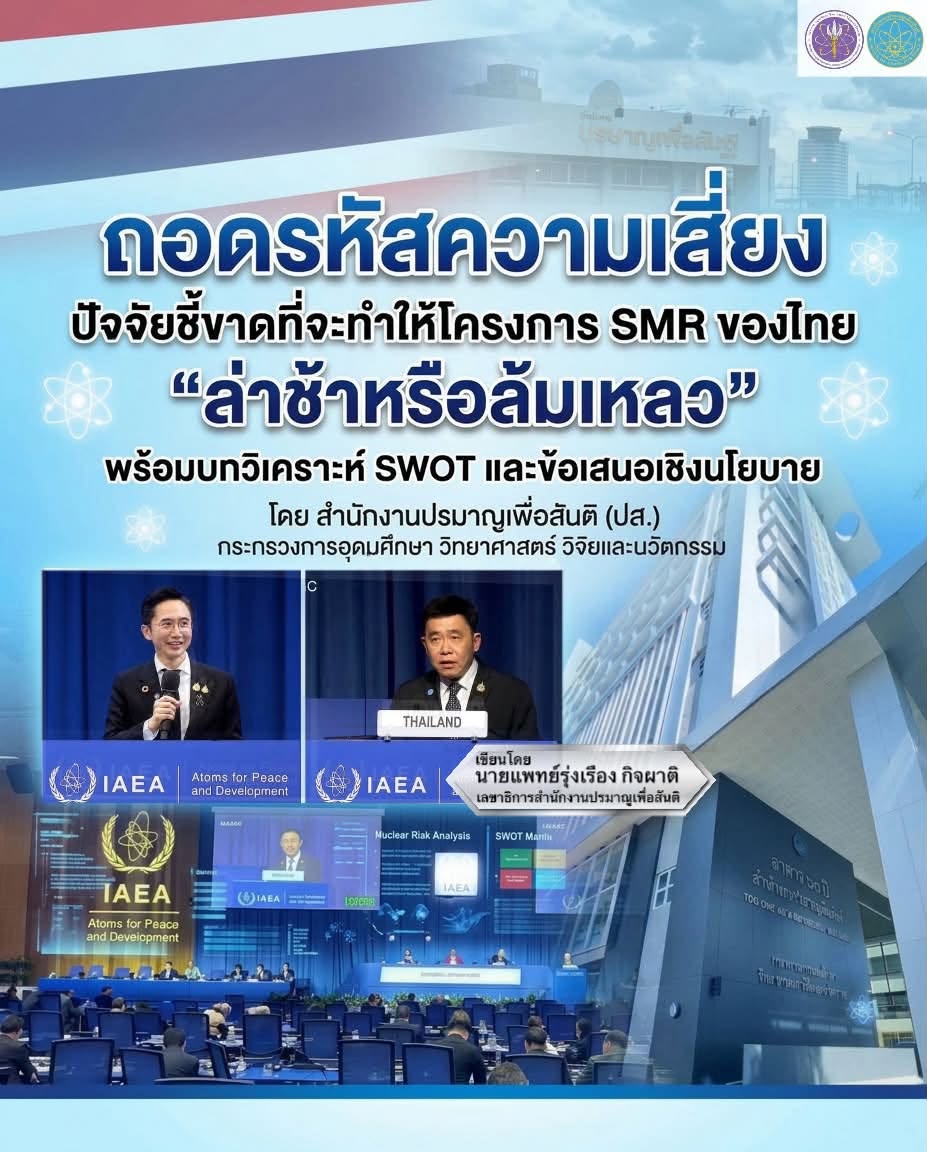
 ถอดรหัสความเสี่ยง: ปัจจัยชี้ขาดที่จะทำให้โครงการ SMR ของไทย “ล่าช้าหรือล้มเหลว” พร้อมบทวิเคราะห์ SWOT และข้อเสนอเชิงนโยบาย โดย สำนักงานปรมาณูเพื่อสันติ (ปส.) กระทรวงการอุดมศึกษา วิทยาศาสตร์ วิจัยและนวัตกรรม


 ร่างแผนพัฒนากำลังผลิตไฟฟ้าของประเทศไทย (PDP 2026) ที่บรรจุเป้าหมายการสร้างโรงไฟฟ้านิวเคลียร์ขนาดเล็ก (SMR) ขนาด 600 เมกะวัตต์ ภายในปี พ.ศ. 2580 ถือเป็นก้าวสำคัญทางยุทธศาสตร์เพื่อความมั่นคงทางพลังงานและเป้าหมาย Net Zero ของประเทศ ทว่า จากบทเรียนในอดีตของไทยที่เคยชะลอโครงการโรงไฟฟ้านิวเคลียร์มาแล้วถึงสองครั้ง รวมถึงข้อมูลการดำเนินโครงการในต่างประเทศ สำนักงานปรมาณูเพื่อสันติ (ปส.) ในฐานะหน่วยงานกำกับดูแลความปลอดภัยระดับชาติ ขอวิเคราะห์อย่างตรงไปตรงมาว่า เทคโนโลยีและเงินทุน ไม่ใช่ปัจจัยหลักที่จะทำให้โครงการนี้ล้มเหลว แต่เป็นปัจจัยด้าน “สังคม การเมือง และโครงสร้างกำกับดูแล”หากโครงการ SMR ของไทยจะไปไม่ถึงฝั่งฝัน หรือเกิดความล่าช้าจนสูญเสียความสามารถในการแข่งขัน ปส. ประเมินว่าปัจจัยชี้ขาดเหล่านั้น ได้แก่
1. วิกฤตความเชื่อมั่นและฉันทามติทางสังคม (The Trust Deficit) นี่คือจุดเปราะบางที่สุด บทเรียนจากต่างประเทศชี้ชัดว่า ต่อให้เทคโนโลยี SMR จะก้าวหน้าไปถึงขั้นมีระบบความปลอดภัยเชิงรับ (Passive Safety) หรือใช้สารหล่อเย็นแบบใหม่ (เช่น โซเดียมเหลวในโครงการ Natrium ของสหรัฐฯ) ที่ขจัดความเสี่ยงการหลอมละลายของแกนปฏิกรณ์ได้ แต่หากประชาชนในพื้นที่และสังคมวงกว้างยังมีภาพจำจากวิกฤตการณ์เชอร์โนบิลหรือฟุกุชิมะ โครงการย่อมถูกต่อต้าน ปรากฏการณ์ NIMBY (Not In My Backyard) จะเป็นตัวแปรสำคัญที่ทำให้กระบวนการเลือกสถานที่ตั้ง (Siting) ล่าช้าออกไปเป็นทศวรรษ หากรัฐใช้วิธีรวบรัดโดยปราศจากความโปร่งใส โครงการนี้จะถูกคัดค้านจนล้มเลิกในที่สุด
2. ความไม่ต่อเนื่องทางการเมืองและนโยบาย (Political Discontinuity) โครงการนิวเคลียร์เป็นโครงการโครงสร้างพื้นฐานขนาดใหญ่ที่ใช้เวลาตั้งแต่ริเริ่มจนถึงเดินเครื่องเชิงพาณิชย์ไม่ต่ำกว่า 10-15 ปี ซึ่งยาวนานกว่าวาระของรัฐบาล หากโครงการ SMR ไม่ได้รับการยกระดับให้เป็นวาระแห่งชาติที่พรรคการเมืองทุกฝ่ายเห็นพ้อง การเปลี่ยนขั้วอำนาจทางการเมืองอาจนำไปสู่การรื้อแผน PDP การตัดงบประมาณ หรือการชะลอการตัดสินใจ ซึ่งความล่าช้าเพียง 2-3 ปี จะส่งผลกระทบลูกโซ่ต่อนักลงทุนและผู้พัฒนาเทคโนโลยีที่อาจถอนตัว
3. คอขวดด้านทรัพยากรบุคคลและโครงสร้างการออกใบอนุญาต (Regulatory Bottlenecks) เทคโนโลยี SMR เป็นเรื่องใหม่ของโลก (First-of-a-kind) การประเมินความปลอดภัยสำหรับเครื่องปฏิกรณ์ที่ผลิตสำเร็จรูปจากโรงงาน หรือเครื่องปฏิกรณ์ที่ไม่ใช่น้ำมวลเบา (Non-LWR) ต้องอาศัยผู้เชี่ยวชาญระดับสูง หากประเทศขาดแคลนวิศวกรนิวเคลียร์ นักฟิสิกส์รังสี และงบประมาณสนับสนุนให้ ปส. ยกระดับระบบการออกใบอนุญาต กระบวนการประเมินความปลอดภัยจะล่าช้าอย่างหลีกเลี่ยงไม่ได้ และหากการกำกับดูแลหย่อนยานเพียงเล็กน้อย จะทำลายความน่าเชื่อถือของโครงการทั้งระบบทันที
 การวิเคราะห์ SWOT: มองทะลุความท้าทายของ SMR ไทย
เพื่อประเมินสถานการณ์อย่างรอบด้าน ปส. ขอนำเสนอการวิเคราะห์ศักยภาพ (SWOT Analysis) ในมิติของความเสี่ยงและการบริหารจัดการ ดังนี้
• จุดแข็ง (Strengths): ประเทศไทยมีหน่วยงานกำกับดูแล (ปส.) ที่ทำงานสอดคล้องกับมาตรฐานทบวงการพลังงานปรมาณูระหว่างประเทศ (IAEA) มีการเตรียมโครงสร้างกฎหมายล่วงหน้า และเทคโนโลยี SMR ในปัจจุบันมีระดับความปลอดภัยสูงกว่าในอดีตอย่างก้าวกระโดด ใช้พื้นที่น้อย และมีความยืดหยุ่นสูง
• จุดอ่อน (Weaknesses): ช่องว่างทางความรู้ความเข้าใจของประชาชนต่อนิวเคลียร์ยุคใหม่ยังกว้างมาก ประเทศไทยขาดแคลนกำลังคนเฉพาะทางอย่างรุนแรงเนื่องจากว่างเว้นการพัฒนาโครงการมานาน และยังไม่มีประสบการณ์ในการจัดการกากกัมมันตรังสีระดับสูง
• โอกาส (Opportunities): กระแสกดดันด้านการลดคาร์บอนระดับโลกและเงื่อนไขจากบริษัทยักษ์ใหญ่ด้านเทคโนโลยี บังคับให้เกิดความต้องการพลังงานสะอาดที่เสถียร (Green Baseload) ซึ่งเป็นตัวเร่งให้เกิดการสนับสนุนจากภาคธุรกิจ นอกจากนี้ การเป็นประเทศผู้ซื้อเทคโนโลยีในช่วงเวลานี้ เปิดโอกาสให้ไทยเจรจาขอรับการถ่ายทอดเทคโนโลยี (Technology Transfer) จากผู้ผลิตได้ง่ายขึ้น
• อุปสรรค (Threats): การแพร่กระจายของข้อมูลบิดเบือน (Misinformation) บนสื่อสังคมออนไลน์ที่อาจจุดชนวนความตื่นตระหนก ความผันผวนทางภูมิรัฐศาสตร์ที่อาจกระทบต่อห่วงโซ่อุปทานเชื้อเพลิงยูเรเนียม (เช่น HALEU) และความล่าช้าในการตัดสินใจเชิงนโยบายระดับชาติ
ข้อเสนอเชิงนโยบายต่อรัฐบาล (Policy Recommendations) เพื่อปิดจุดอ่อนและป้องกันความล้มเหลว สำนักงานปรมาณูเพื่อสันติ ขอเสนอแนวทางปฏิบัติที่รัฐบาลต้องเร่งดำเนินการ “ตั้งแต่วันนี้” เพื่อให้เป้าหมายปี 2580 เป็นจริง: 1. การจัดตั้งคณะกรรมการอิสระระดับชาติเพื่อขับเคลื่อน SMR (National Bipartisan Commission) รัฐบาลควรผลักดันให้เกิดคณะกรรมการระดับชาติที่ประกอบด้วยตัวแทนจากทุกพรรคการเมือง นักวิชาการ และภาคประชาสังคม เพื่อสร้าง “ฉันทามติทางการเมือง” (Political Consensus) รับประกันว่าโครงการ SMR จะดำเนินต่อไปอย่างต่อเนื่อง ไม่ถูกแทรกแซงหรือล้มเลิกเพียงเพราะการเปลี่ยนผ่านรัฐบาล
2. การสื่อสารเชิงรุกและกระบวนการมีส่วนร่วมอย่างโปร่งใสที่สุด (Radical Transparency) รัฐบาลและกระทรวงพลังงานต้องแยกเรื่องนิวเคลียร์ออกจากการเมือง สร้างแคมเปญให้ความรู้ระดับชาติที่นำโดยนักวิทยาศาสตร์ ไม่ใช่นักการเมือง ต้องเปิดเผยข้อมูลด้านความปลอดภัย ความเสี่ยง และแผนการจัดการกากนิวเคลียร์อย่างตรงไปตรงมา โดยให้ชุมชนมีสิทธิร่วมตรวจสอบ (Public Scrutiny) ตั้งแต่ขั้นตอนการร่างเกณฑ์คัดเลือกสถานที่ตั้ง การสื่อสารที่จริงใจคือเกราะป้องกันการต่อต้านที่ดีที่สุด
3. การลงทุนแบบก้าวกระโดดในระบบกำกับดูแลและกำลังคน (Fast-track Human Capital & Regulatory Investment) ความปลอดภัยคือหัวใจของความเชื่อมั่น รัฐต้องอัดฉีดงบประมาณให้ ปส. และสถาบันอุดมศึกษา เพื่อผลิตวิศวกรนิวเคลียร์และผู้เชี่ยวชาญด้านความปลอดภัยอย่างเร่งด่วน พร้อมทั้งสนับสนุนงบประมาณให้ ปส. พัฒนาระบบการออกใบอนุญาต (Licensing Framework) สำหรับเทคโนโลยี SMR และเครื่องปฏิกรณ์ขั้นสูง (Advanced Reactors) ให้มีความรัดกุม รวดเร็ว และเทียบเท่ามาตรฐานสากล (เช่น NRC ของสหรัฐฯ)
4. การบูรณาการ SMR เข้ากับยุทธศาสตร์การพัฒนาพื้นที่ (Area-based Development) การจะลบภาพจำ NIMBY รัฐต้องทำให้ชุมชนเห็นว่า “พวกเขาได้อะไร” นอกเหนือจากความปลอดภัย รัฐควรผูกการตั้งโรงไฟฟ้า SMR เข้ากับการพัฒนาโครงสร้างพื้นฐานของชุมชน การสร้างงาน การให้สิทธิประโยชน์ด้านค่าไฟราคาถูกพิเศษสำหรับพื้นที่รอบโรงไฟฟ้า และการส่งเสริมอุตสาหกรรมเกี่ยวเนื่อง เพื่อให้ชุมชนรู้สึกเป็น “หุ้นส่วน” ของโครงการอย่างแท้จริง
หากรัฐบาลสามารถบริหารจัดการความเสี่ยงด้านความเชื่อมั่นของประชาชน ควบคู่ไปกับการรักษาความต่อเนื่องเชิงนโยบายและเตรียมความพร้อมด้านการกำกับดูแลได้อย่างรัดกุม โครงการ SMR จะไม่ใช่ภาพฝันที่เลือนลาง แต่จะเป็นเสาหลักแห่งความมั่นคงทางพลังงานที่พาประเทศไทยก้าวข้ามวิกฤตคาร์บอนได้อย่างสง่างามบทความโดย: นายแพทย์รุ่งเรือง กิจผาติ เลขาธิการสำนักงานปรมาณูเพื่อสันติ กระทรวงการอุดมศึกษา วิทยาศาสตร์ วิจัยและนวัตกรรม (อว.)
บทความนี้เขียนโดย…
นายแพทย์รุ่งเรือง กิจผาติ เลขาธิการสำนักงานปรมาณูเพื่อสันติ กระทรวงการอุดมศึกษา วิทยาศาสตร์ วิจัยและนวัตกรรม
ขอบคุณข้อมูลจาก Nuclear Engineering, Chulalongkorn University…
ขอบคุณข้อมูลจาก IAEA
บทความนี้เผยแพร่บน Facebook สำนักงานปรมาณูเพื่อสันติ https://www.facebook.com/share/p/1DrtLifCTv/?mibextid=wwXIfr
Decoding the Risks: Decisive Factors That Could “Delay or Derail” Thailand’s SMR Project, Accompanied by a SWOT Analysis and Policy Recommendations By the Office of Atoms for Peace (OAP), Ministry of Higher Education, Science, Research and Innovation (MHESI)
The draft Power Development Plan (PDP 2026), which includes a target to construct 600 megawatts of Small Modular Reactors (SMRs) by 2037, marks a crucial strategic step toward national energy security and the country’s Net Zero goal. However, drawing from Thailand’s past lessons of delaying nuclear power projects twice, as well as data from international project implementations, the Office of Atoms for Peace (OAP)—as the national safety regulatory body—frankly assesses that technology and funding are not the primary factors that would cause this project to fail. Instead, the decisive factors lie in “social, political, and regulatory structures.”
If Thailand’s SMR project fails to reach its goal or faces delays that result in a loss of competitiveness, the OAP evaluates those decisive factors to be
1. The Trust Deficit and Lack of Social Consensus
This is the most fragile point. International lessons clearly show that even if SMR technology advances to incorporate Passive Safety systems or novel coolants (such as liquid sodium in the U.S. Natrium project) that eliminate the risk of a core meltdown, the project will inevitably face resistance if local communities and the broader society still harbor memories of the Chernobyl or Fukushima crises. The NIMBY (Not In My Backyard) phenomenon will be a key variable that could delay the siting process by a decade. If the state rushes the process without transparency, the project will face opposition and ultimately be scrapped.
2. Political Discontinuity
A nuclear power project is a massive infrastructure endeavor requiring at least 10 to 15 years from inception to commercial operation—far exceeding the term of any single government. If the SMR project is not elevated to a national agenda endorsed by all political parties, shifts in political power could lead to the dismantling of the PDP, budget cuts, or delayed decision-making. A delay of just 2-3 years could trigger a chain reaction, causing investors and technology developers to withdraw.
3. Regulatory Bottlenecks and Human Resource Constraints
SMR technology is globally novel (first-of-a-kind). Assessing the safety of factory-built reactors or non-light-water reactors (Non-LWR) requires highly specialized experts. If the country lacks nuclear engineers, health physicists, and the budget to support the OAP in upgrading its licensing system, delays in the safety evaluation process are inevitable. Furthermore, even a slight laxity in regulation will immediately destroy the credibility of the entire project.
SWOT Analysis: Seeing Through the Challenges of Thai SMRs
To evaluate the situation comprehensively, the OAP presents a SWOT Analysis focusing on risk and management dimensions:
* Strengths: Thailand possesses a regulatory body (OAP) that operates in alignment with International Atomic Energy Agency (IAEA) standards; preliminary legal structures have been prepared; and modern SMR technologies offer exponentially higher safety levels than in the past, require less land, and provide high flexibility.
* Weaknesses: The public knowledge gap regarding modern nuclear technology remains exceedingly wide; Thailand faces a severe shortage of specialized manpower due to a long hiatus in project development; and there is a lack of experience in high-level radioactive waste management.
* Opportunities: Global pressure for decarbonization and requirements from major tech giants compel the demand for stable clean energy (Green Baseload), accelerating support from the business sector. Additionally, being a technology buyer at this juncture provides Thailand with the opportunity to easily negotiate for technology transfer from developers.
* Threats: The proliferation of misinformation on social media could ignite public panic; geopolitical fluctuations may impact the uranium fuel supply chain (e.g., HALEU); and delays in national policy decisions.
Policy Recommendations for the Government
To close these vulnerabilities and prevent failure, the Office of Atoms for Peace proposes actionable guidelines that the government must urgently implement “starting today” to make the 2037 goal a reality:
1. Establish a National Bipartisan Commission to Drive SMRs: The government should push for the creation of a national commission comprising representatives from all political parties, academia, and civil society. This is to build a “Political Consensus,” guaranteeing that the SMR project will proceed continuously without being interfered with or scrapped merely due to a transition in government.
2. Radical Transparency and Proactive Engagement Process: The government and the Ministry of Energy must separate nuclear issues from politics. They should launch a national educational campaign led by scientists, not politicians. Data regarding safety, risks, and nuclear waste management plans must be disclosed straightforwardly, granting communities the right to public scrutiny starting from the site selection criteria drafting phase. Sincere communication is the best shield against opposition.
3. Fast-track Human Capital & Regulatory Investment: Safety is the heart of public trust. The state must urgently inject budget into the OAP and higher education institutions to produce nuclear engineers and safety experts. Concurrently, it must provide funding for the OAP to develop a licensing framework for SMR technology and Advanced Reactors that is rigorous, swift, and on par with international standards (such as the U.S. NRC).
4. Area-based Development and SMR Integration: To erase the NIMBY image, the state must show communities “what they get” beyond safety. The government should tie SMR power plant construction to community infrastructure development, job creation, special discounted electricity rates for the area surrounding the plant, and the promotion of related industries. This ensures the community truly feels like a “partner” in the project.
If the government can rigorously manage the risk of public trust, maintain policy continuity, and prepare regulatory frameworks, the SMR project will not be a fading dream but a pillar of energy security that elegantly guides Thailand through the carbon crisis.
Article by: Dr. Rungrueng Kitphati, Secretary General of the Office of Atoms for Peace, Ministry of Higher Education, Science, Research and Innovation (MHESI)
This article was written by…
Dr. Rungrueng Kitphati, Secretary General of the Office of Atoms for Peace, Ministry of Higher Education, Science, Research and Innovation.
Special thanks for information from the Department of Nuclear Engineering, Chulalongkorn University…
Special thanks for information from the IAEA.
สำนักงานปรมาณูเพื่อสันติ (ปส.) กระทรวงการอุดมศึกษา วิทยาศาสตร์ วิจัยและนวัตกรรม (อว.)
เผยแพร่โดย : กลุ่มเผยแพร่และประชาสัมพันธ์ สำนักงานเลขานุการกรม เบอร์โทรศัพท์ภายใน 1110 , 1120


