
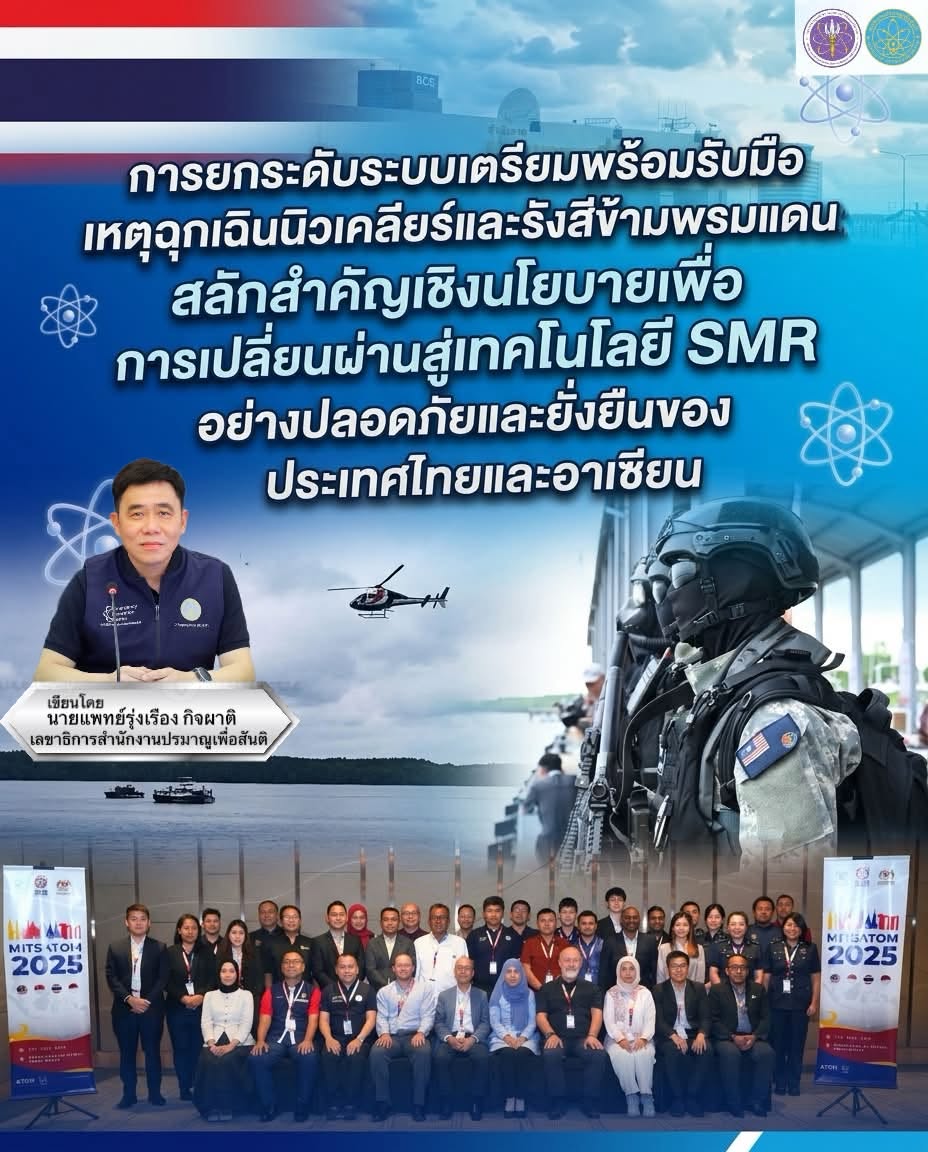
 การยกระดับระบบเตรียมพร้อมรับมือเหตุฉุกเฉินนิวเคลียร์และรังสีข้ามพรมแดน: สลักสำคัญเชิงนโยบายเพื่อการเปลี่ยนผ่านสู่เทคโนโลยี SMR อย่างปลอดภัยและยั่งยืนของประเทศไทยและอาเซียน
 บทนำเชิงยุทธศาสตร์:
 เทคโนโลยี SMR กับโจทย์ความปลอดภัยที่ต้องวางรากฐานล่วงหน้า
ในภาวะปัจจุบันที่ประเทศไทยกำลังศึกษาวิเคราะห์อย่างรอบด้านและเตรียมความพร้อมเชิงนโยบาย เพื่อนำเทคโนโลยีโรงไฟฟ้านิวเคลียร์ขนาดเล็ก (Small Modular Reactor: SMR) มาเป็นทางเลือกสำคัญของพลังงานสะอาด เสถียร และเป็นมิตรต่อสิ่งแวดล้อมในอนาคต
สำนักงานปรมาณูเพื่อสันติ (ปส.) ในฐานะหน่วยงานกำกับดูแลความปลอดภัยทางนิวเคลียร์และรังสีแห่งชาติ เน้นย้ำว่า “การนำเข้าเทคโนโลยีใหม่ที่ล้ำสมัย ต้องดำเนินไปควบคู่กับการสร้างโครงสร้างพื้นฐานด้านความปลอดภัย และระบบบริหารจัดการภาวะฉุกเฉินที่เข้มแข็ง ยืดหยุ่น และได้มาตรฐานสากล”
แม้ SMR จะได้รับการออกแบบเชิงวิศวกรรมให้มีระบบความปลอดภัยเชิงรับ (Passive Safety) ในระดับสูง ….
แต่การเตรียมความพร้อมและการตอบโต้ภาวะฉุกเฉินทางนิวเคลียร์และรังสี (Emergency Preparedness and Response: EPR) ยังคงเป็นภารกิจหลักที่ต้องขับเคลื่อนล่วงหน้าอย่างต่อเนื่อง เนื่องจากเหตุฉุกเฉินทางนิวเคลียร์เป็นเรื่องซับซ้อน มักเกิดขึ้นโดยไม่คาดคิด และอาจส่งผลกระทบต่อชีวิต สุขภาพ สิ่งแวดล้อม ตลอดจนความเชื่อมั่นทางเศรษฐกิจได้อย่างรวดเร็ว การสร้างระบบป้องกันและตอบโต้ที่มีประสิทธิภาพ จึงไม่อาจทำได้เพียงลำพังภายในประเทศ แต่จำเป็นต้องบูรณาการความร่วมมือข้ามพรมแดนกับประเทศเพื่อนบ้านและองค์กรสากลอย่างเป็นรูปธรรม
การซ้อมแผนฉุกเฉินภูมิภาคอาเซียน: กลไกเชื่อมโยงความปลอดภัยไร้รอยต่อเพื่อสร้างหลักประกันความปลอดภัยสูงสุดแก่ประชาชน ประเทศไทย
ปส. ได้ขับเคลื่อนการฝึกซ้อมแผนฉุกเฉินระหว่างประเทศภายใต้ พิธีสารอาเซียนว่าด้วยการเตรียมความพร้อมและการตอบโต้ภาวะฉุกเฉินทางนิวเคลียร์และรังสี (The ASEAN Protocol for Preparedness and Response to a Nuclear or Radiological Emergency) และแนวทางการสื่อสารสาธารณะระหว่างเกิดเหตุฉุกเฉินทางนิวเคลียร์และรังสีระดับภูมิภาค
การฝึกซ้อมในระดับภูมิภาคอาเซียนมุ่งเน้นการจำลองสถานการณ์ที่มีผลกระทบข้ามพรมแดน (Transboundary Impacts) ใน 2 มิติสำคัญ: 1. เหตุการณ์การแพร่กระจายของกัมมันตรังสีข้ามพรมแดน: เกิดจากการปลดปล่อยรังสีจากสถานประกอบการนิวเคลียร์ในภูมิภาค หรือโรงไฟฟ้า SMR
2. เหตุการณ์ด้านความมั่นคงปลอดภัยทางนิวเคลียร์: เกิดจากการลักลอบขนส่งวัสดุกัมมันตรังสีหรือวัสดุนิวเคลียร์ข้ามพรมแดน เพื่อนำไปใช้ก่อเหตุในประเทศเป้าหมาย
กระบวนการฝึกซ้อมนี้เชื่อมโยงผู้ปฏิบัติงานจริงใน 3 ส่วนหลัก ได้แก่ หน่วยงานบริหารจัดการเหตุฉุกเฉิน, หน่วยงานกำกับดูแลความปลอดภัยระดับชาติ (National Competent Authority: NCA) และผู้ประสานงานด้านการสื่อสารสาธารณะ (Contact for Public Communication: CPC) ซึ่งช่วยให้การแลกเปลี่ยนข้อมูลการตรวจวัดรังสี การกำหนดมาตรการป้องกันทางรังสี (Protective Action) เป็นไปตามมาตรฐานเดียวกัน ช่วยลดความซ้ำซ้อน สยบข่าวลือ สื่อสารสภาวะวิกฤตได้อย่างทันท่วงที และลดความตื่นตระหนกของสาธารณชนทั่วทั้งภูมิภาค
รูปแบบการฝึกซ้อมตามมาตรฐานสากล: จากห้องประชุมสู่การปฏิบัติการจริง
ปส. ได้จัดวางโครงสร้างและรูปแบบการฝึกซ้อมแผนฉุกเฉินทางนิวเคลียร์และรังสีอย่างเป็นระบบ โดยแบ่งออกเป็น 2 หมวดหมู่หลัก เพื่อทดสอบและพัฒนาศักยภาพของบุคลากรในทุกระดับ:
1. การฝึกซ้อมเชิงอภิปราย (Discussion-Based Exercise): เน้นการทบทวนระเบียบปฏิบัติ แลกเปลี่ยนความคิดเห็น และแก้ไขปัญหาเชิงนโยบายผ่านการสัมมนา การฝึกซ้อมบนโต๊ะ (TTX) และเกมจำลองสถานการณ์
2. การฝึกซ้อมเชิงปฏิบัติการ (Operations-Based Exercise): เน้นการลงมือปฏิบัติจริง การทดสอบสมรรถนะของเครื่องมือตรวจวัดรังสี อุปกรณ์ป้องกันภัย และการประสานงานของเจ้าหน้าที่ภาคสนาม
ยกระดับสู่มาตรฐานโลกผ่านการฝึกซ้อม ConvEx ของ IAEA
นอกเหนือจากมิติภูมิภาคอาเซียน ประเทศไทยโดย ปส. ยังได้เข้าร่วมการฝึกซ้อมระบบตอบสนองภาวะฉุกเฉินประจำปี Convention Exercises (ConvEx) ของทบวงการพลังงานปรมาณูระหว่างประเทศ (IAEA) อย่างต่อเนื่อง ซึ่งเป็นการทดสอบความพร้อมภายใต้อนุสัญญาสำคัญ 2 ฉบับ คือ อนุสัญญาว่าด้วยการแจ้งเหตุฉุกเฉินทางนิวเคลียร์โดยเร็ว และ อนุสัญญาว่าด้วยการให้ความช่วยเหลือในกรณีเกิดอุบัติเหตุทางนิวเคลียร์หรือเหตุฉุกเฉินทางรังสี
การฝึกซ้อม ConvEx แบ่งออกเป็น 3 ระดับความเข้มข้น: • ConvEx-1: ทดสอบระบบและช่องทางการสื่อสารภาวะฉุกเฉินของจุดประสานงานในประเทศสมาชิก ซึ่งต้องพร้อมติดต่อและตอบกลับได้ตลอด 24 ชั่วโมง 7 วัน (24/7)
• ConvEx-2: ทดสอบขั้นตอนปฏิบัติเฉพาะส่วน เช่น การขอรับและให้ความช่วยเหลือระหว่างประเทศ และการใช้เครื่องมือประเมินทิศทางการแพร่กระจายของสารรังสี
• ConvEx-3: การฝึกซ้อมเต็มรูปแบบ (Full-Scale Exercise) แบบต่อเนื่องหลายวัน โดยไม่จำกัดสาเหตุของเหตุการณ์ เพื่อประเมินขีดความสามารถการตอบสนองสภาวะวิกฤตขั้นสูงสุดในระดับสากล
สรุปบทบาท ปส. และข้อเสนอแนะเชิงนโยบาย
การเข้าร่วมฝึกซ้อมแผนฉุกเฉินระหว่างประเทศทั้งในระดับอาเซียนและ IAEA เป็นประจำทุกปี ไม่ใช่เพียงการทำตามพันธกรณีระหว่างประเทศเท่านั้น แต่คือ “การลงทุนเชิงสถาบัน” ที่ ปส. มุ่งมั่นดำเนินการเพื่อสะสมประสบการณ์ ทบทวนบทบาทหน้าที่ และยกระดับแผนฉุกเฉินทางนิวเคลียร์และรังสีของประเทศไทยให้ทันสมัยและสอดคล้องกับมาตรฐานโลกอยู่เสมอ
ประโยชน์เชิงนโยบายและมิติการสื่อสารแก่ผู้บริหาร ผู้เกี่ยวข้อง และประชาชน: 1. ด้านผู้กำหนดนโยบายและผู้บริหาร: การฝึกซ้อมอย่างสม่ำเสมอช่วยยืนยันความพร้อมของโครงสร้างพื้นฐานทางกฎหมาย กำลังคน และเทคโนโลยี ในการรองรับการตัดสินใจเชิงนโยบายเกี่ยวกับการเปลี่ยนผ่านทางพลังงานไปสู่ SMR อย่างปลอดภัย
2. ด้านหน่วยงานปฏิบัติและผู้เกี่ยวข้อง: เกิดการบูรณาการไร้รอยต่อระหว่างหน่วยงานกำกับดูแล หน่วยงานความมั่นคง และหน่วยแพทย์ฉุกเฉิน ทั้งในและต่างประเทศ ลดคอขวดในการส่งผ่านข้อมูลและการขอรับความช่วยเหลือ
3. ด้านประชาชนและสาธารณชน: สร้างความเชื่อมั่นว่าประเทศไทยมีระบบเฝ้าระวังและแจ้งเตือนภัยรังสีข้ามพรมแดนที่พึ่งพาได้ มีความโปร่งใส และพร้อมปกป้องความปลอดภัยของประชาชนคนไทยและประชาคมอาเซียนตลอดเวลา
สำนักงานปรมาณูเพื่อสันติ (ปส.) พร้อมทำหน้าที่เป็นเสาหลักในการกำกับดูแลความปลอดภัย วางระบบเฝ้าระวังที่เข้มแข็ง และสร้างความเชื่อมั่นสูงสุดแก่สังคม เพื่อให้ประเทศไทยก้าวสู่ยุคพลังงานสะอาดได้อย่างมั่นใจและยั่งยืน
บทความนี้เขียนโดย…
นายแพทย์รุ่งเรือง กิจผาติ เลขาธิการสำนักงานปรมาณูเพื่อสันติ กระทรวงการอุดมศึกษา วิทยาศาสตร์ วิจัยและนวัตกรรม
เอกสารอ้างอิง: รายงานการฝึกซ้อมแผนฉุกเฉินระหว่างประเทศในภูมิภาคอาเซียน เพื่อเตรียมความพร้อมรองรับเทคโนโลยีโรงไฟฟ้านิวเคลียร์ขนาดเล็ก (SMR) ของประเทศอาเซียน, ปส.
บทความนี้เผยแพร่บน Facebook สำนักงานปรมาณูเพื่อสันติ https://www.facebook.com/share/p/1FHxfMzn26/?mibextid=wwXIfr
Upgrading Transboundary Nuclear and Radiological Emergency Preparedness Systems: A Critical Policy Linchpin for Thailand and ASEAN’s Safe and Sustainable SMR Energy Transition Strategic Introduction: SMR Technology and the Imperative for Proactive Safety Foundations
In the current context where Thailand is comprehensively studying and preparing policy readiness to adopt Small Modular Reactor (SMR) technology as a clean, stable, and environmentally friendly energy alternative for the future, the Office of Atoms for Peace (OAP), as the national nuclear and radiation regulatory authority, stresses:
“The deployment of advanced new technologies must proceed hand-in-hand with building robust, resilient, and internationally benchmarked safety infrastructure and emergency management systems.”
Although SMRs are engineered with high-level passive safety features, Emergency Preparedness and Response (EPR) remains a core mission that must be continuously driven in advance. Because nuclear and radiological emergencies are highly complex, unpredictable, and capable of rapidly impacting lives, public health, the environment, and economic confidence, establishing effective prevention and response systems cannot be achieved by any single country alone. Concrete cross-border collaboration with neighboring nations and international organizations is essential.
ASEAN Regional Emergency Exercises: Seamless Coordination for Maximum Public Safety
To ensure the highest level of public safety, OAP drives Thailand’s participation in international emergency exercises under The ASEAN Protocol for Preparedness and Response to a Nuclear or Radiological Emergency and regional public communication guidelines during nuclear and radiological emergencies.
ASEAN regional exercises focus on simulating scenarios with transboundary impacts across two critical dimensions:
1. Transboundary Radiological Dispersal Incidents: Caused by radiological releases from nuclear facilities or SMR power plants within the region.
2. Nuclear Security Incidents: Arising from the illicit trafficking of radioactive or nuclear materials across borders intended for malicious acts in target countries.
This exercise framework connects key operational players across three primary sectors: Emergency Management Agencies, National Competent Authorities (NCA), and Contacts for Public Communication (CPC).
This integrated approach facilitates standardized data exchange on radiation measurements and protective action criteria, eliminates redundancies, counters rumors, enables swift crisis communication, and alleviates public anxiety across the entire ASEAN region.
Internationally Standardized Exercise Modalities: From Tabletop Strategy to Field Operations
OAP systematically structures nuclear and radiological emergency response exercises into two main categories to test and build capacity across all operational levels:
1. Discussion-Based Exercises: Focus on reviewing operating procedures, exchanging policy perspectives, and solving strategic challenges through seminars, workshops, Tabletop Exercises (TTX), and gaming simulations.
2. Operations-Based Exercises: Focus on hands-on field execution, testing equipment performance, verifying radiation detection instruments, and evaluating real-time field coordination through drills, functional exercises, and full-scale exercises.
Elevating to Global Benchmarks via IAEA ConvEx Exercises
Beyond the ASEAN regional framework, Thailand, through OAP, actively participates in the International Atomic Energy Agency’s (IAEA) annual Convention Exercises (ConvEx). These exercises evaluate national readiness under two core international conventions: the Convention on Early Notification of a Nuclear Accident and the Convention on Assistance in the Case of a Nuclear Accident or Radiological Emergency.
ConvEx exercises are structured across three levels of intensity:
• ConvEx-1: Tests emergency communication channels and point-of-contact responsiveness among member states, requiring 24/7 operational availability and rapid response verification.
• ConvEx-2: Evaluates specific functional components under the international EPR framework, such as exercising proper communication protocols, international assistance request workflows, and tools for radiological dispersion modeling and trend forecasting.
• ConvEx-3: A multi-day, full-scale exercise designed to evaluate international response capabilities during severe, complex nuclear or radiological emergencies without limiting the scenario’s origin.
OAP’s Pivotal Role and Strategic Policy Recommendations
Annual participation in regional ASEAN and IAEA emergency exercises represents far more than fulfilling international obligations; it is an essential “institutional investment.”
Through these exercises, OAP continuously gathers operational experience, reviews regulatory roles, and modernizes Thailand’s national nuclear emergency framework to align seamlessly with global safety standards.
Key Policy Takeaways and Communication Insights for Executives, Stakeholders, and the Public:
1. For Policymakers and Executives: Regular exercise participation validates the readiness of Thailand’s legal infrastructure, human resources, and technical capabilities, supporting informed policy decisions toward a safe transition to SMR technology.
2. For Operational Agencies and Stakeholders: Fosters seamless integration among domestic regulatory bodies, national security agencies, first responders, and international partners—eliminating information bottlenecks during crisis response.
3. For the General Public: Instills confidence that Thailand maintains a dependable, transparent, and proactive transboundary radiological monitoring and early warning system dedicated to protecting citizens and the broader ASEAN community.
The Office of Atoms for Peace (OAP) remains steadfast as the primary regulatory pillar—building robust safety frameworks and ensuring highest public trust as Thailand advances confidently toward a sustainable clean energy future.
Written by:
Dr. Rungrueng Kitphati, Secretary-General, Office of Atoms for Peace, Ministry of Higher Education, Science, Research and Innovation (MHESI)
Reference: Report on International Emergency Response Exercises in the ASEAN Region for SMR Technology Readiness in ASEAN Member States, OAP.
สำนักงานปรมาณูเพื่อสันติ (ปส.) กระทรวงการอุดมศึกษา วิทยาศาสตร์ วิจัยและนวัตกรรม (อว.)
เผยแพร่โดย : กลุ่มเผยแพร่และประชาสัมพันธ์ สำนักงานเลขานุการกรม เบอร์โทรศัพท์ภายใน 1110 , 1120


