
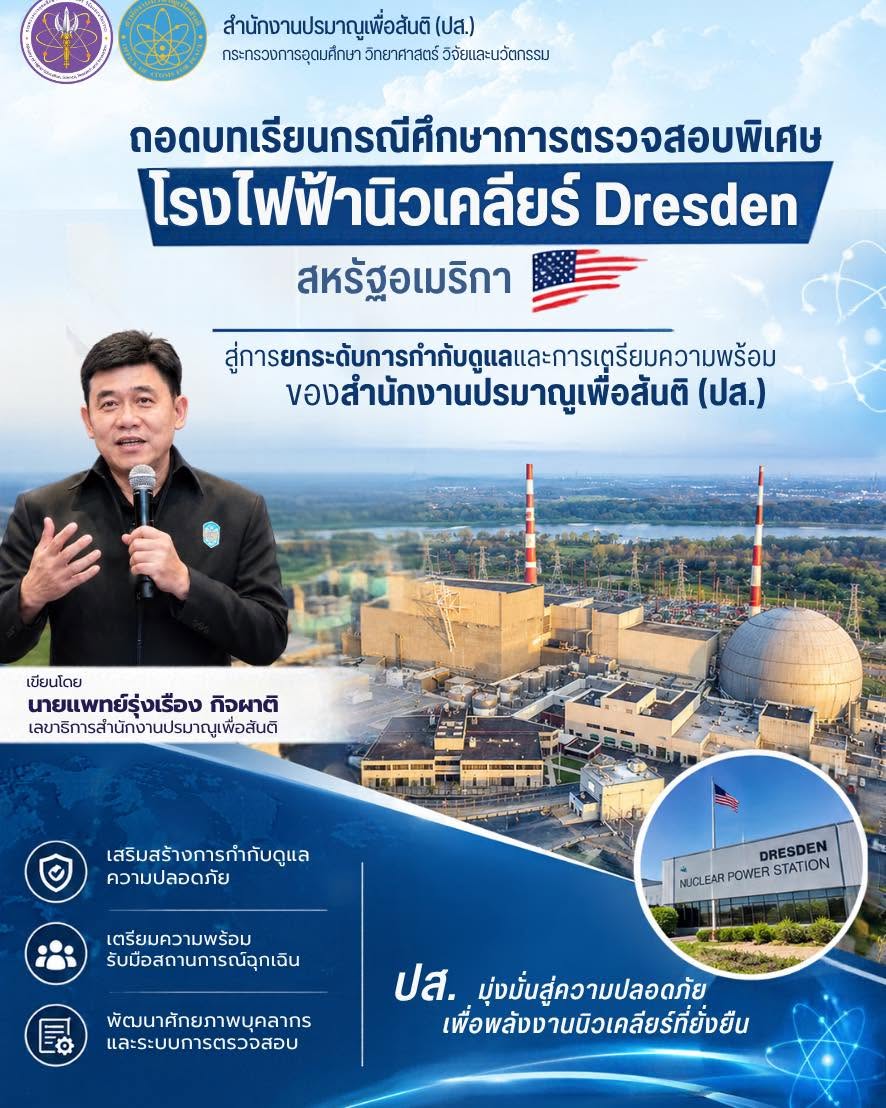
 ถอดบทเรียนกรณีศึกษาการตรวจสอบพิเศษโรงไฟฟ้านิวเคลียร์ Dresden สหรัฐอเมริกา สู่การยกระดับการกำกับดูแลและการเตรียมความพร้อมของสำนักงานปรมาณูเพื่อสันติ (ปส.)
 บทนำ:
บทนำ: สัญญาณเตือนจากระบบความปลอดภัยที่ถูกมองข้าม
เมื่อวันที่ 14 ตุลาคม 2569 คณะกรรมาธิการกำกับดูแลนิวเคลียร์แห่งสหรัฐอเมริกา (NRC) ได้ประกาศเริ่มดำเนินการตรวจสอบพิเศษ (Special Inspection) ณ โรงไฟฟ้าพลังงานนิวเคลียร์ Dresden ในเมืองมอร์ริส รัฐอิลลินอยส์ ซึ่งดำเนินการโดยบริษัท Constellation Energy การตรวจสอบนี้เกิดขึ้นภายหลังจากมีการตรวจพบว่าขั้วต่อแบตเตอรี่มีสภาพถูกกัดกร่อนและแตกหักระหว่างกระบวนการบำรุงรักษา
แม้เหตุการณ์ดังกล่าวจะไม่ได้ส่งผลกระทบต่อสุขภาพและความปลอดภัยของประชาชน แต่ประเด็นที่น่ากังวลในมุมมองด้านความปลอดภัยคือ แบตเตอรี่ชุดนี้เป็นส่วนหนึ่งของระบบไฟฟ้าสำรองที่ทำหน้าที่สนับสนุนอุปกรณ์สำหรับการปิดระบบเตาปฏิกรณ์อย่างปลอดภัย (Safely shut down the reactor) ยิ่งไปกว่านั้น NRC ตัดสินใจยกระดับเป็นการตรวจสอบพิเศษเนื่องจากกระบวนการตรวจสอบตามปกติ (Routine checks) ของโรงไฟฟ้ากลับตรวจไม่พบความเสียหายนี้มาก่อน และปัญหาเกี่ยวกับแบตเตอรี่ในลักษณะคล้ายคลึงกันนี้เคยเกิดขึ้นมาแล้วในโรงไฟฟ้านิวเคลียร์แห่งอื่นๆ
 มุมมองการกำกับดูแลความปลอดภัยเชิงรุก โดย สำนักงานปรมาณูเพื่อสันติ (ปส.)
 ในฐานะหน่วยงานกำกับดูแลความปลอดภัยทางนิวเคลียร์และรังสีของประเทศไทย ปส. มองว่ากรณีศึกษาจาก NRC เป็นตัวอย่างที่ชัดเจนของ “การกำกับดูแลความปลอดภัยเชิงป้องกัน (Preventive Regulatory Oversight)” ซึ่งสะท้อนหลักการทำงานที่ ปส. ยึดถือ ดังนี้:
• การประเมินความเสี่ยงเชิงระบบ (Systemic Risk Evaluation): การที่ NRC ส่งทีมผู้ตรวจการ 2 นายลงพื้นที่ เพื่อตรวจสอบว่าความเสียหายเกิดขึ้นได้อย่างไร และเหตุใดการตรวจสอบตามปกติของโรงไฟฟ้าจึงตรวจไม่พบปัญหาให้เร็วกว่านี้ ชี้ให้เห็นว่าผู้กำกับดูแลต้องไม่พิจารณาเพียงแค่ความเสียหายตรงหน้า แต่ต้องวิเคราะห์ถึงรากเหง้าของปัญหา และประเมินว่าโรงไฟฟ้าแห่งอื่นๆ อาจเผชิญปัญหาเดียวกันหรือไม่
• ความสำคัญสูงสุดของระบบความปลอดภัยสำรอง (Redundancy Systems): อุปกรณ์สำรองฉุกเฉินต้องมีความพร้อมใช้งานตลอดเวลา การเสื่อมสภาพหรือการกัดกร่อนเพียงเล็กน้อยที่ถูกละเลย อาจนำไปสู่ความล้มเหลวของระบบความปลอดภัยหลักเมื่อเกิดวิกฤต การทบทวนอย่างอิสระโดยหน่วยงานกำกับดูแลจะช่วยให้เข้าใจถึงพัฒนาการของปัญหาและกำหนดแนวทางปรับปรุงที่จำเป็น
• ความโปร่งใสและการสื่อสารความเสี่ยง (Transparency): การที่ NRC ประกาศอย่างชัดเจนว่าจะจัดทำเอกสารรายงานผลการตรวจสอบและเผยแพร่ต่อสาธารณชนผ่านเว็บไซต์ เป็นแนวทางปฏิบัติที่เป็นเลิศในการสร้างความโปร่งใสและรักษาความเชื่อมั่นของประชาชน ซึ่งสอดคล้องกับพันธกิจในการปกป้องสุขภาพและความปลอดภัยของสาธารณชน
การเตรียมความพร้อมของ ปส. เพื่อรองรับเทคโนโลยีในอนาคต เพื่อเป็นการเตรียมความพร้อมสำหรับการกำกับดูแลเครื่องปฏิกรณ์นิวเคลียร์วิจัยที่มีอยู่ในปัจจุบัน และเทคโนโลยีโรงไฟฟ้านิวเคลียร์ขนาดเล็ก (SMR) ที่อาจเกิดขึ้นในอนาคต สำนักงานปรมาณูเพื่อสันติได้นำบทเรียนนี้มาบูรณาการเพื่อยกระดับการทำงาน ดังนี้:
1. การพัฒนากลไกการตรวจสอบพิเศษ (Special Inspection Protocol): ปส. เตรียมพร้อมกลไกการส่งผู้เชี่ยวชาญลงพื้นที่ตรวจสอบเชิงลึกทันที หากพบความผิดปกติที่อาจเป็นข้อบกพร่องเชิงระบบ แม้เหตุการณ์นั้นจะยังไม่ลุกลามสู่อุบัติเหตุก็ตาม เพื่อให้มั่นใจว่ากระบวนการกำกับดูแลสถานประกอบการยังคงมีความเข้มแข็ง
2. การกำกับดูแลการจัดการอายุการใช้งานของอุปกรณ์ (Aging Management Oversight): เพิ่มความเข้มงวดในการตรวจสอบแผนการบำรุงรักษาเชิงป้องกันของผู้รับใบอนุญาต โดยเฉพาะอุปกรณ์สำรองที่สำคัญ เพื่อป้องกันไม่ให้เกิดปัญหาซ้ำรอยในสถานประกอบการอื่นๆ
3. การยกระดับสมรรถนะผู้ตรวจการนิวเคลียร์: พัฒนาผู้ตรวจการของ ปส. ให้มีทักษะการประเมินประสิทธิภาพการตอบสนองของสถานประกอบการ และมองเห็นข้อบกพร่องที่แฝงอยู่ได้อย่างเฉียบขาด
บทสรุป เหตุการณ์ที่โรงไฟฟ้า Dresden เป็นเครื่องเตือนใจที่สำคัญว่า ในงานด้านความปลอดภัยทางนิวเคลียร์ เราไม่สามารถพึ่งพาเพียงการตรวจสอบตามปกติได้ สำนักงานปรมาณูเพื่อสันติ (ปส.) จะมุ่งมั่นยกระดับกระบวนการกำกับดูแลให้มีความเข้มแข็ง เป็นอิสระ และรู้เท่าทันความเสี่ยงอยู่เสมอ เพื่อสกัดกั้นปัญหาตั้งแต่ต้นทาง และสร้างความมั่นใจสูงสุดว่าระบบความปลอดภัยทางนิวเคลียร์ของประเทศไทยจะได้มาตรฐานสากลในทุกมิติ
บทความโดย: นายแพทย์รุ่งเรือง กิจผาติ เลขาธิการสำนักงานปรมาณูเพื่อสันติ กระทรวงการอุดมศึกษา วิทยาศาสตร์ วิจัยและนวัตกรรม
เอกสารอ้างอิง:
1. U.S. Nuclear Regulatory Commission (NRC). (14 ตุลาคม 2026). NRC Begins Special Inspection at Dresden Nuclear Power Plant (NRC NEWS No: III-26-015). Office of Public Affairs, Region III.
บทความนี้เผยแพร่ เว็บไซต์ และ Facebook สำนักงานปรมาณูเพื่อสันติ
Extracting Lessons from the U.S. Dresden Nuclear Power Plant Special Inspection to Elevate Regulatory Oversight and Preparedness of the Office of Atoms for Peace (OAP)
Introduction: A Warning Sign from an Overlooked Safety System
On October 14, 2026, the U.S. Nuclear Regulatory Commission (NRC) announced the commencement of a Special Inspection at the Dresden Nuclear Power Plant in Morris, Illinois, operated by Constellation Energy. This inspection was initiated after a battery connection was found to be corroded and broken during a maintenance procedure.
Although this incident did not impact public health and safety, the concerning issue from a safety perspective is that this battery is part of a backup power system supporting equipment used to safely shut down the reactor. Furthermore, the NRC decided to escalate this to a special inspection because the plant’s routine checks failed to detect this damage earlier, and similar battery-related issues have previously occurred at other nuclear power plants.
Proactive Safety Regulatory Perspectives by the Office of Atoms for Peace (OAP)
As Thailand’s national nuclear and radiation safety regulatory authority, OAP views the NRC case study as a clear example of “Preventive Regulatory Oversight,” which reflects OAP’s core operational principles as follows:
• Systemic Risk Evaluation: The NRC’s deployment of a two-inspector team to the site to determine how the damage occurred and why the plant’s routine inspections did not find the issue sooner indicates that regulators must not only look at the immediate damage. They must analyze the root cause and evaluate whether other power plants might face the same problem.
• The Utmost Importance of Redundancy Systems: Emergency backup equipment must be ready for operation at all times. Even minor, neglected degradation or corrosion can lead to the failure of primary safety systems during a crisis. An independent review by the regulatory body helps in understanding how the issue developed and in determining the necessary improvements.
• Transparency and Risk Communication: The NRC’s clear announcement that it will document inspection findings in a publicly available report on its website is a best practice for building transparency and maintaining public trust. This perfectly aligns with the overarching mission to protect public health and safety.
OAP’s Preparedness for Future Technologies
To prepare for the regulatory oversight of existing research nuclear reactors and potential future Small Modular Reactor (SMR) technologies, the Office of Atoms for Peace has integrated these lessons to elevate its operations as follows:
1. Developing a Special Inspection Protocol: OAP is preparing a mechanism for the immediate deployment of experts for in-depth on-site inspections if anomalies that could indicate systemic operational flaws are detected, even if the incident has not escalated into an accident. This ensures that the regulatory oversight process for licensed facilities remains robust.
2. Aging Management Oversight: Intensifying the inspection of licensees’ preventive maintenance plans, particularly for critical backup equipment, to prevent similar issues from recurring in other facilities.
3. Elevating Nuclear Inspector Competencies: Developing the skills of OAP inspectors to accurately evaluate the effectiveness of facility responses and astutely identify hidden flaws.
Conclusion
The incident at the Dresden Nuclear Power Plant serves as a crucial reminder that in the realm of nuclear safety, we cannot rely solely on routine inspections. The Office of Atoms for Peace (OAP) remains committed to elevating its regulatory processes to be robust, independent, and consistently risk-aware. This approach is designed to intercept problems at their source and provide the utmost assurance that Thailand’s nuclear safety systems will meet international standards in every dimension.
Written by:
Dr. Rungrueng Kitphati, Secretary-General, Office of Atoms for Peace, Ministry of Higher Education, Science, Research and Innovation (MHESI)
References:
1. U.S. Nuclear Regulatory Commission (NRC). (October 14, 2026). NRC Begins Special Inspection at Dresden Nuclear Power Plant (NRC NEWS No: III-26-015). Office of Public Affairs, Region III.
สำนักงานปรมาณูเพื่อสันติ (ปส.) กระทรวงการอุดมศึกษา วิทยาศาสตร์ วิจัยและนวัตกรรม (อว.)
เผยแพร่โดย : กลุ่มเผยแพร่และประชาสัมพันธ์ สำนักงานเลขานุการกรม เบอร์โทรศัพท์ภายใน 1110 , 1120


