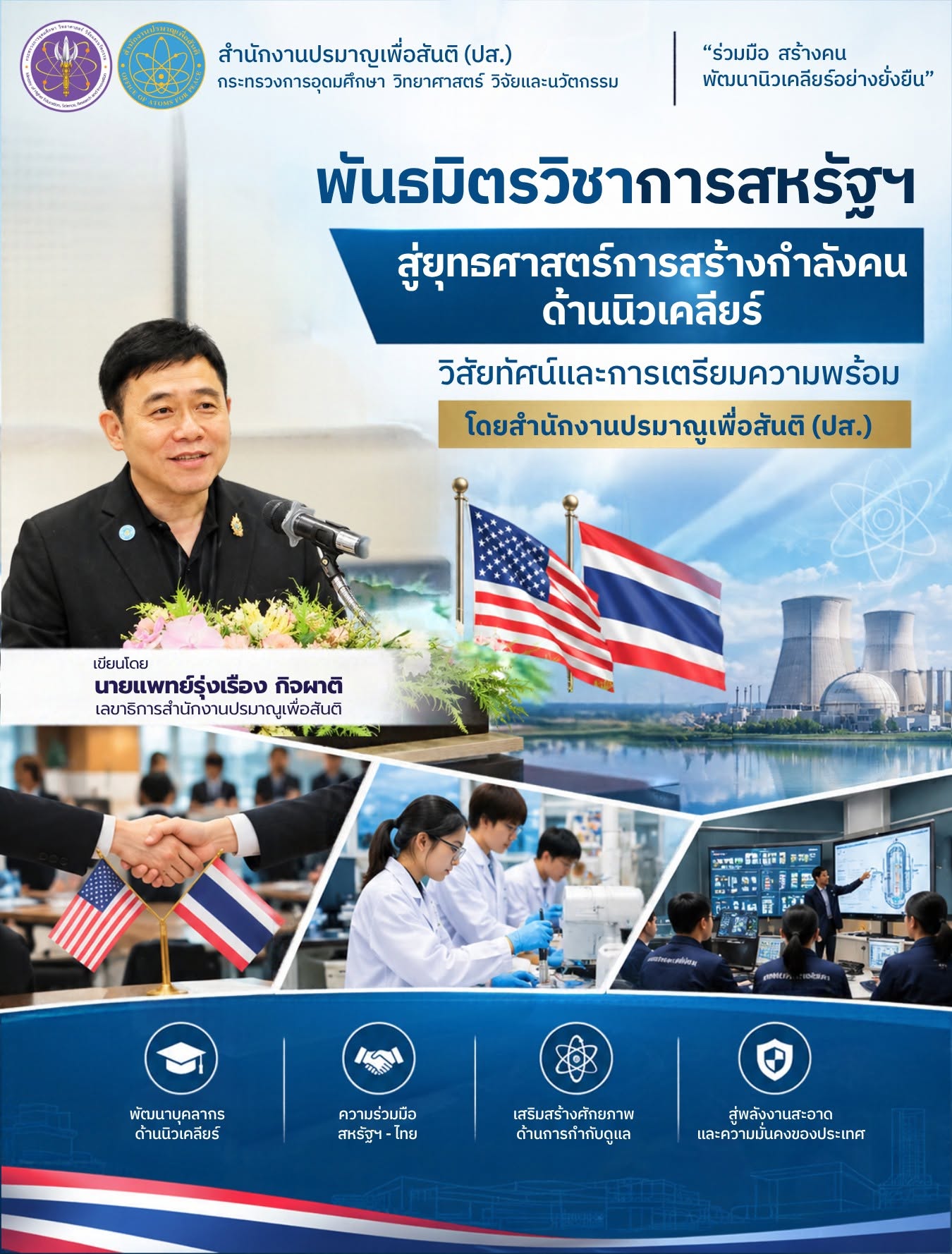
 พันธมิตรวิชาการสหรัฐฯ สู่ยุทธศาสตร์การสร้างกำลังคนด้านนิวเคลียร์: วิสัยทัศน์และการเตรียมความพร้อมโดยสำนักงานปรมาณูเพื่อสันติ (ปส.)
การประกาศจัดตั้ง New Nuclear Academic Consortium เมื่อวันที่ 16 ตุลาคม 2569 ซึ่งเป็นความร่วมมือระหว่าง Arizona State University (ASU), Purdue University และ University of Tennessee, Knoxville (UTK) สะท้อนให้เห็นถึงการพลิกโฉมยุทธศาสตร์การพัฒนากำลังคนเพื่อรองรับการขยายตัวของอุตสาหกรรมนิวเคลียร์ระดับโลก
 สำนักงานปรมาณูเพื่อสันติ (ปส.) ในฐานะหน่วยงานกำกับดูแลความปลอดภัยทางนิวเคลียร์และรังสีของประเทศไทย ได้ถอดบทเรียนจากโมเดลการศึกษาใหม่นี้ เพื่อนำมาประยุกต์ใช้ในการวางรากฐานการกำกับดูแล และเตรียมความพร้อมด้านทรัพยากรบุคคลของชาติให้สอดคล้องกับมาตรฐานสากล
 มุมมองการกำกับดูแลต่อการบูรณาการกำลังคนข้ามสาขา (Multidisciplinary Workforce)
อุตสาหกรรมนิวเคลียร์ยุคใหม่ โดยเฉพาะเทคโนโลยีเครื่องปฏิกรณ์ขนาดเล็ก (SMR) ไม่ได้ต้องการเพียงวิศวกรนิวเคลียร์โดยตรง แต่ยังพึ่งพาความเชี่ยวชาญจากวิศวกรเครื่องกล ไฟฟ้า โยธา ระบบ และผู้เชี่ยวชาญด้านความมั่นคงปลอดภัยทางไซเบอร์ โมเดลของสหรัฐฯ ที่ใช้หลักสูตรระยะสั้น (Microcredentials) สอดคล้องกับทิศทางการพัฒนาของประเทศไทย โดยเฉพาะการปรับปรุงหลักสูตรของภาควิชาวิศวกรรมนิวเคลียร์ จุฬาลงกรณ์มหาวิทยาลัย ที่เตรียมเปิดวิชาโท (Minor in Nuclear Engineering) โดยที่ในปี พ.ศ. 2570 ซึ่งเปิดโอกาสให้นิสิตสาขาอื่นสามารถเรียนต่อยอด 5 วิชา (15 หน่วยกิต)
ในมุมมองของ ปส. การเปิดกว้างนี้คือการสร้าง “ระบบนิเวศด้านความปลอดภัย (Safety Ecosystem)” ที่เข้มแข็ง การที่วิศวกรสาขาต่างๆ มีความรู้พื้นฐานด้านเทคโนโลยีเครื่องปฏิกรณ์ขั้นสูง วัฏจักรเชื้อเพลิง และระบบนิวเคลียร์กับโครงข่ายไฟฟ้า จะช่วยให้กระบวนการออกแบบ ก่อสร้าง และบำรุงรักษาสถานประกอบการทางนิวเคลียร์ในอนาคต มีการบูรณาการมาตรฐานความปลอดภัยทางรังสีเข้าไปในทุกมิติของการทำงานตั้งแต่ต้นทาง
 เทคโนโลยีจำลองเสมือนจริง (Digital Twin) กับการยกระดับการกำกับดูแล
ความร่วมมือระหว่าง Purdue University ที่มีเครื่องปฏิกรณ์วิจัย PUR-1 และ ASU ที่มีความเชี่ยวชาญด้านดิจิทัล ในการพัฒนา Digital Twin ของเครื่องปฏิกรณ์ ถือเป็นก้าวกระโดดของการเรียนรู้เสมือนจริง
สำหรับ ปส. เทคโนโลยี Digital Twin ไม่ได้เป็นเพียงเครื่องมือทางการศึกษา แต่เป็นนวัตกรรมเชิงยุทธศาสตร์สำหรับการกำกับดูแลความปลอดภัย (Regulatory Tools) ดังนี้:
การประเมินความปลอดภัยและจำลองอุบัติเหตุ: ปส. สามารถใช้แบบจำลองดิจิทัลเพื่อวิเคราะห์เหตุการณ์ฉุกเฉินหรือสภาวะการทำงานที่ผิดปกติของเครื่องปฏิกรณ์รุ่นใหม่ได้โดยไม่มีความเสี่ยงต่อประชาชน
การฝึกอบรมผู้ตรวจการนิวเคลียร์ระดับชาติ: ปส. สามารถยกระดับสมรรถนะของผู้ตรวจการ (Nuclear Inspectors) ให้คุ้นเคยกับระบบปฏิบัติการของเทคโนโลยี SMR หรือเครื่องปฏิกรณ์ขั้นสูงผ่านระบบจำลอง ก่อนลงพื้นที่ปฏิบัติงานจริง
การทดสอบระบบความมั่นคงปลอดภัยทางไซเบอร์ (Cybersecurity): Digital Twin เป็นพื้นที่ทดสอบที่สมบูรณ์แบบสำหรับการประเมินความเสี่ยงและป้องกันการโจมตีทางไซเบอร์ต่อระบบควบคุมโรงไฟฟ้านิวเคลียร์
ข้อเสนอเชิงนโยบายเพื่อการพัฒนากำลังคนของประเทศไทย
เพื่อให้ประเทศไทยก้าวทันเทคโนโลยีและมีโครงสร้างพื้นฐานด้านทรัพยากรบุคคลที่พร้อมรองรับโครงการพลังงานนิวเคลียร์ในอนาคต สำนักงานปรมาณูเพื่อสันติ (ปส.) ขอเสนอแนวทางเชิงนโยบาย ดังนี้:
1. การปรับปรุงมาตรฐานการออกใบอนุญาตบุคลากร (Licensing Framework Update): ปส. จะต้องเตรียมความพร้อมในการพัฒนากฎระเบียบและเกณฑ์การประเมินเพื่อออกใบอนุญาตผู้ปฏิบัติงานทางนิวเคลียร์ ให้รองรับผู้สมัครที่มีคุณวุฒิแบบผสมผสาน (เช่น จบวิศวกรรมไฟฟ้าควบคู่กับ Microcredentials หรือ Minor ด้านนิวเคลียร์) โดยยึดมั่นในเกณฑ์ความสามารถ (Competency-based) ตามมาตรฐานทบวงการพลังงานปรมาณูระหว่างประเทศ (IAEA)
2. การขยายเครือข่ายความร่วมมือทางวิชาการ (National Academic Consortium): รัฐบาลควรสนับสนุนงบประมาณให้ กระทรวงกาีอุดมศึกษา วิทยาศาสตร์ วิจัยและนวัตกรรม โดย ปส. บูรณาการความร่วมมือกับมหาวิทยาลัยชั้นนำ สถาบันเทคโนโลยีนิวเคลียร์แห่งชาติ (สทน.) และภาคอุตสาหกรรม ในการร่วมพัฒนาหลักสูตรและสร้างเครือข่ายผู้เชี่ยวชาญระดับประเทศ คล้ายคลึงกับความเชื่อมโยงของ UTK และ Oak Ridge National Laboratory ของสหรัฐฯ
3. การดึงดูดและรักษาบุคลากร (Talent Retention): สร้างแรงจูงใจและเส้นทางอาชีพ (Career Path) ที่ชัดเจนสำหรับบุคลากรข้ามสาขาที่สนใจเข้าสู่งานด้านการกำกับดูแลความปลอดภัยทางนิวเคลียร์ เพื่อให้ ปส. มีขุมกำลังผู้เชี่ยวชาญที่หลากหลายและรู้เท่าทันพลวัตของเทคโนโลยี
โมเดลการศึกษาจากสหรัฐอเมริกาเป็นเครื่องยืนยันว่า การเตรียมความพร้อมด้านนิวเคลียร์ของประเทศต้องเริ่มต้นจากการทลายกรอบการเรียนรู้แบบเดิม
สำนักงานปรมาณูเพื่อสันติ (ปส.) มุ่งมั่นที่จะทำหน้าที่เป็นกลไกสำคัญในการเชื่อมโยงมาตรฐานการกำกับดูแลเข้ากับการพัฒนากำลังคน เพื่อเป็นหลักประกันว่าประเทศไทยจะมีบุคลากรที่มีศักยภาพสูงสุด ในการขับเคลื่อนและดูแลความปลอดภัยทางนิวเคลียร์และรังสีของชาติอย่างยั่งยืน
บทความนี้เขียนโดย…
นายแพทย์รุ่งเรือง กิจผาติ เลขาธิการสำนักงานปรมาณูเพื่อสันติ กระทรวงการอุดมศึกษา วิทยาศาสตร์ วิจัยและนวัตกรรม
ขอบคุณข้อมูลจาก Nuclear Engineering, Chulalongkorn University…
แหล่งข้อมูลอ้างอิง:
1. American Nuclear Society (ANS), Three universities launch nuclear education consortium, 16 October 2026.
บทความนี้เผยแพร่ เว็บไซต์ และ Facebook สำนักงานปรมาณูเพื่อสันติ https://www.facebook.com/share/p/18XgS1A9hx/
U.S. Academic Consortium for a Nuclear Workforce Strategy: Vision and Preparedness by the Office of Atoms for Peace (OAP)
The announcement of the New Nuclear Academic Consortium on October 16, 2026—a collaboration among Arizona State University (ASU), Purdue University, and the University of Tennessee, Knoxville (UTK)—reflects a paradigm shift in workforce development strategies to support the global expansion of the nuclear industry.
The Office of Atoms for Peace (OAP), as Thailand’s national nuclear and radiation safety regulatory authority, has extracted lessons from this new educational model to lay the regulatory foundation and prepare the nation’s human resources in alignment with international standards.
Regulatory Perspectives on Integrating a Multidisciplinary Workforce
The modern nuclear industry, particularly Small Modular Reactor (SMR) technology, does not solely require direct nuclear engineers but also relies on the expertise of mechanical, electrical, civil, and systems engineers, as well as cybersecurity experts. The U.S. model utilizing short-term courses (Microcredentials) aligns with Thailand’s developmental direction. This is particularly evident in the curriculum revision by the Department of Nuclear Engineering at Chulalongkorn University, which is preparing to offer a Minor in Nuclear Engineering in 2027, providing opportunities for students from other disciplines to further their studies by taking 5 additional courses (15 credits).
From OAP’s perspective, this openness creates a robust “Safety Ecosystem.” Having engineers from various fields equipped with fundamental knowledge of advanced reactor technology, the nuclear fuel cycle, and nuclear-to-grid systems will ensure that the future design, construction, and maintenance of nuclear facilities seamlessly integrate radiation safety standards into every dimension of operation right from the start.
Digital Twin Technology and the Elevation of Regulatory Oversight
The collaboration between Purdue University, home to the PUR-1 research reactor, and ASU, renowned for its digital expertise, to develop a Digital Twin of the reactor represents a quantum leap in virtual learning.
For OAP, Digital Twin technology is not merely an educational tool but a strategic innovation for safety regulation (Regulatory Tools), as follows:
• Safety Assessment and Accident Simulation: OAP can utilize digital models to analyze emergency events or abnormal operating conditions of new-generation reactors without posing any risk to the public.
• National Nuclear Inspector Training: OAP can elevate the competencies of Nuclear Inspectors by familiarizing them with the operating systems of SMR technologies or advanced reactors via simulators before they conduct actual on-site operations.
• Cybersecurity System Testing: A Digital Twin serves as a perfect testing ground for evaluating risks and preventing cyberattacks on nuclear power plant control systems.
Policy Recommendations for Thailand’s Workforce Development
To ensure Thailand keeps pace with technological advancements and possesses a human resource infrastructure ready to support future nuclear energy projects, the Office of Atoms for Peace (OAP) proposes the following policy guidelines:
1. Licensing Framework Update: OAP must prepare to develop regulations and assessment criteria for licensing nuclear operators to accommodate applicants with hybrid qualifications (e.g., graduating in electrical engineering coupled with Microcredentials or a Minor in nuclear studies), strictly adhering to competency-based criteria in accordance with International Atomic Energy Agency (IAEA) standards.
2. National Academic Consortium Expansion: The government should allocate budgets to the Ministry of Higher Education, Science, Research and Innovation (MHESI), through OAP, to integrate collaboration with leading universities, the Thailand Institute of Nuclear Technology (TINT), and the industrial sector. This will facilitate joint curriculum development and the creation of a national network of experts, similar to the linkage between UTK and the U.S. Oak Ridge National Laboratory.
3. Talent Retention: Create clear incentives and career paths for cross-disciplinary personnel interested in entering the field of nuclear safety regulation, ensuring OAP maintains a diverse and dynamic pool of experts capable of keeping up with technological advancements.
The U.S. educational model is a testament that the country’s nuclear preparedness must begin by breaking down traditional learning frameworks.
The Office of Atoms for Peace (OAP) is committed to serving as a vital mechanism bridging regulatory standards with workforce development, guaranteeing that Thailand will possess highly capable personnel to drive and safeguard the nation’s nuclear and radiation safety sustainably.
Written by: Dr. Rungrueng Kitphati, Secretary-General, Office of Atoms for Peace, Ministry of Higher Education, Science, Research and Innovation (MHESI)
Special thanks for information from: Department of Nuclear Engineering, Chulalongkorn University
References:
1. American Nuclear Society (ANS), Three universities launch nuclear education consortium, 16 October 2026.
สำนักงานปรมาณูเพื่อสันติ (ปส.) กระทรวงการอุดมศึกษา วิทยาศาสตร์ วิจัยและนวัตกรรม (อว.)
เผยแพร่โดย : กลุ่มเผยแพร่และประชาสัมพันธ์ สำนักงานเลขานุการกรม เบอร์โทรศัพท์ภายใน 1110 , 1120


