
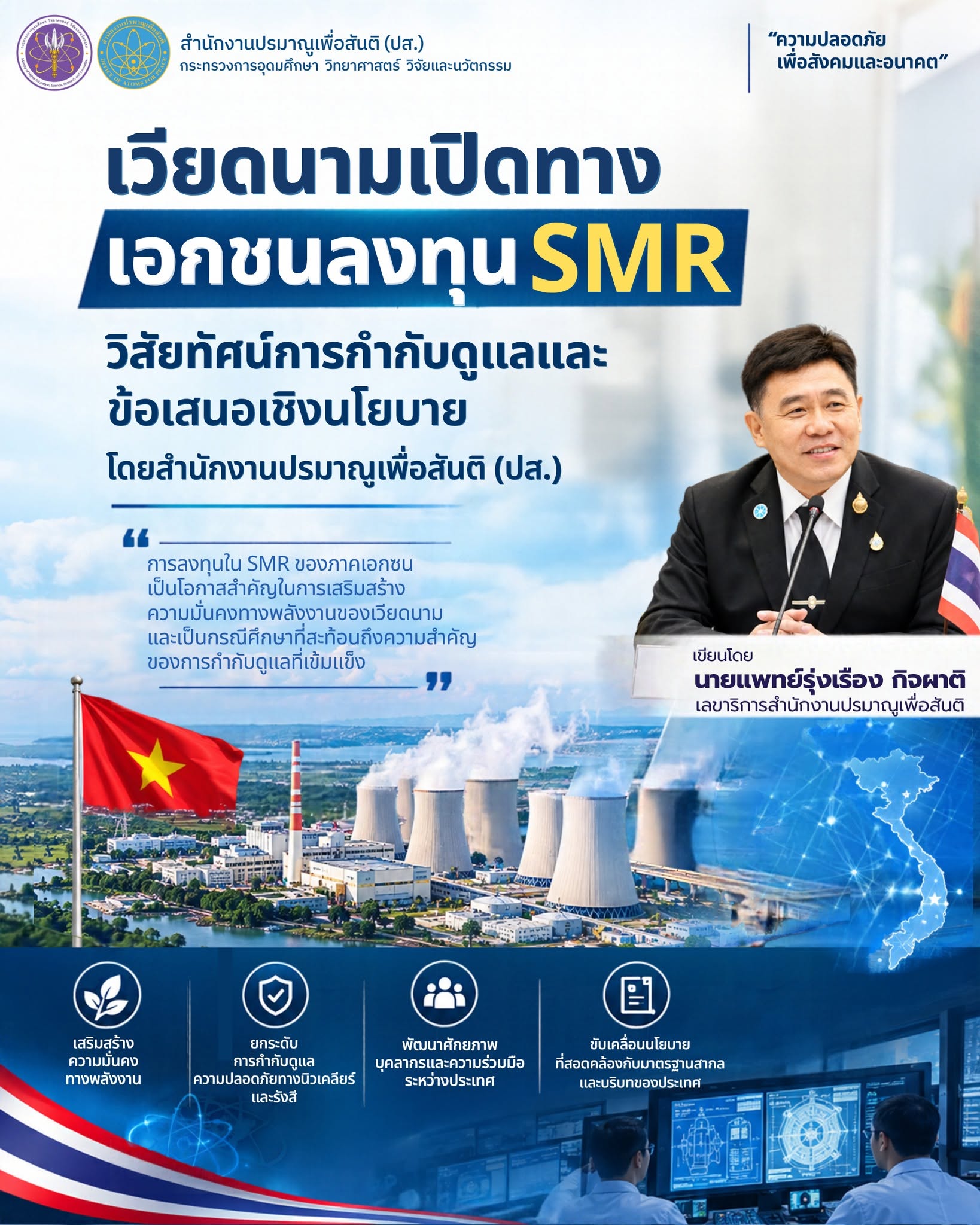
 เวียดนามเปิดทางเอกชนลงทุน SMR: วิสัยทัศน์การกำกับดูแลและข้อเสนอเชิงนโยบายโดยสำนักงานปรมาณูเพื่อสันติ (ปส.)
รัฐบาลเวียดนามได้ยื่นข้อเสนอแก้ไขกฎหมายไฟฟ้า (Law on Electricity) เมื่อวันที่ 21 ตุลาคม 2569 เพื่อเปิดโอกาสให้ภาคเอกชนและรัฐวิสาหกิจสามารถลงทุน ก่อสร้าง และดำเนินงานโรงไฟฟ้านิวเคลียร์ขนาดเล็ก (Small Modular Reactor: SMR) ได้ โดยยังคงสงวนสิทธิ์การผูกขาดโรงไฟฟ้านิวเคลียร์ขนาดใหญ่ไว้กับภาครัฐ
 สำนักงานปรมาณูเพื่อสันติ (ปส.) ในฐานะหน่วยงานกำกับดูแลความปลอดภัยทางนิวเคลียร์และรังสีของชาติ ได้วิเคราะห์การเปลี่ยนผ่านเชิงนโยบายของประเทศเพื่อนบ้านในภูมิภาคอาเซียน เพื่อเตรียมความพร้อมและกำหนดทิศทางการกำกับดูแลหากประเทศไทยมีการเปิดรับการลงทุนในลักษณะเดียวกัน
นัยสำคัญและการเปลี่ยนผ่านสู่เชิงพาณิชย์ของเทคโนโลยี SMR
เวียดนามกำลังเร่งพัฒนาระบบพลังงานเพื่อความมั่นคง โดยยุทธศาสตร์การพัฒนาและประยุกต์ใช้พลังงานปรมาณูเพื่อสันติที่รัฐบาลอนุมัติในปี 2569 ตั้งเป้าเดินเครื่องโรงไฟฟ้านิวเคลียร์ Ninh Thuan 1 และ 2 รวมถึงผลักดันโครงการ SMR อย่างน้อย 1 แห่งให้สำเร็จภายในปี 2035 การเปิดทางให้ภาคเอกชนเข้ามามีส่วนร่วมใน SMR มีนัยสำคัญหลายประการ:
• ปลดล็อกข้อจำกัดด้านเงินทุน: การพัฒนาโรงไฟฟ้านิวเคลียร์ต้องใช้เม็ดเงินลงทุนมหาศาล การเปิดโอกาสให้ภาคเอกชนร่วมระดมทุนจะช่วยลดภาระทางการคลังของรัฐ
• ขยายบทบาทภาคอุตสาหกรรม: เปิดพื้นที่ให้ผู้ประกอบการด้านพลังงานที่มีศักยภาพและเทคโนโลยีเข้ามาแข่งขันและพัฒนาโครงการ
• เพิ่มความยืดหยุ่นเชิงพื้นที่: เทคโนโลยี SMR มีความยืดหยุ่นสูง เอื้อให้การลงทุนพัฒนาโรงไฟฟ้าสอดคล้องกับขนาดและความต้องการใช้พลังงานของแต่ละพื้นที่ได้อย่างแม่นยำ
ความท้าทายและจุดยืนด้านการกำกับดูแลของ ปส. ในมุมมองของ ปส. ….การเปิดให้ภาคเอกชนลงทุนดำเนินกิจการโรงไฟฟ้านิวเคลียร์ ไม่ได้หมายถึงการพัฒนาที่ปราศจากข้อจำกัด แต่เป็นการยกระดับความท้าทายในการกำกับดูแล เพื่อให้มั่นใจว่าเป้าหมายทางธุรกิจของเอกชนจะไม่ส่งผลกระทบต่อมาตรฐานความปลอดภัย
ปส. มุ่งเน้นการวางรากฐานการกำกับดูแลในประเด็นสำคัญ ดังนี้:
• การกำหนดเงื่อนไขการออกใบอนุญาต (Licensing Process): การพิจารณาเทคโนโลยี SMR จากเอกชนต้องผ่านการประเมินความปลอดภัยเชิงวิศวกรรมและการรักษาความมั่นคงปลอดภัยทางนิวเคลียร์ขั้นสูงสุด
• ความรับผิดชอบทางกฎหมาย (Liability): ผู้ประกอบการเอกชนต้องมีกลไกความรับผิดชอบต่อความเสียหายและอุบัติเหตุทางนิวเคลียร์ที่ชัดเจนและครอบคลุม
• ความรับผิดชอบระยะยาว (Long-term Readiness): การจัดการกากกัมมันตรังสีและการรื้อถอนโรงไฟฟ้า ต้องมีแผนรองรับที่รัดกุมเพื่อป้องกันการทิ้งภาระไว้ให้สังคม
ข้อเสนอเชิงนโยบายต่อการพัฒนาโครงสร้างพื้นฐานด้าน SMR ของประเทศไทย แม้ปัจจุบันแนวทางของเวียดนามจะเป็นเพียงข้อเสนอที่อยู่ระหว่างการพิจารณา แต่ก็เป็นกรณีศึกษาที่สำคัญสำหรับการออกแบบกลไกการลงทุน SMR ของประเทศไทย หากรัฐบาลมีนโยบายสนับสนุนพลังงานนิวเคลียร์ ปส. ขอเสนอแนวทางเชิงนโยบาย ดังนี้:
1. บูรณาการกฎหมายการลงทุนกับมาตรฐานความปลอดภัย: รัฐควรออกแบบโครงสร้างการลงทุนที่ระบุบทบาทระหว่างภาครัฐ ผู้พัฒนาเทคโนโลยี ผู้ผลิตไฟฟ้า และนักลงทุนเอกชนอย่างรัดกุม โดยกรอบกฎหมายการลงทุนต้องสอดรับกับพระราชบัญญัติพลังงานนิวเคลียร์เพื่อสันติ เพื่อให้ ปส. สามารถใช้อำนาจกำกับดูแลด้านความปลอดภัยได้อย่างเด็ดขาด
2. สร้างความแข็งแกร่งให้หน่วยงานกำกับดูแล (Regulatory Empowerment): หัวใจสำคัญของการให้เอกชนร่วมลงทุน ไม่ใช่เพียงว่าใครเป็นผู้จ่ายเงิน แต่คือการมีระบบกำกับดูแลที่เข้มแข็ง รัฐควรจัดสรรทรัพยากรเพื่อเตรียมความพร้อมให้ ปส. ทั้งในด้านโครงสร้างพื้นฐานทางเทคนิค และการเร่งผลิตบุคลากรผู้เชี่ยวชาญด้านการประเมินเทคโนโลยี SMR
3. กำหนดกลไกการจัดหาเงินทุนสำหรับการจัดการกากกัมมันตรังสี: รัฐต้องกำหนดเงื่อนไขให้ผู้ลงทุนเอกชนจัดตั้งกองทุน หรือวางหลักประกันทางการเงินตั้งแต่วันแรกของการดำเนินโครงการ เพื่อครอบคลุมค่าใช้จ่ายในการจัดการกากกัมมันตรังสีและการเลิกดำเนินงาน (Decommissioning) ตลอดวงจรชีวิตของโรงไฟฟ้า
การพัฒนาเทคโนโลยี SMR ให้เกิดขึ้นจริง ต้องอาศัยความสมดุลระหว่างรูปแบบการจัดหาเงินทุนที่เป็นไปได้เชิงพาณิชย์ และการกำกับดูแลที่เข้มงวด สำนักงานปรมาณูเพื่อสันติพร้อมทำหน้าที่เป็นกลไกหลักในการคุ้มครองประชาชน เพื่อเป็นหลักประกันว่าทุกการขับเคลื่อนนวัตกรรมพลังงานของประเทศ จะดำเนินไปภายใต้มาตรฐานความปลอดภัยสูงสุดอย่างยั่งยืน
บทความนี้เขียนโดย…
นายแพทย์รุ่งเรือง กิจผาติ เลขาธิการสำนักงานปรมาณูเพื่อสันติ กระทรวงการอุดมศึกษา วิทยาศาสตร์ วิจัยและนวัตกรรม
ขอบคุณข้อมูลจาก Nuclear Engineering, Chulalongkorn University…
เอกสารอ้างอิง
• The Star (21 October 2026): Vietnam proposes allowing private investment in SMRs
• Vietnam Ministry of Science and Technology: Strategy for Development of Atomic Energy for Peaceful Purposes
• Resolution No. 253/2025/QH15: Policies for National Energy Development
บทความนี้เผยแพร่ เว็บไซต์ และ Facebook สำนักงานปรมาณูเพื่อสันติ https://www.facebook.com/share/p/14tiDwgFDFb/
Vietnam Opens the Door for Private Investment in SMRs: Regulatory Vision and Policy Recommendations by the Office of Atoms for Peace (OAP)
On October 21, 2026, the Vietnamese government submitted a proposal to amend the Law on Electricity, opening opportunities for the private sector and state-owned enterprises to invest in, construct, and operate Small Modular Reactors (SMRs), while maintaining a state monopoly on large-scale nuclear power plants.
The Office of Atoms for Peace (OAP), as Thailand’s national nuclear and radiation safety regulatory authority, has analyzed this policy transition of its ASEAN neighbor to prepare and determine the regulatory direction should Thailand open up to similar investments.
Significance and Commercial Transition of SMR Technology
Vietnam is accelerating the development of its energy system for national security. The strategy for the development and application of atomic energy for peaceful purposes, approved by the government in 2026, aims to commission the Ninh Thuan 1 and 2 nuclear power plants and push forward at least one SMR project by 2035. Allowing private sector participation in SMRs holds several significant implications:
• Unlocking Funding Constraints: Developing nuclear power plants requires massive capital investment. Allowing the private sector to co-invest will help alleviate the government’s fiscal burden.
• Expanding the Industrial Sector’s Role: Providing space for energy entrepreneurs with potential and technology to compete and develop projects.
• Increasing Spatial Flexibility: SMR technology is highly flexible, facilitating power plant development investments that precisely match the scale and energy demands of each specific area.
Regulatory Challenges and OAP’s Stance
From OAP’s perspective, allowing the private sector to invest in and operate nuclear power plants does not equate to unrestricted development. Instead, it elevates regulatory challenges to ensure that private business objectives do not compromise safety standards.
OAP focuses on laying a regulatory foundation on the following key issues:
• Licensing Process: The consideration of SMR technologies from the private sector must undergo the highest level of engineering safety and nuclear security assessments.
• Liability: Private operators must have clear and comprehensive accountability mechanisms for nuclear damages and accidents.
• Long-Term Readiness: Radioactive waste management and power plant decommissioning must have stringent backup plans to prevent leaving a burden on society.
•
Policy Recommendations for the Development of Thailand’s SMR Infrastructure
Although Vietnam’s approach is currently a proposal under consideration, it serves as a crucial case study for designing Thailand’s SMR investment mechanisms. Should the Thai government have a policy to support nuclear energy, OAP proposes the following policy guidelines:
1. Integrate Investment Laws with Safety Standards: The state should design an investment structure that strictly defines the roles among the government sector, technology developers, power producers, and private investors. The investment legal framework must align with the Nuclear Energy for Peace Act to enable OAP to exercise decisive safety regulatory authority.
2. Regulatory Empowerment: The core of allowing private co-investment is not merely about who funds it, but having a robust regulatory system. The state should allocate resources to prepare OAP in terms of technical infrastructure and accelerating the production of experts in SMR technology assessment.
3. Establish Financing Mechanisms for Radioactive Waste Management: The state must set conditions for private investors to establish a fund or place financial guarantees from day one of the project’s operation to cover the costs of radioactive waste management and decommissioning throughout the power plant’s lifecycle.
Realizing SMR technology requires a balance between commercially viable financing models and stringent regulatory oversight. The Office of Atoms for Peace stands ready to serve as the primary mechanism for public protection, guaranteeing that every drive for the country’s energy innovation will proceed sustainably under the highest safety standards.
Written by:
Dr. Rungrueng Kitphati, Secretary-General, Office of Atoms for Peace, Ministry of Higher Education, Science, Research and Innovation (MHESI)
Special thanks for information from: Department of Nuclear Engineering, Chulalongkorn University
References
• The Star (21 October 2026): Vietnam proposes allowing private investment in SMRs
• Vietnam Ministry of Science and Technology: Strategy for Development of Atomic Energy for Peaceful Purposes
• Resolution No. 253/2025/QH15: Policies for National Energy Development
สำนักงานปรมาณูเพื่อสันติ (ปส.) กระทรวงการอุดมศึกษา วิทยาศาสตร์ วิจัยและนวัตกรรม (อว.)
เผยแพร่โดย : กลุ่มเผยแพร่และประชาสัมพันธ์ สำนักงานเลขานุการกรม เบอร์โทรศัพท์ภายใน 1110 , 1120


