
การพัฒนาและนำเทคโนโลยีพลังงานนิวเคลียร์ขั้นสูงมาใช้งานจริงจำเป็นต้องดำเนินควบคู่ไปกับกระบวนการกำกับดูแลความปลอดภัยนิวเคลียร์และรังสีที่รัดกุม เข้มงวด และเป็นไปตามมาตรฐานสากล
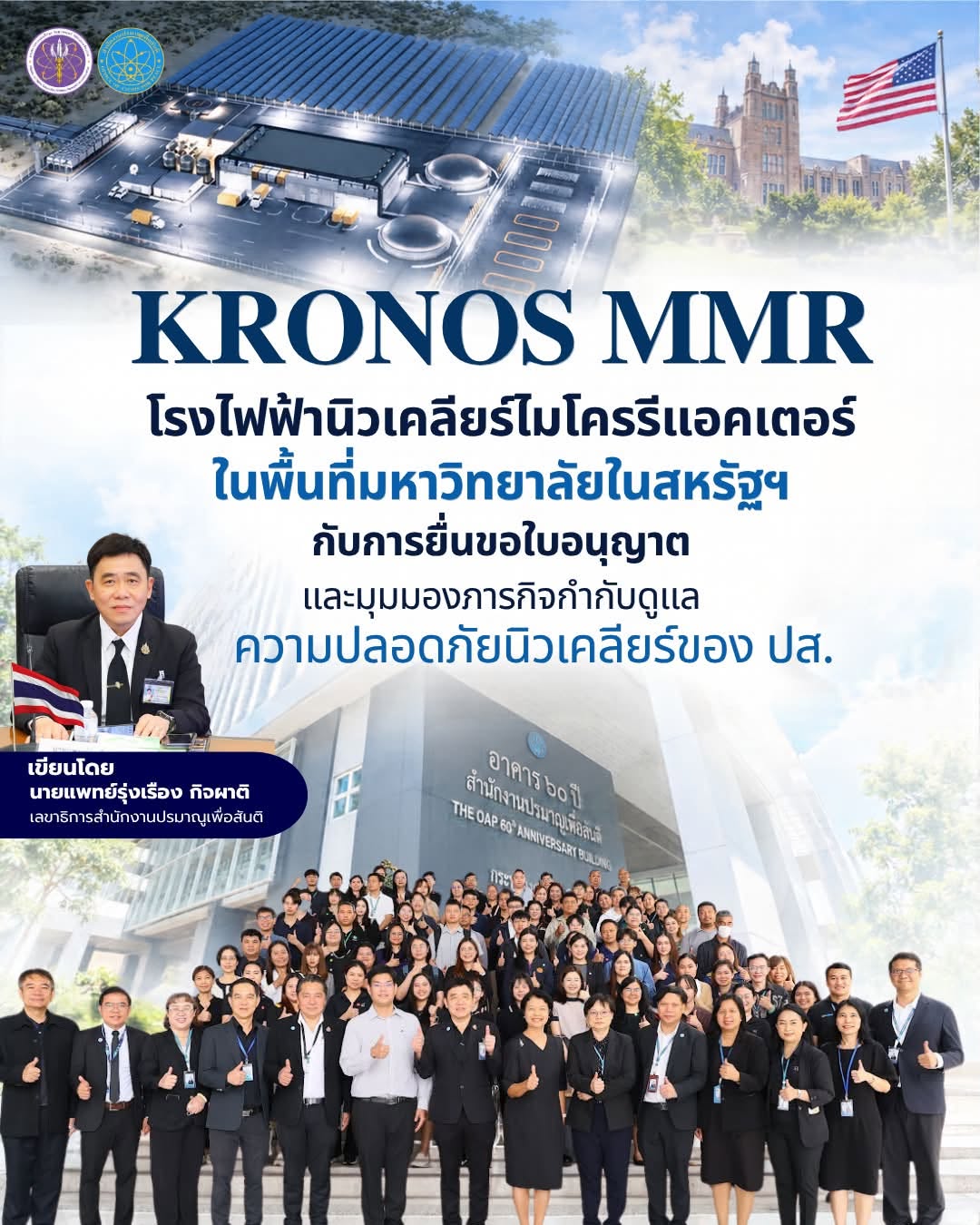
 กรณีศึกษาล่าสุดเกิดขึ้นเมื่อบริษัท NANO Nuclear Energy ร่วมกับ University of Illinois Urbana-Champaign (UIUC) เปิดเผยความคืบหน้าโครงการ KRONOS Micro Modular Reactor (MMR) ซึ่งกำลังอยู่ระหว่างกระบวนการตรวจสอบทางเทคนิคและความปลอดภัยของคำขอใบอนุญาตก่อสร้าง (Construction Permit Application) โดยคณะกรรมการกำกับดูแลนิวเคลียร์สหรัฐฯ (U.S. Nuclear Regulatory Commission หรือ US NRC)
 โครงการดังกล่าวมุ่งติดตั้งเครื่องปฏิกรณ์นิวเคลียร์ขนาดเล็กมาก (Microreactor) ในพื้นที่มหาวิทยาลัย เพื่อใช้ประโยชน์สำหรับการวิจัย การศึกษา การพัฒนาบุคลากร และการสาธิตเทคโนโลยี ซึ่งนับเป็นกรณีศึกษาสำคัญสำหรับหน่วยงานกำกับดูแลนิวเคลียร์ทั่วโลก รวมถึง สำนักงานปรมาณูเพื่อสันติ (ปส.) ในฐานะหน่วยงานกำกับดูแลความปลอดภัยทางนิวเคลียร์และรังสีของประเทศไทย ตามพระราชบัญญัติพลังงานนิวเคลียร์เพื่อสันติ พ.ศ. 2559 และที่แก้ไขเพิ่มเติม
คุณลักษณะทางเทคนิคของ KRONOS MMR และประเด็นที่ต้องประเมินความปลอดภัย
KRONOS MMR เป็นเครื่องปฏิกรณ์นิวเคลียร์ขนาดเล็กที่ใช้เทคโนโลยีระบายความร้อนด้วยก๊าซอุณหภูมิสูง (High-Temperature Gas-Cooled Reactor: HTGR) โดยมีรายละเอียดทางวิศวกรรมที่หน่วยงานกำกับดูแลต้องประเมินอย่างละเอียด ดังนี้
1. กำลังความร้อน 45 MWth: เป็นกำลังความร้อนที่เกิดจากปฏิกิริยาฟิชชันภายในแกนปฏิกรณ์ ไม่ใช่กำลังไฟฟ้าสุทธิที่ส่งเข้าสู่ระบบ ในมุมมองการกำกับดูแล ความร้อนระดับนี้ต้องการการวิเคราะห์พฤติกรรมทางอุณหภูมิศาสตร์อย่างรัดกุม เพื่อรับประกันว่าระบบสามารถถ่ายเทและรองรับภาระความร้อนในทุกสภาวะการทำงานได้อย่างปลอดภัย
2. ก๊าซฮีเลียมเป็นสารหล่อเย็น: ฮีเลียมทำหน้าที่รับและถ่ายเทความร้อนจากแกนปฏิกรณ์ เนื่องจากเป็นก๊าซเฉื่อยที่ไม่ทำปฏิกิริยาเคมีกับวัสดุส่วนใหญ่ จึงช่วยลดความเสี่ยงด้านการกัดกร่อนและการระเบิดจากปฏิกิริยาเคมี อย่างไรก็ดี หน่วยงานกำกับดูแลยังต้องตรวจสอบระบบกักเก็บก๊าซความดันสูงเพื่อป้องกันการรั่วไหลภายใต้สภาวะการทำงานจริง
3. เชื้อเพลิง TRISO: เป็นอนุภาคเชื้อเพลิงขนาดเล็กที่ห่อหุ้มด้วยชั้นวัสดุเซรามิกหลายชั้น ทำหน้าที่เป็นแนวกักเก็บผลิตผลฟิชชันและช่วยเพิ่มความสามารถในการทนต่ออุณหภูมิสูงล่วงพ้นขีดปกติ จัดเป็นระบบความปลอดภัยเชิงรับ (Passive Safety) ซึ่งต้องผ่านการพิสูจน์สมรรถนะและผลการทดสอบทางวิศวกรรมอย่างชัดเจน
4. ระบบกักเก็บพลังงานความร้อนด้วยเกลือหลอมเหลว (TESS): ใช้สำหรับการกักเก็บพลังงานความร้อนเพื่อช่วยบริหารและปรับการจ่ายพลังงาน ในทางกำกับดูแล จำเป็นต้องประเมินจุดเชื่อมต่อระหว่างวงจรปฏิกรณ์นิวเคลียร์และวงจรความร้อนภายนอก เพื่อป้องกันความเสี่ยงจากการแทรกแซงหรือการปนเปื้อนข้ามระบบ
ลำดับเหตุการณ์และขั้นตอนการพิจารณาของ NRC
กระบวนการตรวจสอบคำขอใบอนุญาตก่อสร้างของโครงการนี้มีลำดับขั้นตอนและเป้าหมายการดำเนินงาน ดังนี้
• 31 มีนาคม 2026: UIUC ยื่นคำขอใบอนุญาตก่อสร้างต่อ NRC
• 18 พฤษภาคม 2026: NRC รับคำขอเข้าสู่กระบวนการพิจารณาอย่างเป็นทางการ
• 23 มิถุนายน 2026: เริ่มกิจกรรมการตรวจสอบทางเทคนิคและความปลอดภัยอย่างเป็นทางการ
• 13 ตุลาคม 2026: NANO Nuclear รายงานความก้าวหน้าในการจัดส่งข้อมูลทางเทคนิคเพิ่มเติมตามข้อซักถามของ NRC
เป้าหมายกำหนดการถัดไปของ NRC:
⁃ กุมภาพันธ์ 2027:
จัดทำร่างรายงานประเมินสิ่งแวดล้อม (Draft Environmental Assessment) และร่างรายงานประเมินความปลอดภัย (Draft Safety Evaluation)
⁃ พฤษภาคม 2027:
ออกรายงานประเมินสิ่งแวดล้อมฉบับสุดท้าย (Final Environmental Assessment)
⁃ กันยายน 2027:
ออกรายงานประเมินความปลอดภัยฉบับสุดท้าย (Final Safety Evaluation)
หากได้รับการอนุมัติและปฏิบัติตามเงื่อนไขครบถ้วน คาดว่าโครงการอาจเริ่มกิจกรรมก่อสร้างระยะแรกได้ในช่วงครึ่งหลังของปี 2027
หลักการกำกับดูแล: การรับคำขอ ไม่เท่ากับการอนุมัติให้ก่อสร้าง
ประเด็นสำคัญในทางกฎหมายและการกำกับดูแล คือการที่ NRC รับคำขอเข้าสู่กระบวนการพิจารณา ไม่ได้แปลว่า NRC ได้รับรองความปลอดภัยหรืออนุมัติให้เริ่มก่อสร้างแล้ว แต่เป็นเพียงจุดเริ่มต้นของการตรวจสอบข้อมูลหลักฐานทางวิศวกรรมอย่างเป็นทางการ
กระบวนการประเมินความปลอดภัยของหน่วยงานกำกับดูแลครอบคลุม 4 ด้านหลัก ได้แก่
1. ความปลอดภัยทางวิศวกรรม: ตรวจสอบการออกแบบแกนปฏิกรณ์ ระบบหล่อเย็น ระบบควบคุม และโครงสร้างการป้องกันเชิงลึก (Defense-in-Depth)
2. การวิเคราะห์และเหตุผิดปกติ: ประเมินแบบจำลองอุบัติเหตุเพื่อให้แน่ใจว่าระบบสามารถตัดการทำงานหรือระบายความร้อนได้เองอย่างปลอดภัยโดยไม่ต้องพึ่งพาระบบไฟฟ้าภายนอก
3. ผลกระทบต่อสิ่งแวดล้อมและรังสี: พิจารณาการบริหารจัดการกากกัมมันตรังสี การปลดปล่อยสารรังสี และผลกระทบต่อระบบนิเวศโดยรอบ
4. กระบวนการขอใบอนุญาตแบบแยกระยะ: ใบอนุญาตก่อสร้าง (Construction Permit) และใบอนุญาตเดินเครื่อง (Operating License) เป็นคนละขั้นตอนกัน ผู้พัฒนาโครงการต้องผ่านการประเมินความปลอดภัยอย่างครบถ้วนในแต่ละขั้นตอนก่อนเริ่มดำเนินงานจริง
บทเรียนและการเตรียมความพร้อมของสำนักงานปรมาณูเพื่อสันติ (ปส.)
การพัฒนาเทคโนโลยีเครื่องปฏิกรณ์ขนาดเล็ก (SMRs/Microreactors) ในต่างประเทศ สะท้อนให้เห็นว่าการนำเทคโนโลยีนิวเคลียร์มาใช้งานจริงไม่ได้ขึ้นอยู่กับความพร้อมทางเทคโนโลยีเพียงอย่างเดียว แต่ต้องอาศัยโครงสร้างพื้นฐานด้านการกำกับดูแลที่เข้มแข็ง สำนักงานปรมาณูเพื่อสันติ (ปส.) ในฐานะหน่วยงานกำกับดูแลของไทย ได้ถอดบทเรียนเพื่อเตรียมความพร้อมใน 5 มิติสำคัญ ดังนี้
1. การพัฒนากรอบกฎหมายและกฎระเบียบ (Regulatory Framework): ปรับปรุงและจัดทำกฎกระทรวง ประกาศ และข้อกำหนดด้านความปลอดภัยนิวเคลียร์ให้ครอบคลุมเทคโนโลยีรุ่นใหม่ เช่น HTGR หรือ Microreactor ซึ่งมีลักษณะทางเทคนิคแตกต่างจากเครื่องปฏิกรณ์น้ำมวลเบาแบบเดิม
2. การยกระดับศักยภาพบุคลากรกำกับดูแล (Regulatory Body Capacity Building): เร่งพัฒนาความเชี่ยวชาญของพนักงานเจ้าหน้าที่และนักวิเคราะห์ความปลอดภัย ในการประเมินรายงานการวิเคราะห์ความปลอดภัย (Safety Analysis Report: SAR) และการประเมินความเสี่ยงทางวิศวกรรมขั้นสูง
3. การกำหนดเกณฑ์ประเมินสถานที่ตั้ง (Site Evaluation Criteria): กำหนดหลักเกณฑ์การประเมินความปลอดภัยของพื้นที่ติดตั้ง ทั้งด้านธรณีวิทยา สภาพอากาศ แหล่งน้ำ ภัยธรรมชาติ และระยะห่างจากชุมชน โดยเฉพาะกรณีการติดตั้งเครื่องปฏิกรณ์ขนาดเล็กใกล้เขตเมืองหรือสถานศึกษา
4. ระบบการอนุญาตและการตรวจสอบที่โปร่งใส (Licensing & Inspection Process): วางขั้นตอนการพิจารณาใบอนุญาตที่ชัดเจนและตรวจสอบได้ ตั้งแต่การอนุมัติสถานที่ตั้ง การก่อสร้าง การเดินเครื่อง ไปจนถึงการยกเลิกการใช้งาน (Decommissioning) ตามหลักการป้องกันเชิงลึก
5. การสร้างความเชื่อมั่นและการมีส่วนร่วมของประชาชน (Public Engagement): สื่อสารข้อมูลด้านความปลอดภัยอย่างเปิดเผย ตรงไปตรงมา ตามหลักวิทยาศาสตร์ พร้อมเปิดโอกาสให้สาธารณชนมีส่วนร่วมในกระบวนการประเมินผลกระทบสิ่งแวดล้อม เพื่อสร้างความไว้วางใจในการใช้พลังงานนิวเคลียร์อย่างปลอดภัยและยั่งยืน
บทความนี้เขียนโดย…
นายแพทย์รุ่งเรือง กิจผาติ เลขาธิการสำนักงานปรมาณูเพื่อสันติ กระทรวงการอุดมศึกษา วิทยาศาสตร์ วิจัยและนวัตกรรม
ขอบคุณข้อมูลจาก Nuclear Engineering, Chulalongkorn University…
KRONOS MMR: Microreactor Nuclear Power Project in U.S. University Campus Steps Into Construction Licensing
— Insights from Office of Atoms for Peace (OAP) Regulatory Oversight Mission
The actual deployment and commercialization of advanced nuclear technology must proceed hand-in-hand with strict, rigorous nuclear and radiation safety regulatory processes aligned with international standards.
A recent significant case study emerged when NANO Nuclear Energy, in collaboration with the University of Illinois Urbana-Champaign (UIUC), revealed progress on the KRONOS Micro Modular Reactor (MMR) program.
The project is currently undergoing technical and safety evaluation of its Construction Permit Application (CPA) by the U.S. Nuclear Regulatory Commission (US NRC).
This project aims to construct a microreactor within a university campus to support research, education, workforce development, and nuclear technology demonstration. It serves as a vital case study for nuclear regulators worldwide, including Thailand’s Office of Atoms for Peace (OAP)—the national regulatory authority governing nuclear and radiation safety under the Nuclear Energy for Peace Act B.E. 2559 (2016) and its amendments.
Technical Features of KRONOS MMR and Key Safety Assessment Aspects
The KRONOS MMR is a micro-scale High-Temperature Gas-Cooled Reactor (HTGR). Its key engineering specifications require rigorous evaluation by regulatory bodies:
1. Thermal Power of 45 MWth: Represents the thermal energy produced by fission inside the reactor core, not the net electrical output delivered to the grid. From a regulatory standpoint, this power level demands thorough thermal-hydraulic analysis to guarantee that the system can safely transfer and remove decay heat under all operating conditions.
2. Helium Gas Coolant: Helium serves as the primary coolant transferring heat from the core. Being a chemically inert gas that does not react with structural materials, it significantly reduces corrosion risks and chemical explosion hazards. Nevertheless, regulators must scrutinize the high-pressure gas retention boundaries to prevent potential leakage during operation.
3. TRISO Fuel: Microscopic fuel particles encapsulated within multiple ceramic coating layers act as a primary containment boundary against fission product release and withstand extreme temperatures far beyond conventional limits. As a key passive safety feature, its long-term performance must be proven through validated engineering tests.
4. Thermal Energy Storage System (TESS): Utilizes molten salt thermal storage to manage and balance thermal output. Regulators must evaluate the physical and functional interfaces between the nuclear reactor loop and external thermal circuits to prevent cross-system contamination or operational interference.
NRC Review Timeline and Licensing Schedule
The safety review process for the Construction Permit Application follows key milestones and target schedules set by the US NRC:
• March 31, 2026: UIUC submits the Construction Permit Application to the NRC.
• May 18, 2026: NRC formally dockets the application for detailed review.
• June 23, 2026: Formal technical and safety review activities commence.
• October 13, 2026: NANO Nuclear reports progress on responding to NRC requests for additional technical information.
NRC Target Schedule for Next Steps:
• February 2027: Issuance of the Draft Environmental Assessment (Draft EA) and Draft Safety Evaluation Report (Draft SER).
• May 2027: Publication of the Final Environmental Assessment (Final EA).
• September 2027: Publication of the Final Safety Evaluation Report (Final SER).
Subject to regulatory approvals and meeting all compliance conditions, initial site construction activities are anticipated to begin in the second half of 2027.
Regulatory Principles: Application Acceptance Does Not Equal Construction Approval
A critical principle in nuclear law and regulation is that formal acceptance of an application for review by the NRC does not signify safety endorsement or construction authorization. It merely marks the beginning of an independent, evidence-based technical audit.
Regulatory safety evaluations encompass four primary dimensions:
1. Engineering Safety: Comprehensive review of core design, cooling systems, control mechanisms, and Defense-in-Depth structures.
2. Accident and Transient Analysis: Evaluation of accident scenario modeling to ensure the reactor can safely shut down and remove heat passively without requiring offsite electrical power.
3. Environmental and Radiological Impact: Assessment of radioactive waste management, effluent releases, and ecological impacts surrounding the facility.
4. Two-Step Licensing Framework: Construction Permits and Operating Licenses are distinct regulatory steps. Project developers must fulfill complete safety mandates at each stage before operations can commence.
Lessons and Strategic Readiness for the Office of Atoms for Peace (OAP)
The global momentum surrounding Small Modular Reactors (SMRs) and Microreactors demonstrates that deploying advanced nuclear technology depends as heavily on robust regulatory infrastructure as it does on technological readiness. The Office of Atoms for Peace (OAP) has extracted 5 key takeaways to strengthen Thailand’s regulatory framework:
1. Regulatory Framework Enhancement: Updating and establishing ministerial regulations, rules, and technical standards tailored for next-generation technologies like HTGRs and Microreactors, which feature design characteristics distinct from traditional Light Water Reactors (LWRs).
2. Regulatory Body Capacity Building: Upgrading the technical competence of regulatory inspectors and safety assessors to evaluate advanced Safety Analysis Reports (SAR) and probabilistic risk assessments.
3. Site Evaluation Criteria: Establishing safety criteria for site evaluation covering geology, meteorology, water resources, natural hazards, and emergency planning zones—especially when considering microreactors located near urban areas or academic institutions.
4. Transparent Licensing and Inspection Systems: Defining clear, predictable, and traceable licensing steps from site approval, construction, and commissioning to eventual decommissioning, anchored in Defense-in-Depth principles.
5. Public Trust and Engagement: Communicating safety facts transparently and scientifically while facilitating public participation in environmental assessments to build enduring trust in safe nuclear energy utilization.
Written by: Dr. Rungrueng Kitphati, M.D. Secretary-General, Office of Atoms for Peace (OAP) Ministry of Higher Education, Science, Research and Innovation (MHESI)
Special thanks for technical information: Department of Nuclear Engineering, Faculty of Engineering, Chulalongkorn University.
บทความนี้เผยแพร่บน Facebook สำนักงานปรมาณูเพื่อสันติ https://www.facebook.com/share/p/19rogpQsoM/?mibextid=wwXIfr
สำนักงานปรมาณูเพื่อสันติ (ปส.) กระทรวงการอุดมศึกษา วิทยาศาสตร์ วิจัยและนวัตกรรม (อว.)
เผยแพร่โดย : กลุ่มเผยแพร่และประชาสัมพันธ์ สำนักงานเลขานุการกรม เบอร์โทรศัพท์ภายใน 1110 , 1120


