
เมื่อกล่าวถึงพลังงานนิวเคลียร์ ประเด็นการจัดการ “เชื้อเพลิงนิวเคลียร์ใช้แล้ว” (Spent Nuclear Fuel) ถือเป็นหนึ่งในหัวใจสำคัญที่ต้องได้รับการวางแผนและกำกับดูแลอย่างรัดกุมตลอดวงจรชีวิต
 ความก้าวหน้าทางเทคโนโลยีในปัจจุบันแสดงให้เห็นว่า เชื้อเพลิงนิวเคลียร์ที่ผ่านการใช้งานแล้วไม่จำเป็นต้องเข้าสู่กระบวนการกำจัดทันที แต่สามารถจัดเก็บไว้ชั่วคราวได้อย่างปลอดภัยสูงด้วยระบบจัดเก็บแบบแห้ง (Dry Storage) บนพื้นฐานการรับรองทางวิทยาศาสตร์อย่างรอบด้าน
 กรณีศึกษาจากสหรัฐฯ:
 โครงการวิจัยขนาดยักษ์รับประกันความปลอดภัยระยะยาว
กระทรวงพลังงานสหรัฐฯ (U.S. Department of Energy: DOE) ร่วมกับ Electric Power Research Institute (EPRI) ได้ดำเนินโครงการศึกษาเชื้อเพลิงนิวเคลียร์ใช้แล้วที่มีค่าการเผาไหม้สูง (High Burnup) เพื่อรวบรวมข้อมูลพฤติกรรมทางกายภาพ สภาพวัสดุ และระดับความปลอดภัยทั้งในระหว่างการจัดเก็บและการขนส่งระยะไกล
•  ถังวิจัยพิเศษ (High Burnup Research Cask):
ถังวิจัยพิเศษ (High Burnup Research Cask):เริ่มต้นบรรจุเชื้อเพลิงใช้แล้วจากโรงไฟฟ้านิวเคลียร์ North Anna รัฐเวอร์จิเนีย และเข้าสู่ระบบจัดเก็บแบบแห้งตั้งแต่ปี 2017
• การเฝ้าระวังอย่างใกล้ชิด:
การเฝ้าระวังอย่างใกล้ชิด: มีการติดตั้งเซนเซอร์วัดอุณหภูมิภายในถังจัดเก็บมากถึง 63 จุด เพื่อติดตามการเปลี่ยนแปลงของอุณหภูมิอย่างต่อเนื่อง พร้อมประเมินความคงทนของวัสดุหุ้มแท่งเชื้อเพลิง (Fuel Cladding) ที่ทำหน้าที่กักเก็บยูเรเนียม
• ผลการตรวจสอบเบื้องต้น:
ผลการตรวจสอบเบื้องต้น: ข้อมูลจนถึงปัจจุบันยืนยันว่า ระดับอุณหภูมิภายในถังวิจัยยังคงไม่อยู่ในระดับที่เกินขีดจำกัดความปลอดภัย อย่างไรก็ตาม การทดสอบแท่งเชื้อเพลิงจริงในห้องปฏิบัติการยังเป็นขั้นตอนสำคัญเพื่อยืนยันพฤติกรรมของวัสดุเมื่อเวลาผ่านไป
•  หมุดหมายต่อไป:
หมุดหมายต่อไป: DOE เตรียมย้ายถังวิจัยดังกล่าวไปยังห้องปฏิบัติการแห่งชาติไอดาโฮ (Idaho National Laboratory: INL) เพื่อเปิดตรวจวิเคราะห์โครงสร้างชุดเชื้อเพลิงด้วยเครื่องมือเฉพาะทาง โดยมีแผนส่งมอบภายในช่วงฤดูใบไม้ร่วงปี 2027 เพื่อทำการวิจัยเชิงลึกในระยะยาว
•  มุมมองจาก ปส. :
มุมมองจาก ปส. : ถอดบทเรียนเพื่อการกำกับดูแลความปลอดภัยในประเทศไทย
สำนักงานปรมาณูเพื่อสันติ (ปส.) ในฐานะหน่วยงานกำกับดูแลความปลอดภัยทางนิวเคลียร์และรังสีของประเทศไทย ได้ติดตามและศึกษาบทเรียนจากโครงการวิจัยสากลอย่างต่อเนื่อง เพื่อนำมาประยุกต์ใช้ในการวางรากฐานโครงสร้างพื้นฐานและการกำกับดูแลความปลอดภัยในประเทศ โดยมีมิติสำคัญดังนี้:
1. การบริหารจัดการแบบครบวงจร (Life-Cycle Management): การเตรียมความพร้อมทางนิวเคลียร์ต้องไม่ได้หยุดอยู่แค่การผลิตพลังงาน แต่ต้องครอบคลุมไปถึงการวางแผนจัดเก็บ การขนส่ง และการจัดการกากกัมมันตรังสีอย่างยั่งยืน
2. ยึดหลักฐานทางวิทยาศาสตร์ (Evidence-Based Decision Making): การตัดสินใจเชิงนโยบายและมาตรการความปลอดภัย ต้องอิงจากข้อมูลการทดลองจริง ผลการติดตามสภาพวัสดุ และงานวิจัยที่พิสูจน์ได้
3. การบูรณาการความร่วมมือ: การบริหารจัดการความปลอดภัยที่มีประสิทธิภาพเกิดจากการประสานพลังอย่างเข้มแข็งระหว่างหน่วยงานกำกับดูแล ผู้ประกอบการ และสถาบันวิจัย ทั้งในและต่างประเทศ
 “สำนักงานปรมาณูเพื่อสันติ (ปส.) มุ่งมั่นยกระดับมาตรฐานการกำกับดูแลความปลอดภัยทางนิวเคลียร์และรังสีของไทย โดยยึดมั่นในข้อมูลทางวิทยาศาสตร์และมาตรฐานสากล เพื่อปกป้องประชาชน สิ่งแวดล้อม และสร้างความมั่นใจในทุกก้าวของการพัฒนาเทคโนโลยีของประเทศ”
บทความนี้เขียนโดย…
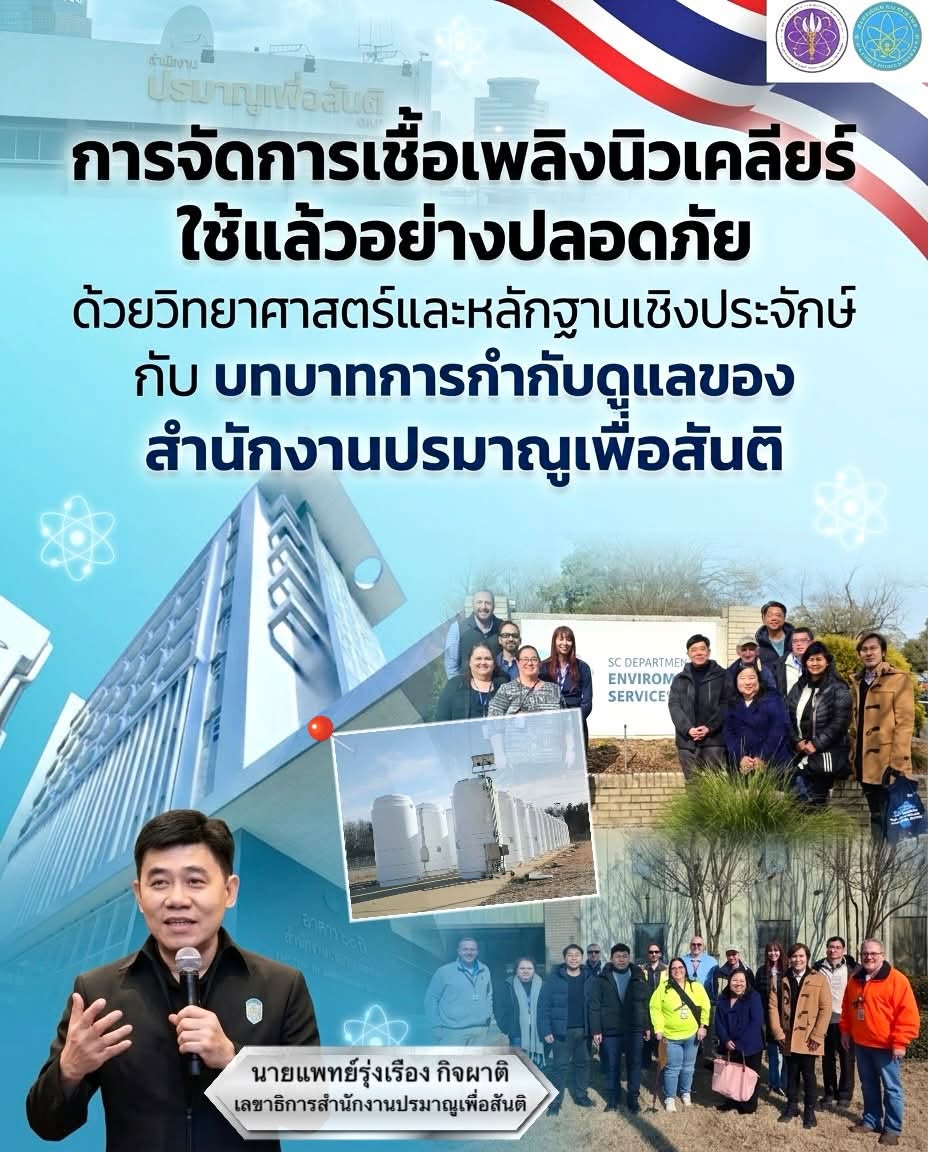
นายแพทย์รุ่งเรือง กิจผาติ เลขาธิการสำนักงานปรมาณูเพื่อสันติ กระทรวงการอุดมศึกษา วิทยาศาสตร์ วิจัยและนวัตกรรม
ขอบคุณข้อมูลจาก Nuclear Engineering, Chulalongkorn University…
อ้างอิงข้อมูล: U.S. Department of Energy, Office of Nuclear Energy (July 7, 2025)
บทความนี้เผยแพร่บน Facebook สำนักงานปรมาณูเพื่อสันติ https://www.facebook.com/share/p/18u2Ltt2VZ/?mibextid=wwXIfr
 Safe Management of Spent Nuclear Fuel Through Science and Empirical Evidence: The Regulatory Role of the Office of Atoms for Peace (OAP)
When discussing nuclear energy, the management of Spent Nuclear Fuel (SNF) is a critical element that requires rigorous planning and oversight throughout its entire life cycle.
Current technological advancements demonstrate that spent nuclear fuel does not need to be disposed of immediately. Instead, it can be safely stored in interim Dry Storage systems backed by comprehensive scientific validation.
U.S. Case Study: Mega Research Project Guaranteeing Long-Term Safety
The U.S. Department of Energy (DOE), in collaboration with the Electric Power Research Institute (EPRI), has conducted a research project on High Burnup spent nuclear fuel to gather data on physical behavior, material conditions, and safety performance during long-term storage and transportation:
• High Burnup Research Cask:
•
• Commenced dry storage in 2017, loaded with spent fuel assemblies from the North Anna Nuclear Power Plant in Virginia.
•
• Close Monitoring:
•
• Equipped with 63 temperature sensors inside the storage cask to continuously track thermal changes and evaluate the durability of the fuel cladding—the primary barrier containing the uranium fuel pellets.
•
• Preliminary Findings:
•
• Data to date confirms that internal cask temperatures remain well within safe operating limits. Nevertheless, laboratory testing of actual fuel rods remains an essential step in verifying long-term material behavior over time.
•
• Next Milestone:
•
• The DOE plans to transport the research cask to the Idaho National Laboratory (INL) for detailed structural examination using specialized equipment. Delivery is anticipated by autumn 2027 to support ongoing long-term research.
•
OAP Perspective: Translating Lessons Learned to Regulatory Oversight in Thailand
As Thailand’s regulatory authority for nuclear and radiation safety, the Office of Atoms for Peace (OAP) continuously monitors and studies lessons from international research initiatives to lay a strong foundation for domestic safety infrastructure and regulation across three core dimensions:
1. Life-Cycle Management: Nuclear readiness extends beyond energy generation to encompass comprehensive planning for interim storage, transport, and sustainable radioactive waste management.
2. Evidence-Based Decision Making: Regulatory policies and safety standards must be anchored in empirical test data, material condition monitoring, and proven scientific research.
3. Integrated Collaboration: Effective safety oversight relies on robust synergy among regulatory bodies, operators, and research institutes—both nationally and internationally.
“The Office of Atoms for Peace (OAP) is dedicated to elevating Thailand’s nuclear and radiation safety standards. Guided by scientific evidence and international best practices, we protect the public, safeguard the environment, and build confidence in every step of the nation’s technological development.”
This article was written by…
Dr. Rungrueng Kitphati
Secretary-General, Office of Atoms for Peace (OAP)
Ministry of Higher Education, Science, Research and Innovation (MHESI)
Special thanks to Nuclear Engineering, Chulalongkorn University for the information.
Source Reference: U.S. Department of Energy, Office of Nuclear Energy (July 7, 2025)
สำนักงานปรมาณูเพื่อสันติ (ปส.) กระทรวงการอุดมศึกษา วิทยาศาสตร์ วิจัยและนวัตกรรม (อว.)
เผยแพร่โดย : กลุ่มเผยแพร่และประชาสัมพันธ์ สำนักงานเลขานุการกรม เบอร์โทรศัพท์ภายใน 1110 , 1120


