
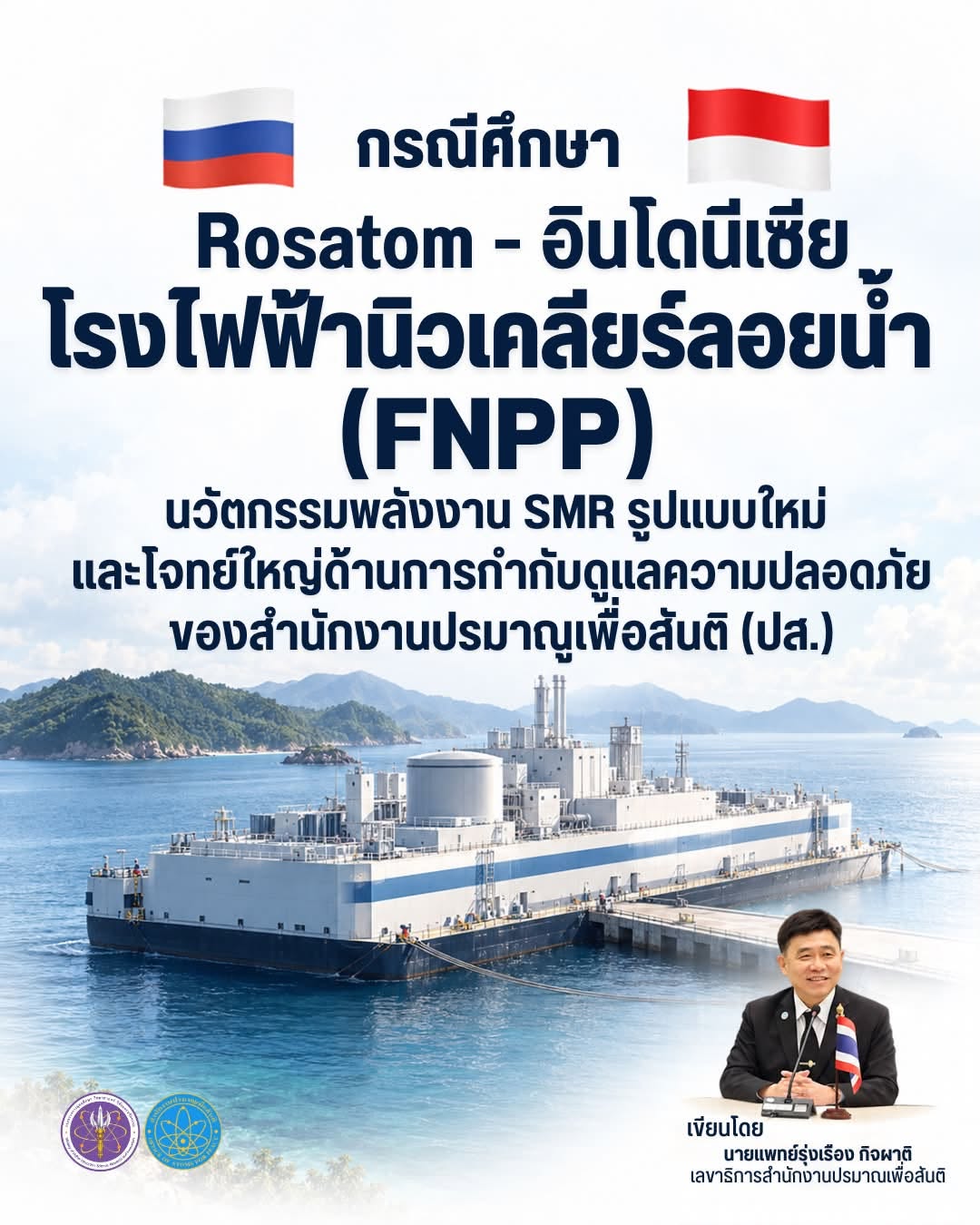
กรณีศึกษา Rosatom-อินโดนีเซีย กับโรงไฟฟ้านิวเคลียร์ลอยน้ำ (FNPP): นวัตกรรมพลังงาน SMR รูปแบบใหม่ และโจทย์ใหญ่ด้านการกำกับดูแลความปลอดภัยของ สำนักงานปรมาณูเพื่อสันติ (ปส.)
เมื่อวันที่ 16 ตุลาคม 2569 ข่าวการลงนามข้อตกลงระหว่างบริษัท Rosatom ของรัสเซีย และบริษัท PT Pembangkit Listrik Nuklir ของอินโดนีเซีย ในการจัดหาไฟฟ้าจาก โรงไฟฟ้านิวเคลียร์ลอยน้ำ (Floating Nuclear Power Plant: FNPP) ขนาดกำลังการผลิตรวม 200 MW (ใช้หน่วยลอยน้ำรุ่น FPU-100 จำนวน 2 หน่วย ติดตั้งเตาปฏิกรณ์ RITM-200M หน่วยละ 100 MW) สำหรับพื้นที่เกาะ Halmahera จังหวัด North Maluku ได้สร้างแรงกระเพื่อมสำคัญในวงการพลังงานโลก
โครงการนี้ไม่เพียงแต่เป็นก้าวสำคัญของการส่งออกไฟฟ้าจากหน่วยผลิตไฟฟ้านิวเคลียร์ลอยน้ำครั้งแรกของโลก แต่ยังเป็นกรณีศึกษาเชิงยุทธศาสตร์ที่น่าสนใจของเตาปฏิกรณ์ขนาดเล็กแบบโมดูลาร์ (Small Modular Reactor: SMR) ที่ดัดแปลงจากเทคโนโลยีเรือตัดน้ำแข็งพลังงานนิวเคลียร์มาสู่ระบบผลิตไฟฟ้าทางทะเล
ในฐานะหน่วยงานกำกับดูแลความปลอดภัยทางนิวเคลียร์และรังสีแห่งชาติ สำนักงานปรมาณูเพื่อสันติ (ปส.) มองว่าข้อตกลงนี้ไม่ได้นำเสนอเพียงโมเดลธุรกิจใหม่แบบ B2B ที่ผู้พัฒนาเป็นเจ้าของสินทรัพย์และขายไฟฟ้าในระยะยาว 60 ปีเท่านั้น แต่ยังนำมาซึ่ง “มิติการกำกับดูแลความปลอดภัย (Regulatory Governance) รูปแบบใหม่” ที่มีความซับซ้อนเฉพาะตัว ซึ่งประเทศไทยต้องศึกษาวิเคราะห์และเตรียมความพร้อมอย่างรอบด้าน
ความท้าทายเชิงเทคนิคและการกำกับดูแลความปลอดภัยทางนิวเคลียร์ลอยน้ำ (FNPP Safety Dimensions)
แม้ว่า FNPP จะใช้หลักการฟิชชันทางนิวเคลียร์พื้นฐานเช่นเดียวกับโรงไฟฟ้าบนบก แต่การนำเตาปฏิกรณ์นิวเคลียร์ไปติดตั้งอยู่บนโครงสร้างลอยน้ำกลางทะเล ทำให้หน่วยงานกำกับดูแลอย่าง BAPETEN ของอินโดนีเซีย รวมถึง ปส. ในฐานะผู้กำกับดูแล ต้องพิจารณาประเด็นความปลอดภัยทางนิวเคลียร์เพิ่มเติมที่เข้มงวดกว่าเดิม:
• ภัยพิบัติทางธรรมชาติและการเดินเรือ (Maritime & Natural Hazards): การกำกับดูแลต้องประเมินความคงทนของโครงสร้างต่อคลื่นยักษ์สึนามิ พายุหมุนไต้ฝุ่น การกัดกร่อนจากน้ำเค็ม แรงกระแทกจากการชนของเรือสินค้า หรืออุบัติเหตุการเกยตื้น
• ระบบกักเก็บและความปลอดภัยเชิงรับ (Containment & Passive Safety): ต้องวิเคราะห์สมรรถนะของระบบระบายความร้อนฉุกเฉินเมื่ออยู่ในสภาวะโครงสร้างเอียงหรือโคลงเคลงตามระลอกคลื่น เพื่อให้มั่นใจว่าระบบแกนปฏิกรณ์จะไม่เกิดความเสียหาย
• การปฏิบัติตามหลักการ 3S (ความปลอดภัย (Safety) ความมั่นคงปลอดภัย (Security) และการพิทักษ์ความปลอดภัยทางนิวเคลียร์ (Safeguards)) การคุ้มครองทางกายภาพและการป้องกันการก่อการร้ายทางทะเล (Maritime Nuclear Security) การป้องกันการโจรกรรมวัสดุนิวเคลียร์กลางทะเล ตลอดจนการตรวจสอบพิทักษ์ความปลอดภัยทางนิวเคลียร์ (IAEA Safeguards) สำหรับหน่วยผลิตที่เคลื่อนที่ได้ มีความซับซ้อนกว่าสถานประกอบการบนบกอย่างมาก
โจทย์ทางกฎหมายและระเบียบปฏิบัติข้ามสายงาน (Inter-agency & Legal Frameworks)
รายงานระบุว่าก่อนการลงนาม BAPETEN ได้เร่งหารือกรอบกฎหมายร่วมกับ Rosatom และหน่วยงานภาครัฐ ซึ่งสะท้อนถึงประเด็นทางกฎหมายนิวเคลียร์ที่ ปส. วิเคราะห์ว่าเป็นหัวใจสำคัญของการกำกับดูแล FNPP:
1. สถานะทางกฎหมายคู่ (Dual Legal Status): ตัวเรือมีสถานะเป็นทั้ง “ยานพาหนะทางทะเล” ภายใต้กฎหมายการเดินเรือสากล (IMO) และเป็น “สถานประกอบการทางนิวเคลียร์” ภายใต้กฎหมายพลังงานนิวเคลียร์เพื่อสันติ การออกใบอนุญาตจึงต้องประสานงานแบบบูรณาการระหว่างหน่วยงานกำกับดูแลนิวเคลียร์ กรมเจ้าท่า และหน่วยงานทางทะเล
2. ความรับผิดทางแพ่งกรณีเกิดความเสียหายทางนิวเคลียร์ (Nuclear Liability): โครงการข้ามพรมแดนเช่นนี้ต้องมีกรอบความรับผิดทางแพ่งที่ชัดเจน หากเกิดอุบัติเหตุรังสีรั่วไหลในเขตน้ำเค็มหรือน่านน้ำสากล ตามหลักสากลของอนุสัญญาว่าด้วยความรับผิดทางนิวเคลียร์
3. การจัดการเชื้อเพลิงใช้แล้วและกากกัมมันตรังสี (Spent Fuel & Waste Management): ต้องกำหนดสัญญากำกับการข้ามพรมแดนและการนำเชื้อเพลิงใช้แล้วกลับประเทศผู้ผลิตอย่างโปร่งใส ไม่ให้เกิดภาระกากกัมมันตรังสีค้างคาในประเทศผู้รับบริการ
มุมมองนโยบายและการเตรียมความพร้อมของประเทศไทย โดย สำนักงานปรมาณูเพื่อสันติ (ปส.)
สำหรับประเทศไทย การพัฒนาเทคโนโลยี SMR ทั้งแบบตั้งบนบกหรือแบบลอยน้ำสำหรับพื้นที่ชายฝั่งและเขตอุตสาหกรรม เป็นทางเลือกทางพลังงานที่อยู่ในความสนใจ อย่างไรก็ดี สำนักงานปรมาณูเพื่อสันติ ได้เน้นย้ำเชิงนโยบายอย่างชัดเจนว่า “ความเทคโนโลยีที่ล้ำสมัย ต้องมาพร้อมกับความพร้อมสูงสุดของระบบกำกับดูแลและความปลอดภัยของประชาชน”
ปส. กำลังดำเนินแนวทางเตรียมความพร้อมเชิงรุก ดังนี้:
• การศึกษากรอบการออกใบอนุญาต SMR/FNPP ล่วงหน้า: ปส. ปรับปรุงและพัฒนากฎหมายลูกภายใต้ พ.ร.บ. พลังงานนิวเคลียร์เพื่อสันติ ให้รองรับเกณฑ์การอนุมัติสถานที่ตั้ง (Siting) การประเมินผลกระทบสิ่งแวดล้อมและสุขภาพ (EHIA) และการประเมินความปลอดภัยของเทคโนโลยี Gen-IV และ SMR
• การวางแผนเขตพื้นที่ฉุกเฉินทางทะเล (Maritime Emergency Planning Zone – EPZ): ร่วมมือกับหน่วยงานความมั่นคงทางทะเลเพื่อกำหนดมาตรการตอบโต้เหตุฉุกเฉินทางรังสีในพื้นที่ชายฝั่ง
• การประเมินความคุ้มค่าและความปลอดภัยเชิงประจักษ์: ปส. ย้ำว่าประเทศไทยยังไม่ได้ตัดสินใจเลือกเทคโนโลยี FNPP ในทันที แต่จะใช้กรณีศึกษาของอินโดนีเซียเป็นข้อมูลเปรียบเทียบเชิงวิชาการ โดยต้องผ่านการรับฟังความคิดเห็นจากประชาชน การประเมินความเสี่ยงภัยธรรมชาติ และมาตรฐานความปลอดภัยสูงสุดของ IAEA เป็นสำคัญ
บทสรุป:
โครงการโรงไฟฟ้านิวเคลียร์ลอยน้ำ Rosatom–อินโดนีเซีย ได้พิสูจน์ให้เห็นถึงความยืดหยุ่นของเทคโนโลยี SMR ในยุคปัจจุบัน ในมิติของการกำกับดูแล สำนักงานปรมาณูเพื่อสันติ (ปส.) มุ่งมั่นทำหน้าที่เป็นผู้กำกับดูแลที่เข้มแข็ง ทันสมัย และโปร่งใส เพื่อวางรากฐานทางกฎหมายและมาตรฐานเทคนิคไว้ล่วงหน้า ให้ประชาชนคนไทยมั่นใจได้ว่า ทุกกิจกรรมทางนิวเคลียร์ในอนาคตจะตั้งอยู่บนความปลอดภัยสูงสุดเสมอ
บทความนี้เขียนโดย…
นายแพทย์รุ่งเรือง กิจผาติ เลขาธิการสำนักงานปรมาณูเพื่อสันติ กระทรวงการอุดมศึกษา วิทยาศาสตร์ วิจัยและนวัตกรรม
ขอบคุณข้อมูลจาก Nuclear Engineering, Chulalongkorn University…
ข้อมูลอ้างอิงจาก: Rosatom, Interfax, BAPETEN (30 มิถุนายน และ 16 ตุลาคม 2569)
บทความนี้เผยแพร่บน Facebook สำนักงานปรมาณูเพื่อสันติ https://www.facebook.com/share/1F3DFmPc2m/?mibextid=wwXIfr
Rosatom-Indonesia Case Study on Floating Nuclear Power Plants (FNPP): A New Form of SMR Energy Innovation and Major Regulatory Safety Challenges for the Office of Atoms for Peace (OAP)
On October 16, 2026, the agreement signed between Russia’s Rosatom and Indonesia’s PT Pembangkit Listrik Nuklir to supply electricity from a Floating Nuclear Power Plant (FNPP) with a total capacity of 200 MW (utilizing two FPU-100 floating units equipped with 100 MW RITM-200M reactors each) for Halmahera Island in North Maluku province created significant ripples in the global energy sector.
This project is not only a major milestone as the world’s first export of electricity from a floating nuclear power unit, but it also serves as an intriguing strategic case study of Small Modular Reactors (SMRs) adapted from nuclear-powered icebreaker technology into marine-based power generation systems.
As the national nuclear and radiation safety regulatory authority, the Office of Atoms for Peace (OAP) observes that this agreement presents more than just a new B2B business model—where the developer owns the asset and sells electricity over a 60-year term. It also introduces a “new paradigm of Regulatory Governance” with unique complexities that Thailand must comprehensively study, analyze, and prepare for
Technical Challenges and FNPP Safety Dimensions
Although FNPPs utilize the same fundamental nuclear fission principles as land-based power plants, installing a nuclear reactor on a floating structure at sea compels regulatory bodies like Indonesia’s BAPETEN, as well as the OAP, to consider far more stringent nuclear safety issues:
• Maritime & Natural Hazards: Regulators must evaluate the structure’s resilience against tsunamis, typhoons, saltwater corrosion, impact forces from commercial vessel collisions, or grounding accidents.
• Containment & Passive Safety: The performance of emergency cooling systems must be analyzed under conditions where the structure is tilting or swaying with ocean swells, ensuring the reactor core system remains undamaged.
• Compliance with 3S Principles (Safety, Security, Safeguards): Physical protection and maritime nuclear security against terrorism, prevention of nuclear material theft at sea, and IAEA Safeguards inspections for mobile production units are significantly more complex than for land-based facilities.
Inter-agency & Legal Frameworks
Reports indicate that prior to the signing, BAPETEN accelerated discussions on legal frameworks with Rosatom and relevant government agencies. This reflects the nuclear legal issues that the OAP identifies as the core of FNPP regulatory oversight:
1. Dual Legal Status: The vessel holds the status of both a “marine vessel” under the International Maritime Organization (IMO) laws and a “nuclear facility” under the Atomic Energy for Peace Act. Licensing therefore requires integrated coordination among the nuclear regulatory body, the marine department, and maritime authorities.
2. Nuclear Liability: Such cross-border projects require a clear civil liability framework in the event of a radiation leak in saltwater zones or international waters, in accordance with international principles of conventions on nuclear liability.
3. Spent Fuel & Waste Management: Cross-border supervision contracts and transparent repatriation of spent fuel to the manufacturer’s country must be established to prevent leaving a residual radioactive waste burden in the host country.
Policy Perspectives and Thailand’s Readiness by the Office of Atoms for Peace (OAP)
For Thailand, the development of SMR technology—whether land-based or floating for coastal and industrial areas—is an energy alternative of considerable interest. However, the Office of Atoms for Peace has clearly emphasized its policy stance: “Cutting-edge technology must be accompanied by the utmost readiness of the regulatory system and public safety.”
The OAP is currently implementing proactive preparedness guidelines as follows:
• Pre-studying the SMR/FNPP Licensing Framework: The OAP is updating and developing subordinate laws under the Atomic Energy for Peace Act to accommodate Siting approval criteria, Environmental and Health Impact Assessments (EHIA), and safety evaluations for Gen-IV and SMR technologies.
• Maritime Emergency Planning Zone (EPZ): Collaborating with maritime security agencies to establish radiation emergency response measures in coastal areas.
• Empirical Assessment of Cost-Effectiveness and Safety: The OAP emphasizes that Thailand has not yet made an immediate decision to adopt FNPP technology. Instead, the Indonesian case study will be used as comparative academic data, prioritizing public hearings, natural hazard risk assessments, and the highest IAEA safety standards.
Conclusion:
The Rosatom-Indonesia floating nuclear power plant project demonstrates the flexibility of modern SMR technology. In terms of regulatory oversight, the Office of Atoms for Peace (OAP) is committed to functioning as a robust, modern, and transparent regulator to proactively lay down the legal foundations and technical standards. This ensures the Thai public can be confident that all future nuclear activities will always be anchored in maximum safety.
Written by: Dr. Rungrueng Kitphati, Secretary-General, Office of Atoms for Peace, Ministry of Higher Education, Science, Research and Innovation (MHESI)
Special thanks for information from: Department of Nuclear Engineering, Faculty of Engineering, Chulalongkorn University
References: Rosatom, Interfax, BAPETEN (June 30 & October 16, 2026)
สำนักงานปรมาณูเพื่อสันติ (ปส.) กระทรวงการอุดมศึกษา วิทยาศาสตร์ วิจัยและนวัตกรรม (อว.)
เผยแพร่โดย : กลุ่มเผยแพร่และประชาสัมพันธ์ สำนักงานเลขานุการกรม เบอร์โทรศัพท์ภายใน 1110 , 1120


