
 การเปลี่ยนผ่านทางพลังงานและนวัตกรรมเทคโนโลยีเตาปฏิกรณ์นิวเคลียร์ขนาดเล็กแบบโมดูลาร์ (Small Modular Reactor: SMR) กำลังก้าวข้ามจากขั้นตอนการศึกษาวิจัยไปสู่กระบวนการพิจารณาอนุมัติทางกฎหมายและเทคนิคอย่างเป็นรูปธรรมในหลายประเทศทั่วโลก
อย่างไรก็ตาม กรณีศึกษาล่าสุดจากประเทศเกาหลีใต้เมื่อวันที่ 13 ตุลาคม 2569 ได้สะท้อนให้เห็นถึงโจทย์ใหญ่ที่สำคัญยิ่งในมุมมองของผู้กำกับดูแลความปลอดภัย (Regulator) นั่นคือ “ความท้าทายด้านอัตรากำลังคนและศักยภาพของบุคลากรในการประเมินความปลอดภัย”
1. สถานการณ์และวิกฤตคอขวดในเกาหลีใต้ (NSSC & KINS) ในการตรวจสอบการทำงานประจำปีของรัฐสภาเกาหลีใต้ คณะกรรมการความปลอดภัยและความมั่นคงทางนิวเคลียร์เกาหลีใต้ (Nuclear Safety and Security Commission: NSSC) และสถาบันความปลอดภัยทางนิวเคลียร์เกาหลี (Korea Institute of Nuclear Safety: KINS) ได้เปิดเผยข้อมูลเชิงลึกเกี่ยวกับภาระงานที่เพิ่มขึ้นอย่างก้าวกระโดด:
• ภาวะขาดแคลนกำลังคนในหน่วยงานกำกับดูแลหลัก (NSSC): ปัจจุบัน NSSC มีบุคลากรที่รับผิดชอบการกำกับดูแลและพิจารณาอนุมัติ SMR เพียง 7 คนเท่านั้น ซึ่งปฏิบัติงานอยู่ในโครงสร้างหน่วยงานชั่วคราว แม้จะมีแผนปรับยกระดับเป็นหน่วยงานทางการและเพิ่มเจ้าหน้าที่อีก 5 คนในปี 2027 แต่ประธาน NSSC ได้ชี้แจงต่อสภาว่า “ยังไม่เพียงพอต่อภารกิจที่เพิ่มขึ้นอย่างแน่นอน” โดย NSSC ได้เสนอแผนความต้องการอัตรากำลังคนเฉพาะงาน SMR ต่อรัฐสภา ได้แก่ ปี 2027 จำนวน 33 คน, ปี 2028 จำนวน 37 คน และปี 2029–2030 จำนวน 39 คน เพื่อตั้งเป็นหน่วยงานระดับสำนักอย่างถาวร
• ความท้าทายทางเทคนิคขององค์กรสนับสนุน (KINS): สถาบัน KINS ซึ่งเป็นองค์กรสนับสนุนทางเทคนิค (Technical Support Organization: TSO) ประเมินภารกิจเชิงลึกจนถึงปี 2035 ว่า จำเป็นต้องขยายอัตรากำลังคนเพิ่มขึ้นถึงประมาณ 180 คน โดยในจำนวนนี้มากกว่า 100 คน ต้องเป็นผู้เชี่ยวชาญเฉพาะทางสำหรับ SMR กลุ่มที่ไม่ใช่เตาปฏิกรณ์น้ำเบา (Non-Light Water Reactor SMR: Non-LWR) เนื่องจากเตาปฏิกรณ์ยุคใหม่เหล่านี้ใช้สารหล่อเย็นแบบอื่น (เช่น เกลือหลอมเหลว ก๊าซอุณหภูมิสูง หรือโลหะเหลว) และมีหลักการออกแบบเชิงวิศวกรรมที่แตกต่างจากเตาปฏิกรณ์น้ำเบาแบบดั้งเดิมอย่างสิ้นเชิง จึงต้องอาศัยระเบียบวิธีประเมินความปลอดภัย (Safety Assessment Framework) รูปแบบใหม่
• ภาระงานกระจุกตัวสะสม (Workload Bottleneck): นอกเหนือจากการพิจารณาอนุมัติแบบมาตรฐาน (Standard Design Approval) ของโครงการ i-SMR ที่เริ่มขึ้นแล้ว บุคลากรกำกับดูแลยังต้องเผชิญกับภาระงานประเมินการต่ออายุใบอนุญาตโรงไฟฟ้านิวเคลียร์เดิมที่ยื่นเข้ามาพร้อมกันถึง 10 หน่วย ซึ่งการยื่นคำขอที่กระจุกตัวพร้อมกันในเวลาเดียว ได้สร้างสภาวะคอขวดและกดดันกระบวนการตรวจสอบความปลอดภัยอย่างหนัก
2. บทวิเคราะห์ในมุมมองการกำกับดูแลความปลอดภัย (Regulatory Perspective) จากกรณีศึกษาของเกาหลีใต้ สำนักงานปรมาณูเพื่อสันติ (ปส.) วิเคราะห์ว่า ปัญหาดังกล่าวไม่ได้เกิดจากความไม่พร้อมทางเทคโนโลยี แต่เกิดจาก “การขาดสมดุลระหว่างความเร็วในการพัฒนาเทคโนโลยี กับความเร็วในการสร้างศักยภาพของหน่วยงานกำกับดูแล”
3. “ยื่นคำขอ ≠ อนุมัติทันที” แต่ความล่าช้าต้องไม่เกิดจากคนไม่พอ: ในทางกฎหมายและการกำกับดูแลความปลอดภัยทางนิวเคลียร์ กระบวนการทบทวนรายงานวิเคราะห์ความปลอดภัย (Safety Analysis Report) ต้องทำอย่างละเอียดรอบคอบโดยไม่เร่งรัดจนมองข้ามความเสี่ยง แต่หากหน่วยงานกำกับดูแลขาดแคลนบุคลากร กระบวนการพิจารณาจะล่าช้าเกินความจำเป็น ส่งผลกระทบต่อความเชื่อมั่นและกรอบเวลาการพัฒนาพลังงานของประเทศ
4. ความหลากหลายของเทคโนโลยี SMR (Non-LWR Complexity): เทคโนโลยี SMR มีความหลากหลายสูงมาก การประเมินความปลอดภัยจึงไม่สามารถใช้เกณฑ์เดียว (One-size-fits-all) กับทุกแบบได้ ผู้ตรวจสอบจำเป็นต้องมีความเชี่ยวชาญเฉพาะในฟิสิกส์ของเตาปฏิกรณ์แต่ละประเภท
5. หลักการกำกับดูแลแบบอิสระและโปร่งใส: การเพิ่มจำนวนบุคลากรและการพัฒนา TSO ต้องตั้งอยู่บนความเป็นอิสระทางวิชาการ เพื่อให้การตัดสินใจด้านความปลอดภัยเป็นไปอย่างตรงไปตรงมาและยึดถือประโยชน์ของประชาชนเป็นสำคัญ
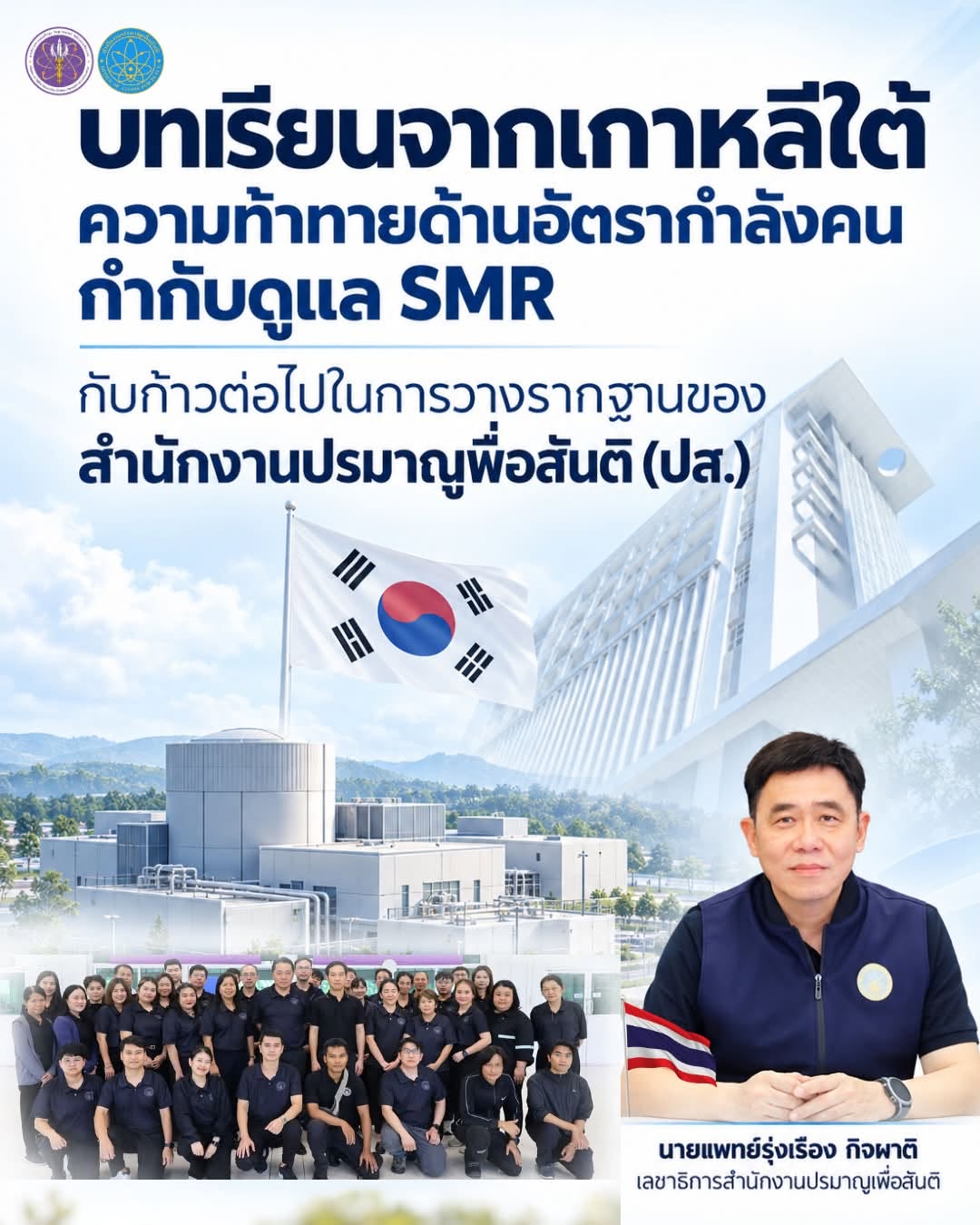
1. การวางรากฐานและเตรียมความพร้อมของประเทศไทย โดย สำนักงานปรมาณูเพื่อสันติ (ปส.) นายแพทย์รุ่งเรือง กิจผาติ เลขาธิการสำนักงานปรมาณูเพื่อสันติ ย้ำเตือนเสมอว่า “ประเทศไทยจะไม่รอให้เทคโนโลยี SMR มาถึงแล้วจึงเริ่มสร้างคน แต่ ปส. จะต้องสร้าง ‘Smart Regulator’ และวางระบบกำกับดูแลไว้ล่วงหน้า เพื่อไม่ให้ประเทศไทยต้องเผชิญกับภาวะคอขวดดังเช่นกรณีศึกษาในต่างประเทศ”
เพื่อรองรับแนวโน้มดังกล่าว สำนักงานปรมาณูเพื่อสันติ (ปส.) กระทรวงการอุดมศึกษา วิทยาศาสตร์ วิจัยและนวัตกรรม (อว.) ได้วางแนวทางการเตรียมความพร้อมเชิงรุกอย่างเป็นระบบ ดังนี้:
• การพัฒนากรอบกฎหมายและโครงสร้างองค์กรล่วงหน้า: ปส. ได้ดำเนินการทบทวนและยกร่าง พ.ร.บ. พลังงานนิวเคลียร์เพื่อสันติ และกฎกระทรวงที่เกี่ยวข้องให้รองรับการออกใบอนุญาต SMR และเทคโนโลยี Gen-IV พร้อมทั้งวางโครงสร้างการบริหารจัดการภายใน เพื่อให้อำนาจการพิจารณาอนุญาตมีความคล่องตัวและได้มาตรฐาน IAEA
• การวางแผนพัฒนาบุคลากรเฉพาะทาง (Smart Regulator Roadmap): ปส. เร่งบ่มเพาะและพัฒนาขีดความสามารถของเจ้าหน้าที่ตรวจสอบ (Inspectors) และนักวิชาการนิวเคลียร์ในศาสตร์สมัยใหม่ เช่น:
• Advanced & Non-LWR SMR Safety Assessment: การวิเคราะห์ความปลอดภัยเตาปฏิกรณ์ยุคใหม่และสารหล่อเย็นทางเลือก
• Passive Safety System Evaluation: การประเมินสมรรถนะระบบความปลอดภัยเชิงรับที่พึ่งพากฎธรรมชาติ
• Cybersecurity & AI in Nuclear Facilities: การป้องกันและกำกับดูแลความปลอดภัยทางไซเบอร์และระบบอัตโนมัติในสถานประกอบการทางนิวเคลียร์
• Generic Design Assessment (GDA): การศึกษากรอบประเมินความปลอดภัยแบบมาตรฐานเพื่อลดความซ้ำซ้อนในการขอใบอนุญาต
• การสร้างเครือข่ายความร่วมมือสากลและ TSO: ปส. กระชับความร่วมมือกับทบวงการพลังงานปรมาณูระหว่างประเทศ (IAEA) ผ่านเวที SMR Regulators’ Forum และขยายความร่วมมือกับหน่วยงานกำกับดูแลระดับโลก (เช่น U.S. NRC, NSSC/KINS) รวมทั้งดึงศักยภาพภาคสถาบันการศึกษาในประเทศมาร่วมเป็นสถาบันสนับสนุนทางเทคนิค (TSO) เพื่อเตรียมพร้อมรับมือภาระงานประเมินความปลอดภัยทางนิวเคลียร์ในอนาคต
บทสรุป: กรณีศึกษาจากเกาหลีใต้เป็นบทเรียนอันทรงคุณค่าที่ตอกย้ำว่า “กติกาที่พร้อมและคนกำกับดูแลที่เก่ง” คือหัวใจสำคัญของการนำพลังงานนิวเคลียร์มาใช้อย่างปลอดภัย สำนักงานปรมาณูเพื่อสันติ (ปส.) มุ่งมั่นทำหน้าที่ผู้กำกับดูแลที่เข้มแข็ง สร้างความพร้อมในทุกมิติ เพื่อให้ประชาชนชาวไทยมั่นใจได้ว่า ทุกกิจกรรมทางนิวเคลียร์ในประเทศไทยจะตั้งอยู่บนมาตรฐานความปลอดภัยสูงสุดในระดับสากล
บทความโดย: นายแพทย์รุ่งเรือง กิจผาติ เลขาธิการสำนักงานปรมาณูเพื่อสันติ กระทรวงการอุดมศึกษา วิทยาศาสตร์ วิจัยและนวัตกรรม ขอบคุณข้อมูลจาก: ภาควิชาวิศวกรรมนิวเคลียร์ คณะวิศวกรรมศาสตร์ จุฬาลงกรณ์มหาวิทยาลัย, SBS News (13 ตุลาคม 2026), NSSC และ KINS
Lessons from South Korea — SMR Regulatory Workforce Challenges and Next Steps in Building Foundations for the Office of Atoms for Peace (OAP)
The energy transition and technological innovations surrounding Small Modular Reactors (SMRs) are shifting from research and development stages into tangible legal and technical licensing processes across several nations worldwide.
However, a recent case study from South Korea on October 13, 2026, highlights a paramount challenge from a safety regulatory perspective:
“Workforce Capacity and Capability Constraints in Nuclear Safety Assessment.”
1. Bottlenecks and Challenges in South Korea (NSSC & KINS)
During the annual parliamentary audit of South Korea’s National Assembly, the Nuclear Safety and Security Commission (NSSC) and the Korea Institute of Nuclear Safety (KINS) disclosed key data regarding rapidly surging workloads:
• Workforce Shortages in the Primary Regulatory Authority (NSSC): Currently, the NSSC relies on a temporary unit of just 7 personnel dedicated to SMR safety regulation and licensing. Although there are plans to formalize the division and add 5 more staff members in 2027, the NSSC Chairperson testified to parliament that this remains “definitely insufficient for the growing workload.” The NSSC submitted a proposed SMR regulatory staffing roadmap to parliament requesting 33 personnel in 2027, 37 in 2028, and 39 in 2029–2030 to permanently establish a dedicated bureau.
• Technical Challenges for Technical Support Organizations (KINS): As the primary Technical Support Organization (TSO), KINS evaluated its long-term technical review requirements through 2035, projecting a need for approximately 180 additional personnel. Over 100 of these experts must specialize in Non-Light Water Small Modular Reactors (Non-LWR SMRs). Because advanced Gen-IV reactors utilize alternative coolants (such as molten salt, high-temperature gas, or liquid metal) and fundamentally different engineering design principles than traditional Light Water Reactors, they demand entirely new Safety Assessment Frameworks.
• Workload Surges and Accumulation: In addition to initiating the Standard Design Approval review for the i-SMR project, regulators face simultaneous relicensing reviews for 10 existing commercial nuclear power units. This sudden concentration of review applications has created severe workload bottlenecks, placing immense pressure on safety assessment workflows.
2. Analysis from a Nuclear Safety Regulatory Perspective
Based on South Korea’s case study, the Office of Atoms for Peace (OAP) analyzes that this issue does not stem from technological unreadiness, but rather from an “imbalance between the pace of technological deployment and the speed of building regulatory capacity.”
1. “Application Submission Does Not Equal Immediate Approval” — Yet delays must not stem from understaffing: Under nuclear law and safety regulation principles, reviewing a Safety Analysis Report (SAR) requires meticulous rigor without compromising safety for speed. However, if a regulatory body suffers from chronic understaffing, review processes experience unnecessary delays, undermining public trust and national energy timelines.
2. Technological Diversity in SMRs (Non-LWR Complexity): SMR technology encompasses vast design variations. Safety evaluation cannot rely on a “one-size-fits-all” framework; regulators and inspectors must possess deep technical expertise in the core physics of each reactor concept.
3. Independent and Transparent Regulation: Expanding human resources and strengthening TSOs must be rooted in academic and technical independence to ensure that all nuclear safety decisions remain objective, transparent, and aligned with public interest.
3. Laying Foundations and Proactive Readiness of Thailand’s Office of Atoms for Peace (OAP)
Dr. Rungrueng Kitphati, Secretary-General of the Office of Atoms for Peace, consistently emphasizes:
“Thailand will not wait for SMR technology to arrive before building human capacity. Instead, OAP must cultivate ‘Smart Regulators’ and establish regulatory frameworks in advance to prevent safety review bottlenecks like those experienced abroad.”
To address these global trends, the Office of Atoms for Peace (OAP), Ministry of Higher Education, Science, Research and Innovation (MHESI), has established a proactive roadmap:
* Proactive Legal and Organizational Framework Modernization: OAP is reviewing and drafting amendments to the Atomic Energy for Peace Act and relevant ministerial regulations to accommodate licensing for SMRs and Generation-IV technologies. Internal administrative structures are also being realigned to ensure agile, independent licensing workflows up to IAEA international standards.
* Smart Regulator Human Capital Roadmap: OAP is accelerating capacity building for nuclear inspectors and technical specialists in advanced fields, including:
* Advanced & Non-LWR SMR Safety Assessment: Analyzing safety characteristics of next-generation reactors and alternative coolants.
* Passive Safety System Evaluation: Evaluating passive safety performance governed by natural physical laws.
* Cybersecurity & AI in Nuclear Facilities: Regulating cybersecurity and automated control systems in nuclear installations.
* Generic Design Assessment (GDA): Studying standardized design pre-licensing frameworks to minimize regulatory redundancy.
* Expanding International Networks and Local TSOs: OAP is strengthening ties with the International Atomic Energy Agency (IAEA) through the SMR Regulators’ Forum and broadening bilateral cooperation with global regulatory authorities (such as U.S. NRC and South Korea’s NSSC/KINS). Additionally, OAP is leveraging domestic academic capabilities to establish local Technical Support Organizations (TSOs) to handle future technical review demands.
Conclusion: South Korea’s experience serves as a valuable lesson reinforcing that “ready regulatory rules and highly skilled regulators” are the cornerstone of safe nuclear energy deployment. The Office of Atoms for Peace (OAP) remains steadfast in its role as a strong, independent regulator—building comprehensive readiness so the Thai public can be fully confident that all nuclear activities in Thailand adhere to the highest international safety standards.
Written by: Dr. Rungrueng Kitphati, Secretary-General, Office of Atoms for Peace, Ministry of Higher Education, Science, Research and Innovation (MHESI) Special thanks for information from: Department of Nuclear Engineering, Faculty of Engineering, Chulalongkorn University; SBS News (13 October 2026); NSSC; and KINS
บทความนี้เผยแพร่บน Facebook สำนักงานปรมาณูเพื่อสันติ https://www.facebook.com/share/p/1ZFKmeWnFS/?mibextid=wwXIfr
สำนักงานปรมาณูเพื่อสันติ (ปส.) กระทรวงการอุดมศึกษา วิทยาศาสตร์ วิจัยและนวัตกรรม (อว.)
เผยแพร่โดย : กลุ่มเผยแพร่และประชาสัมพันธ์ สำนักงานเลขานุการกรม เบอร์โทรศัพท์ภายใน 1110 , 1120


