
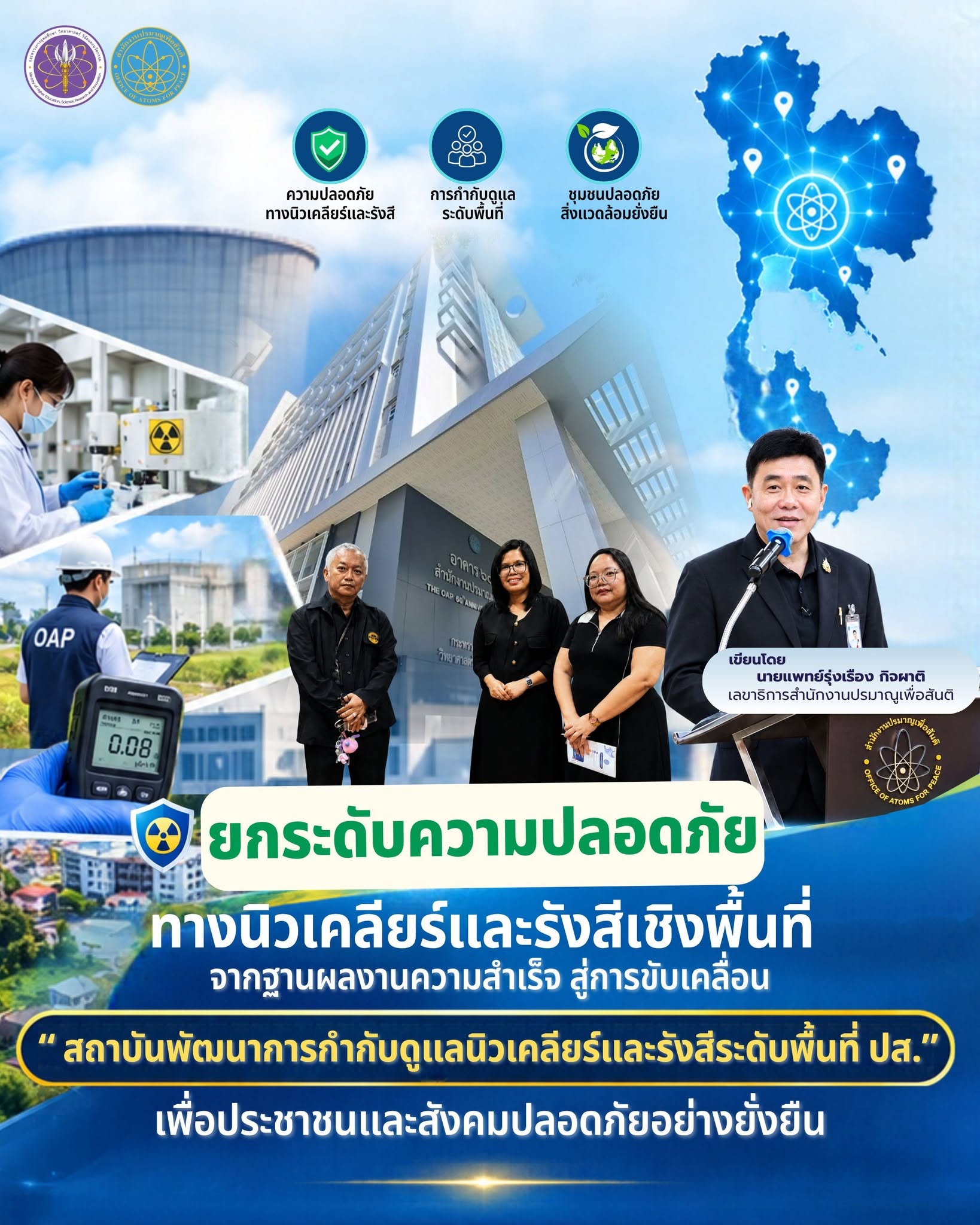
 ยกระดับความปลอดภัยทางนิวเคลียร์และรังสีเชิงพื้นที่: จากฐานผลงานความสำเร็จ สู่การขับเคลื่อน “สถาบันพัฒนาการกำกับดูแลนิวเคลียร์และรังสีระดับพื้นที่ ปส. ” เพื่อประชาชนและสังคมปลอดภัยอย่างยั่งยืน
 สำนักงานปรมาณูเพื่อสันติ (ปส.) มุ่งมั่นพัฒนาและยกระดับมาตรฐานการกำกับดูแลความปลอดภัยทางนิวเคลียร์และรังสีของประเทศไทยให้ครอบคลุมและเข้าถึงทุกภูมิภาคอย่างยั่งยืน โดยได้ถอดบทเรียนและนำผลการดำเนินงานอันโดดเด่นของศูนย์ปรมาณูเพื่อสันติภูมิภาค (ปสภ.) และสำนักงานปรมาณูเพื่อสันติ เขตภาคตะวันออก (ปสอ.) ในปีงบประมาณ พ.ศ. 2569 มาใช้เป็นองค์ความรู้ ประสบการณ์ และเครือข่ายความร่วมมือฐานรากที่สำคัญในการขับเคลื่อนภารกิจของ “สถาบันพัฒนาการกำกับดูแลนิวเคลียร์และรังสีระดับพื้นที่ (สพพ.)” ซึ่งจัดตั้งขึ้นอย่างเป็นทางการในปีงบประมาณ พ.ศ. 2570
 การจัดตั้งสถาบันพัฒนาการกำกับดูแลนิวเคลียร์และรังสีระดับพื้นที่ ในครั้งนี้ มีวัตถุประสงค์เพื่อพัฒนารูปแบบ กลไก และกระบวนการดำเนินงานด้านการกำกับดูแลนิวเคลียร์และรังสีเชิงพื้นที่ให้เป็นระบบ สอดคล้องกับบริบท ระดับความเสี่ยง และสนับสนุนการทำงานร่วมกับส่วนกลางได้อย่างมีประสิทธิภาพ โดยมีแนวทางการขับเคลื่อนภารกิจ 5 ด้านหลัก ดังนี้:
 1. การสนับสนุนการกำกับดูแลความปลอดภัยที่สอดคล้องกับบริบทพื้นที่
• ผลงานฐานราก (ปี 2569): สนับสนุนเจ้าหน้าที่ความปลอดภัยทางรังสี โดยมีผู้เข้าสอบรวม 291 คน ให้คำปรึกษาเกี่ยวกับการขอรับและการต่ออายุใบอนุญาต 20 ครั้ง และให้คำปรึกษาเกี่ยวกับการสอบขึ้นทะเบียนเจ้าหน้าที่ความปลอดภัยทางรังสี 23 ครั้ง
• ทิศทางการขับเคลื่อนของสถาบันพัฒนาการกำกับดูแลนิวเคลียร์และรังสีระดับพื้นที่: นำประสบการณ์และข้อมูลมาพัฒนารูปแบบการสนับสนุนที่ตอบโจทย์ความเสี่ยงเฉพาะพื้นที่ เช่น พื้นที่อุตสาหกรรม หรือพื้นที่ที่มีการใช้วัสดุกัมมันตรังสีและสถานประกอบการกระจายตัว พร้อมพัฒนากลไกการทำงานร่วมกับหน่วยงานส่วนกลางให้มีความชัดเจน ไม่ซ้ำซ้อน และสอดคล้องกับอำนาจหน้าที่อย่างแท้จริง
2. การเตรียมความพร้อมและการประสานงานรองรับเหตุฉุกเฉินทางนิวเคลียร์และรังสี
• ผลงานฐานราก (ปี 2569): จัดอบรมเชิงปฏิบัติการพัฒนาทักษะทีมเผชิญเหตุ 2 ครั้ง (ผู้เข้าร่วม 100 คน) และพัฒนาความพร้อมของบุคลากรด้านสาธารณสุข (ผู้เข้าร่วม 62 คน และ 37 คน) พร้อมบูรณาการความร่วมมือกับจังหวัด องค์กรปกครองส่วนท้องถิ่น โรงพยาบาล และหน่วยงานในพื้นที่
• ทิศทางการขับเคลื่อนของสถาบันพัฒนาการกำกับดูแลนิวเคลียร์และรังสีระดับพื้นที่: ต่อยอดสู่การพัฒนากลไกประสานงานระดับพื้นที่ที่ชัดเจนและเป็นระบบ กำหนดบทบาท ช่องทางการแจ้งเหตุ และการสื่อสารข้อมูล สนับสนุนการฝึกซ้อมร่วมในพื้นที่อย่างต่อเนื่อง นำผลการซ้อมมาวิเคราะห์ปรับปรุงกระบวนการให้สามารถปฏิบัติได้จริงทันทีเมื่อเกิดเหตุฉุกเฉิน
3. การพัฒนาฐานข้อมูลและการเฝ้าระวังความเสี่ยงเชิงพื้นที่
• ผลงานฐานราก (ปี 2569): ตรวจวัดก๊าซเรดอนร่วมกับสถาบันการศึกษา ตรวจสอบวัสดุกัมมันตรังสีในอุปกรณ์ที่ไม่ได้ใช้งาน และสนับสนุนการตรวจวัดเฝ้าระวังในพื้นที่ที่มีความเสี่ยงเฉพาะ
• ทิศทางการขับเคลื่อนของสถาบันพัฒนาการกำกับดูแลนิวเคลียร์และรังสีระดับพื้นที่: นำข้อมูลตรวจวัด การเฝ้าระวัง และเหตุการณ์ในพื้นที่มาวิเคราะห์ประเมินความเสี่ยง เพื่อจัดลำดับความสำคัญของพื้นที่เป้าหมาย วางแผนดำเนินงานเชิงรุกอย่างมีหลักฐานเชิงประจักษ์ พร้อมเชื่อมโยงและแลกเปลี่ยนฐานข้อมูลระหว่างหน่วยงานเพื่อใช้ประโยชน์ร่วมกันในการติดตามและตัดสินใจ
4. การสื่อสารความเสี่ยงและการเสริมสร้างความรู้ความเข้าใจแก่ประชาชน
• ผลงานฐานราก (ปี 2569): เผยแพร่ความรู้ด้านพลังงานนิวเคลียร์ รังสี และการป้องกันอันตรายแก่ประชาชนและเยาวชน ร่วมกับสถาบันการศึกษา หน่วยงานภาครัฐ และองค์กรเครือข่าย
• ทิศทางการขับเคลื่อนของสถาบันพัฒนาการกำกับดูแลนิวเคลียร์และรังสีระดับพื้นที่: พัฒนารูปแบบการสื่อสารความเสี่ยงให้เหมาะสมกับกลุ่มเป้าหมายและบริบทพื้นที่ เน้นข้อมูลที่ถูกต้อง ชัดเจน เข้าใจง่าย ส่งเสริมแนวทางการปฏิบัติตนอย่างปลอดภัย พร้อมจัดทำระบบติดตามประเมินผลการสื่อสาร เพื่อให้มั่นใจว่าประชาชนเกิดความเข้าใจและความพร้อมอย่างเป็นรูปธรรม
5. การบูรณาการเครือข่ายความร่วมมือเชิงพื้นที่อย่างยั่งยืน
• ผลงานฐานราก (ปี 2569): ประสานความร่วมมือกับภาครัฐ ท้องถิ่น สถาบันการศึกษา บุคลากรสาธารณสุข และเครือข่ายในพื้นที่ เพื่อสนับสนุนงานวิชาการ การเฝ้าระวัง การรับมือเหตุฉุกเฉิน และการสร้างความตระหนักรู้
• ทิศทางการขับเคลื่อนของสถาบันพัฒนาการกำกับดูแลนิวเคลียร์และรังสีระดับพื้นที่: สถาปนาเครือข่ายความร่วมมือให้เป็นกลไกการทำงานร่วมกันอย่างเป็นระบบ กำหนดบทบาทชัดเจน ใช้ทรัพยากรและองค์ความรู้ร่วมกันอย่างคุ้มค่า เพื่อสร้างการเชื่อมโยงการทำงานระหว่างส่วนกลางและภูมิภาคอย่างต่อเนื่องและไร้รอยต่อ
ขั้นตอนการดำเนินงานเพื่อการขับเคลื่อนอย่างเป็นรูปธรรม
สำนักงานปรมาณูเพื่อสันติ โดย สถาบันพัฒนาการกำกับดูแลนิวเคลียร์และรังสีระดับพื้นที่ จะใช้แนวทางการออกแบบ พัฒนา ทดลอง และปรับปรุง (Design-Test-Improve) ดังนี้:
1. ศึกษาวิเคราะห์ บริบทการใช้นิวเคลียร์และรังสี รวมถึงระดับความเสี่ยงของแต่ละพื้นที่
2. รับฟังความคิดเห็น และร่วมออกแบบกระบวนการทำงานกับผู้ปฏิบัติงานและหน่วยงานภาคีเครือข่าย
3. ทดลองใช้ (Pilot Project) รูปแบบการกำกับดูแลในพื้นที่เป้าหมาย
4. ติดตาม ประเมินผล และปรับปรุง นำข้อค้นพบมาพัฒนารูปแบบการกำกับดูแลให้เหมาะสม สอดคล้องกับการปฏิบัติจริง และขยายผลไปยังพื้นที่อื่นทั่วประเทศต่อไป
สำนักงานปรมาณูเพื่อสันติ เชื่อมั่นว่า การขับเคลื่อนภารกิจของสถาบันพัฒนาการกำกับดูแลนิวเคลียร์และรังสีระดับพื้นที่ โดยมีฐานจากผลการดำเนินงานที่เข้มแข็ง จะเป็นก้าวสำคัญในการยกระดับประสิทธิภาพการกำกับดูแลความปลอดภัยทางนิวเคลียร์และรังสีของประเทศไทย ให้มีความเป็นเอกภาพ ตอบสนองต่อบริบทพื้นที่อย่างแท้จริง และสร้างความมั่นใจให้แก่ประชาชนทุกคนอย่างยั่งยืน
บทความนี้เขียนโดย…
นายแพทย์รุ่งเรือง กิจผาติ เลขาธิการสำนักงานปรมาณูเพื่อสันติ กระทรวงการอุดมศึกษา วิทยาศาสตร์ วิจัยและนวัตกรรม
ขอบคุณข้อมูลจาก สถาบันพัฒนาการกำกับดูแลนิวเคลียร์และรังสีระดับพื้นที่ ปส.
บทความนี้เผยแพร่บน Facebook สำนักงานปรมาณูเพื่อสันติ
Elevating Area-Based Nuclear and Radiation Safety: From a Foundation of Success to Driving the “Office of Atoms for Peace Area-Based Nuclear and Radiation Regulatory Development Institute” for Sustainable Public and Social Safety
The Office of Atoms for Peace (OAP) is committed to developing and elevating nuclear and radiation safety regulatory standards in Thailand to be comprehensive and accessible across all regions sustainably. By drawing key lessons and leveraging the outstanding operational achievements of the Regional Office of Atoms for Peace (ROAP) and the Eastern Office of Atoms for Peace (EOAP) in Fiscal Year 2026, OAP is utilizing this knowledge, experience, and foundational cooperation network to drive the mission of the “Area-Based Nuclear and Radiation Regulatory Development Institute (ARDI),” officially established in Fiscal Year 2027.
The establishment of the Area-Based Nuclear and Radiation Regulatory Development Institute aims to develop systematic operational models, mechanisms, and processes for area-based nuclear and radiation regulation that align with local contexts and risk levels, while efficiently supporting collaboration with headquarters. The key driving strategies cover five main areas:
1. Supporting Safety Regulation Tailored to Local Contexts
• Foundational Achievements (FY 2026): Provided support for Radiation Safety Officers (RSOs), with a total of 291 exam candidates, 20 consultations regarding license applications and renewals, and 23 consultations on RSO registration examinations.
• Future Direction of the Area-Based Nuclear and Radiation Regulatory Development Institute: Apply experience and data to develop support frameworks that address specific local risk profiles—such as industrial zones or areas with distributed radioactive materials and facilities. Concurrently, clear operational mechanisms will be developed in collaboration with central agencies to ensure clarity, eliminate redundancy, and align strictly with statutory authority.
2. Emergency Preparedness and Coordination for Nuclear and Radiation Incidents
• Foundational Achievements (FY 2026): Conducted two workshop trainings to enhance first-responder team skills (100 participants) and organized readiness development activities for public health personnel (62 and 37 participants, respectively). Integrated collaboration with provincial authorities, local administrative organizations, hospitals, and local agencies.
• Future Direction of the Area-Based Nuclear and Radiation Regulatory Development Institute: Expand into a systematic and clear area-based emergency coordination mechanism by defining agency roles, reporting channels, and communication flows. Continuously support joint field drills and analyze outcomes to refine procedures, ensuring practical execution in real emergency scenarios.
3. Database Development and Area-Based Risk Surveillance
• Foundational Achievements (FY 2026): Conducted radon gas measurements in collaboration with educational institutions, inspected disused radioactive sources/devices, and supported safety monitoring in specific high-risk areas.
• Future Direction of the Area-Based Nuclear and Radiation Regulatory Development Institute: Utilize measurement, monitoring, and local incident data to analyze and evaluate risks, prioritize target areas, and establish proactive, evidence-based action plans. Facilitate database integration and information sharing across agencies to support joint monitoring and efficient decision-making.
4. Risk Communication and Building Public Knowledge and Understanding
• Foundational Achievements (FY 2026): Disseminated knowledge on nuclear energy, radiation, and radiation protection to the public and youth in cooperation with educational institutions, government agencies, and partner organizations.
• Future Direction of the Area-Based Nuclear and Radiation Regulatory Development Institute: Develop risk communication strategies tailored to specific target groups and local contexts, emphasizing accurate, clear, and easily understandable information. Promote practical safety procedures during incidents and establish monitoring and evaluation systems to ensure tangible public understanding and readiness.
5. Integrating Sustainable Local Cooperation Networks
• Foundational Achievements (FY 2026): Coordinated with government sectors, local administrative bodies, academic institutions, public health personnel, and local networks to support academic work, risk monitoring, emergency response, and nuclear/radiation awareness.
• Future Direction of the Area-Based Nuclear and Radiation Regulatory Development Institute: Institutionalize cooperation networks into systematic operational mechanisms with clearly defined roles. Optimize shared resources and knowledge to ensure continuous, seamless connectivity between central and regional operations.
Concrete Implementation Steps
The Office of Atoms for Peace, through the Area-Based Nuclear and Radiation Regulatory Development Institute, will adopt a Design-Test-Improve approach as follows:
1. Analyze local contexts of nuclear and radiation utilization, including site-specific risk levels.
2. Gather Feedback and co-design operational workflows with local officers and partner agencies.
3. Pilot Test the developed regulatory frameworks in target areas.
4. Monitor, Evaluate, and Improve by using findings to optimize regulatory models for practical implementation and nationwide expansion.
The Office of Atoms for Peace firmly believes that driving the mission of the Area-Based Nuclear and Radiation Regulatory Development Institute on a strong operational foundation will mark a major milestone in raising Thailand’s nuclear and radiation safety governance standards—ensuring unity, responsiveness to local contexts, and long-term public trust and safety.
Written by: Dr. Rungrueng Kitphati Secretary-General, Office of Atoms for Peace Ministry of Higher Education, Science, Research and Innovation
Special thanks to the Area-Based Nuclear and Radiation Regulatory Development Institute, OAP, for the information.
สำนักงานปรมาณูเพื่อสันติ (ปส.) กระทรวงการอุดมศึกษา วิทยาศาสตร์ วิจัยและนวัตกรรม (อว.)
เผยแพร่โดย : กลุ่มเผยแพร่และประชาสัมพันธ์ สำนักงานเลขานุการกรม เบอร์โทรศัพท์ภายใน 1110 , 1120


