
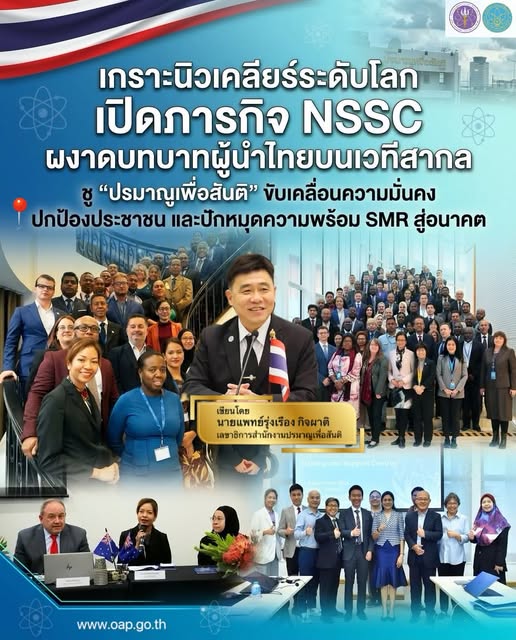
 เกราะนิวเคลียร์ระดับโลก! เปิดภารกิจ NSSC ผงาดบทบาทผู้นำไทยบนเวทีสากล ชู “ปรมาณูเพื่อสันติ” ขับเคลื่อนความมั่นคง ปกป้องประชาชน และปักหมุดความพร้อม SMR สู่อนาคต
สถาปัตยกรรมความมั่นคงปลอดภัยทางนิวเคลียร์ในยุคไร้พรมแดน ในโลกยุคปัจจุบันที่ภัยคุกคามมีความซับซ้อน ไร้รูปแบบ และเชื่อมโยงข้ามพรมแดนอย่างไร้รอยต่อ ประเด็น “ความมั่นคงปลอดภัยทางนิวเคลียร์” (Nuclear Security) มิใช่เรื่องไกลตัว หรือเป็นเพียงภารกิจเฉพาะของกลุ่มประเทศที่มีโรงไฟฟ้านิวเคลียร์หรือครอบครองอาวุธนิวเคลียร์เท่านั้น หากแต่เป็นภารกิจหลักอันเกี่ยวเนื่องโดยตรงกับการคุ้มครองชีวิตและสุขภาพของประชาชน การรักษาความมั่นคงของรัฐ และการสร้างความเชื่อมั่นต่อระบบเศรษฐกิจ โลจิสติกส์ และการลงทุนของประเทศ
 ประเทศไทยมีการประยุกต์ใช้วัสดุกัมมันตรังสี สารกัมมันตรังสี และเทคโนโลยีนิวเคลียร์อย่างแพร่หลาย ทั้งในภาคการแพทย์ การอุตสาหกรรม การเกษตร และการศึกษาวิจัยขั้นสูง ดังนั้น การป้องกันมิให้วัสดุหรือเทคโนโลยีเหล่านี้สูญหาย ถูกลักลอบเคลื่อนย้าย ถูกนำไปใช้ในทางที่ผิด หรือก่อให้เกิดอันตรายต่อประชาชนและสิ่งแวดล้อม จึงเป็นภารกิจเชิงรุกที่รัฐต้องดำเนินการอย่างมีระบบ เข้มงวด และสอดคล้องกับมาตรฐานสากล
 สำนักงานปรมาณูเพื่อสันติ (ปส.) ในฐานะหน่วยงานกำกับดูแลความปลอดภัยทางนิวเคลียร์และรังสีแห่งชาติ ได้นำประเทศไทยก้าวสู่การเป็นผู้นำในการสร้างระบบความมั่นคงปลอดภัยทางนิวเคลียร์ ผ่าน ศูนย์สนับสนุนการพัฒนาศักยภาพด้านความมั่นคงปลอดภัยทางนิวเคลียร์ (National Nuclear Security Support Centre: NSSC) ตามแนวทางของทบวงการพลังงานปรมาณูระหว่างประเทศ (IAEA) เพื่อวางรากฐานโครงสร้างพื้นฐาน และยกระดับขีดความสามารถของประเทศให้โดดเด่นในระดับสากล
 “ไทยผงาดผู้นำบนเวทีสากล: จากผู้ปฏิบัติตาม สู่ผู้กำหนดทิศทางโลก”
 ผลจากการดำเนินงานอย่างเข้มแข็งและยึดมั่นในมาตรฐานสากลอย่างต่อเนื่อง ส่งผลให้ สำนักงานปรมาณูเพื่อสันติ (ปส.) ได้รับการยอมรับและยกย่องอย่างสูงในประชาคมนิวเคลียร์โลก โดยบุคลากรของ ปส. คือ ดร.อิสริยา ชัยรัมย์ สถาบันนิวเคลียร์นิติวิทยาศาสตร์แห่งชาติ (สนน.) สำนักงานปรมาณูเพื่อสันติ ได้รับเลือกให้ดำรงตำแหน่ง ประธานเครือข่ายศูนย์สนับสนุนด้านความมั่นคงปลอดภัยทางนิวเคลียร์ของทบวงการพลังงานปรมาณูระหว่างประเทศ (IAEA NSSC Network’s Chair) ในวาระมิถุนายน 2567 – พฤศจิกายน 2569
พร้อมกันนี้ ประเทศไทยยังได้รับบทบาทเป็น ผู้นำกลุ่มความร่วมมือย่อยระดับภูมิภาคเอเชียตะวันออกเฉียงใต้ (Southeast Asian Nations Sub-regional Group: SAN) อีกด้วย
การได้รับเลือกให้ดำรงตำแหน่งประธานเครือข่ายสากลของ ดร.อิสริยา ชัยรัมย์ และบทบาทผู้นำภูมิภาคของ ปส. ในครั้งนี้ เป็นหมุดหมายประวัติศาสตร์ที่ตอกย้ำว่า ประเทศไทยและข้าราชการไทยมิได้เป็นเพียง “ผู้ปฏิบัติตามมาตรฐาน” (Standard Taker) อีกต่อไป แต่ได้ก้าวขึ้นสู่การเป็น “ผู้นำและผู้กำหนดทิศทาง” (Standard Setter) ในการเสนอแนวคิด ผลักดันนโยบาย และยกระดับความร่วมมือด้านความมั่นคงปลอดภัยทางนิวเคลียร์ทั้งในระดับภูมิภาคและระดับโลก
บทบาทผู้นำนี้นับเป็น “ทุนทางยุทธศาสตร์” (Strategic Asset) ที่ช่วยเพิ่มอำนาจการต่อรอง สร้างความน่าเชื่อถือ และตอกย้ำเกียรติภูมิของประเทศไทยในฐานะสมาชิกที่มีความรับผิดชอบสูงต่อสันติภาพและความปลอดภัยของประชาคมโลก
 NSSC: กลไกสร้างภูมิคุ้มกันและความพร้อมใน 3 มิติ
 NSSC โดย สถาบันนิวเคลียร์นิติวิทยาศาสตร์แห่งชาติ (สนน.) ปส. ทำหน้าที่เป็นศูนย์กลางการพัฒนาศักยภาพของประเทศ โดยบูรณาการการดำเนินงานร่วมกับหน่วยงานด้านความมั่นคง หน่วยงานบังคับใช้กฎหมาย และเจ้าหน้าที่ผู้ปฏิบัติงานส่วนหน้า (Frontline Officers) เช่น ศุลกากร และตรวจคนเข้าเมือง เพื่อเสริมสร้างความพร้อมอย่างรอบด้านใน 3 มิติสำคัญ:
1. การพัฒนากำลังคนและบุคลากรผู้เชี่ยวชาญ: สร้างบุคลากรและเจ้าหน้าที่ตรวจสอบที่มีความรู้ ทักษะ และสมรรถนะการปฏิบัติงานตามมาตรฐานสากล
2. การบริหารจัดการเทคโนโลยีและอุปกรณ์ตรวจจับรังสี: วางระบบ ดูแล และบำรุงรักษาอุปกรณ์ตรวจวัดรังสีให้พร้อมใช้งานอย่างมีประสิทธิภาพและแม่นยำตลอดเวลา
3. การสนับสนุนทางวิชาการและนิวเคลียร์นิติวิทยาศาสตร์: พัฒนาฐานข้อมูล องค์ความรู้ นวัตกรรม และห้องปฏิบัติการนิวเคลียร์นิติวิทยาศาสตร์เพื่อรองรับการตรวจพิสูจน์และรับมือภัยคุกคามทางนิวเคลียร์และรังสีรูปแบบใหม่ได้อย่างทันท่วงที
ประโยชน์เชิงยุทธศาสตร์ 5 ประการ: สิ่งที่ประเทศและคนไทยได้รับจากภารกิจ NSSC ภารกิจของ NSSC ไม่ใช่เพียงงานด้านความมั่นคงทางเทคนิคเท่านั้น แต่เป็นการลงทุนเชิงยุทธศาสตร์ที่ส่งผลดีโดยตรงต่อประชาชน ความมั่นคง และเศรษฐกิจของประเทศใน 5 ด้านหลัก:
• 1. ประชาชนปลอดภัย: ประชาชนได้รับการคุ้มครองดูแลให้ปลอดภัยจากอันตรายและอันตรายรังสีที่อาจเกิดจากการใช้วัสดุกัมมันตรังสีและวัสดุนิวเคลียร์ในทางที่ผิด ผ่านระบบการเฝ้าระวัง การตรวจจับ และการตอบสนองที่ได้มาตรฐานสากล พร้อมทีมผู้เชี่ยวชาญปฏิบัติหน้าที่เฝ้าระวังตลอด 24 ชั่วโมง
• 2. ประเทศมั่นคง: เกิดการบูรณาการไร้รอยต่อระหว่างหน่วยงานกำกับดูแล (ปส.) หน่วยงานความมั่นคง และเจ้าหน้าที่ปฏิบัติการส่วนหน้า ทำให้ประเทศมีระบบแจ้งเตือน การเฝ้าระวังชายแดน และแผนตอบสนองต่อเหตุฉุกเฉินทางนิวเคลียร์และรังสีที่เป็นเอกภาพ มีประสิทธิภาพ และรวดเร็วตามหลักสากล
• 3. เพิ่มความเชื่อมั่นด้านเศรษฐกิจและการลงทุน: ระบบความมั่นคงปลอดภัยทางนิวเคลียร์ที่เข้มแข็งและได้มาตรฐาน เป็นปัจจัยสำคัญในการสร้างความเชื่อมั่นต่อระบบโลจิสติกส์ การขนส่งสินค้าข้ามพรมแดน ท่าเรือพาณิชย์ และห่วงโซ่อุปทาน (Supply Chain) ของประเทศ ช่วยยืนยันต่อคู่ค้า นักลงทุน และองค์กรระหว่างประเทศว่า ประเทศไทยมีมาตรการบริหารจัดการความเสี่ยงทางรังสีที่รัดกุม ปลอดภัย และได้มาตรฐานโลก
• 4. ประเทศไทยในฐานะผู้นำบนเวทีสากล: การดำรงตำแหน่งประธานเครือข่าย NSSC สากลของข้าราชการไทย ช่วยให้ประเทศไทยสามารถเข้าถึงเครือข่ายผู้เชี่ยวชาญระดับโลก เทคโนโลยีขั้นสูง องค์ความรู้ นวัตกรรม และทุนสนับสนุนวิชาการจาก IAEA และประเทศพัฒนาแล้วได้อย่างรวดเร็ว โดยไม่ต้องเสียเวลาและงบประมาณในการนับหนึ่งใหม่ด้วยตนเอง
• 5. ความพร้อมสำหรับพลังงานและเทคโนโลยีแห่งอนาคต (SMR/MMR Readiness): ท่ามกลางการเปลี่ยนผ่านทางพลังงาน (Energy Transition) เพื่อมุ่งสู่สังคมคาร์บอนต่ำ ประเทศไทยกำลังพิจารณาทางเลือกด้านพลังงานสะอาด รวมถึงเทคโนโลยีโรงไฟฟ้านิวเคลียร์ขนาดเล็ก (Small Modular Reactor: SMR) และเครื่องปฏิกรณ์ขนาดจิ๋ว (Micro Modular Reactor: MMR) แม้ปัจจุบันไทยยังไม่ได้เริ่มดำเนินโครงการ SMR แต่การวางรากฐานด้านบุคลากร ระบบกำกับดูแล โครงสร้างพื้นฐานวิชาการ และกลไกความมั่นคงปลอดภัยผ่าน NSSC ไว้ล่วงหน้า ถือเป็นความพร้อมเชิงยุทธศาสตร์ที่สำคัญยิ่ง ช่วยลดต้นทุนการเตรียมความพร้อม และช่วยให้ภาครัฐสามารถตัดสินใจเชิงนโยบายบนพื้นฐานของข้อมูลเชิงประจักษ์และความปลอดภัยสูงสุดของประชาชน
 บทสรุป
 การขับเคลื่อนภารกิจศูนย์ NSSC โดย สถาบันนิวเคลียร์นิติวิทยาศาสตร์แห่งชาติ สำนักงานปรมาณูเพื่อสันติ (ปส.) จึงมิได้เป็นเพียงการปฏิบัติตามภารกิจประจำเท่านั้น แต่คือ “โครงสร้างพื้นฐานเชิงสถาบัน” (Institutional Infrastructure) ที่เชื่อมโยงความปลอดภัยของประชาชน ความมั่นคงของชาติ ความเติบโตทางเศรษฐกิจ และการเตรียมความพร้อมสู่อนาคตพลังงานสะอาด
สำนักงานปรมาณูเพื่อสันติ (ปส.) มุ่งมั่นทำหน้าที่กำกับดูแลความปลอดภัย ยกระดับศักยภาพบุคลากรไทย และนำประเทศไทยก้าวสู่การเป็นผู้นำด้านความมั่นคงปลอดภัยทางนิวเคลียร์ในระดับสากลอย่างยั่งยืน
บทความนี้เขียนโดย…
นายแพทย์รุ่งเรือง กิจผาติ เลขาธิการสำนักงานปรมาณูเพื่อสันติ กระทรวงการอุดมศึกษา วิทยาศาสตร์ วิจัยและนวัตกรรม
ขอบคุณข้อมูลจากศูนย์สนับสนุนการพัฒนาศักยภาพด้านความมั่นคงปลอดภัยทางนิวเคลียร์ (NSSC) สถาบันนิวเคลียร์นิติวิทยาศาสตร์แห่งชาติ (สนน.) ปส.
บทความนี้เผยแพร่บน Facebook สำนักงานปรมาณูเพื่อสันติ https://www.facebook.com/share/p/19i9FT4rHo/?mibextid=wwXIfr
Global Nuclear Shield! Unveiling the NSSC Mission as Thailand Takes a Leading Global Role: Office of Atoms for Peace Drives Security, Protects Citizens, and Sets the Stage for Future SMR Readiness Nuclear Security Architecture in a Borderless Era
In today’s world, where threats are increasingly complex, amorphous, and seamlessly interconnected across borders, nuclear security is neither a distant issue nor a mission exclusive to nations with nuclear power plants or nuclear weapons. Rather, it is a primary mandate directly tied to protecting public health and safety, safeguarding state security, and instilling confidence in national economic, logistical, and investment systems.
Thailand extensively utilizes radioactive materials, radioisotopes, and nuclear technology across medicine, industry, agriculture, and advanced research. Consequently, preventing these materials or technologies from being lost, illicitly trafficked, misused, or causing harm to the public and the environment is a proactive national duty that must be executed systematically, stringently, and in full alignment with international standards.
The Office of Atoms for Peace (OAP), as Thailand’s national nuclear and radiation regulatory authority, has led the nation toward global leadership in nuclear security through the National Nuclear Security Support Centre (NSSC). Established under the guidelines of the International Atomic Energy Agency (IAEA), the NSSC lays essential infrastructural foundations and elevates national capabilities to prominent international standards.
“Thailand Emerges as a Global Leader: From Standard Taker to Global Standard Setter”
Sustained, rigorous operations and unwavering commitment to international benchmarks have earned the Office of Atoms for Peace (OAP) high recognition and prestige within the global nuclear community. Notably, OAP official Dr. Issariya Chairam from the National Institute for Nuclear Forensics (NINF), Office of Atoms for Peace, was elected as Chair of the IAEA Nuclear Security Support Centre (NSSC) Network for the term spanning June 2024 to November 2026.
Concurrently, Thailand has assumed the leadership role for the Southeast Asian Nations Sub-regional Group (SAN) within the network.
The election of Dr. Issariya Chairam as International Network Chair, alongside OAP’s regional leadership, marks a historic milestone. It underscores that Thailand and its civil servants are no longer merely “Standard Takers,” but have ascended to become “Standard Setters”—shaping directions, proposing innovative concepts, and driving regional and global nuclear security cooperation.
This leadership role serves as a “Strategic Asset” for the nation, enhancing bargaining leverage, building trust, and reinforcing Thailand’s prestige as a responsible, proactive member of the global security community.
NSSC: A Mechanism for Building Security Immunity Across 3 Core Dimensions
Operating under the National Institute for Nuclear Forensics (NINF) at OAP, the NSSC functions as the national hub for capacity building. It integrates operations across national security agencies, law enforcement, and frontline officers (such as Customs and Immigration) to fortify readiness across three vital dimensions:
1. Human Capital Development: Cultivating qualified personnel and inspectors equipped with knowledge, skills, and operational competencies aligned with international standards.
2. Radiation Detection Technology & Equipment Management: Establishing, maintaining, and calibrating radiation detection systems to ensure continuous 24/7 accuracy and operational readiness.
3. Technical Support & Nuclear Forensics: Developing databases, specialized knowledge, innovations, and nuclear forensic laboratories to support rapid identification and response against emerging nuclear and radiological threats.
5 Strategic National Benefits: What Thailand and Its Citizens Gain from NSSC
The NSSC mission extends beyond technical security; it represents a strategic investment that yields direct benefits for public safety, national security, and economic growth across five primary areas:
• 1. Public Safety: Citizens are shielded from radiological risks and the potential misuse of nuclear or radioactive materials through world-class surveillance, detection, and emergency response systems supported by 24/7 expert teams.
• 2. National Security: Seamless integration among regulatory bodies (OAP), national security agencies, and frontline officers establishes unified, rapid, and efficient border surveillance and nuclear emergency response mechanisms.
• 3. Enhanced Economic and Investment Confidence: Robust, standardized nuclear security infrastructure bolsters confidence across national logistics, cross-border trade, commercial sea ports, and global supply chains. It assures trading partners and international investors that Thailand enforces rigorous, internationally accepted risk management standards.
• 4. Global Leadership for Thailand: Serving as Chair of the IAEA Global NSSC Network enables Thailand to directly access world-class experts, advanced technologies, cutting-edge knowledge, and IAEA academic support without having to re-invent technologies independently.
• 5. Readiness for Future Energy & Technology (SMR/MMR Readiness): Amid global energy transitions toward low-carbon societies, Thailand is exploring clean energy options, including Small Modular Reactors (SMRs) and Micro Modular Reactors (MMRs). Although Thailand has not yet launched an SMR project, proactively building human resources, regulatory frameworks, academic infrastructure, and nuclear security mechanisms through the NSSC provides essential strategic readiness. This lowers future onboarding costs and ensures policy decisions are grounded in empirical evidence and maximum public safety.
Conclusion
Driving the NSSC mission through the National Institute for Nuclear Forensics at the Office of Atoms for Peace (OAP) is far more than a routine administrative task; it is an essential “Institutional Infrastructure” connecting public safety, national security, economic prosperity, and clean energy readiness.
The Office of Atoms for Peace (OAP) remains steadfast in its mandate to regulate safety, empower Thai personnel, and sustainably lead Thailand as a global leader in nuclear security.
Written by: Dr. Rungrueng Kitphati, Secretary-General, Office of Atoms for Peace, Ministry of Higher Education, Science, Research and Innovation (MHESI)
Special thanks for information from: National Nuclear Security Support Centre (NSSC), National Institute for Nuclear Forensics (NINF), Office of Atoms for Peace (OAP)
สำนักงานปรมาณูเพื่อสันติ (ปส.) กระทรวงการอุดมศึกษา วิทยาศาสตร์ วิจัยและนวัตกรรม (อว.)
เผยแพร่โดย : กลุ่มเผยแพร่และประชาสัมพันธ์ สำนักงานเลขานุการกรม เบอร์โทรศัพท์ภายใน 1110 , 1120


